
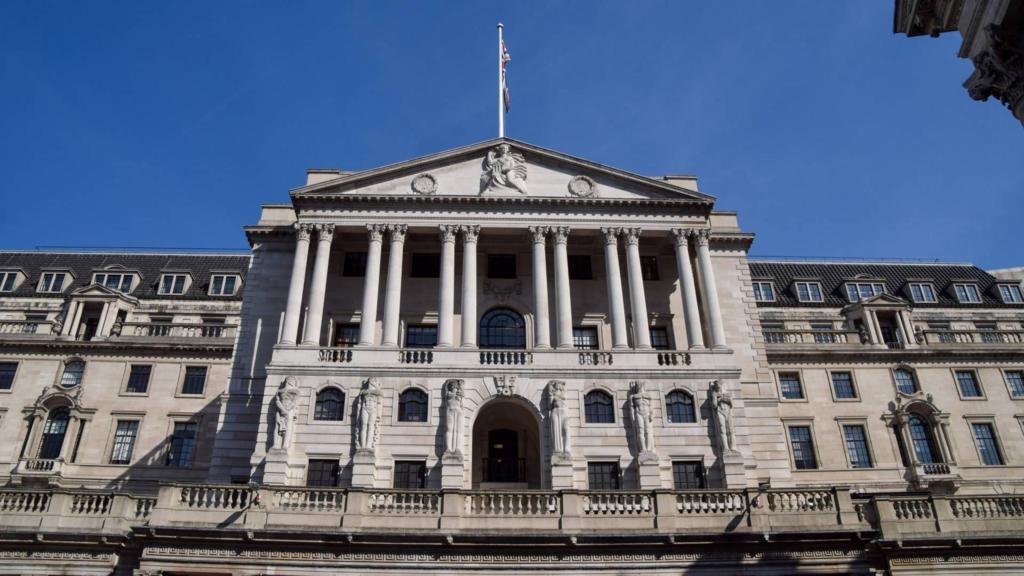
The Bank of England interest rates are widely expected to fall this week as the UK faces growing economic challenges. Policymakers plan to reduce the headline rate by 0.25 percentage points to 4% on Thursday. This move aims to prevent the economy from sliding further backward amid rising unemployment and global trade tensions.
City traders have put the chance of a rate cut at more than 80%. They also anticipate another quarter-point reduction before the end of the year. If implemented, this will mark the fifth rate cut since August last year, bringing rates back to the level seen in March 2023.
Chancellor Rachel Reeves will likely welcome the cut. Lower rates can reduce mortgage payments and ease borrowing costs for businesses struggling with tight finances. However, the decision exposes the difficult balancing act the UK government faces. It needs to stimulate growth while keeping public spending under control before the autumn budget.
Recent economic data show the UK economy shrank by 0.1% in May and 0.3% in April. Many economists blame this on uncertainty caused by new US tariffs and increased business taxes introduced last October. Additionally, the number of job vacancies fell below pre-pandemic levels, while unemployment rose to 4.7% in the three months leading up to May, its highest point since June 2021.
Matt Swannell, chief economic adviser to the EY Item Club, noted that the labour market is weakening. He pointed to an increase in vacancies alongside rising unemployment. Meanwhile, pay growth slowed faster than the Bank of England’s May forecast predicted.
Swannell expects a split vote among the Bank’s nine-member Monetary Policy Committee (MPC) because of a jump in food inflation in June. Some members will likely favor holding rates steady due to persistent price pressures. In contrast, others want to cut rates to support the slowing economy.
Food inflation, especially rising costs for essentials like meat and butter, has surged more than the Bank anticipated three months ago. Swannell emphasized that this increase matters a great deal. It influences household inflation expectations, which the MPC closely watches to assess the risk of inflation becoming entrenched.
The IMF recently forecast sluggish UK growth of just 0.1% in the second half of this year. Slight improvement to 0.3% is expected next year. The MPC’s upcoming forecasts could be even gloomier, hinting at stagflation—slow growth combined with high inflation.
In summary, the Bank of England interest rates cut aims to tackle economic weakness but must balance growing inflation risks. The MPC remains cautious as it navigates a complex and uncertain economic landscape.
For more updates, follow London Pulse News.