
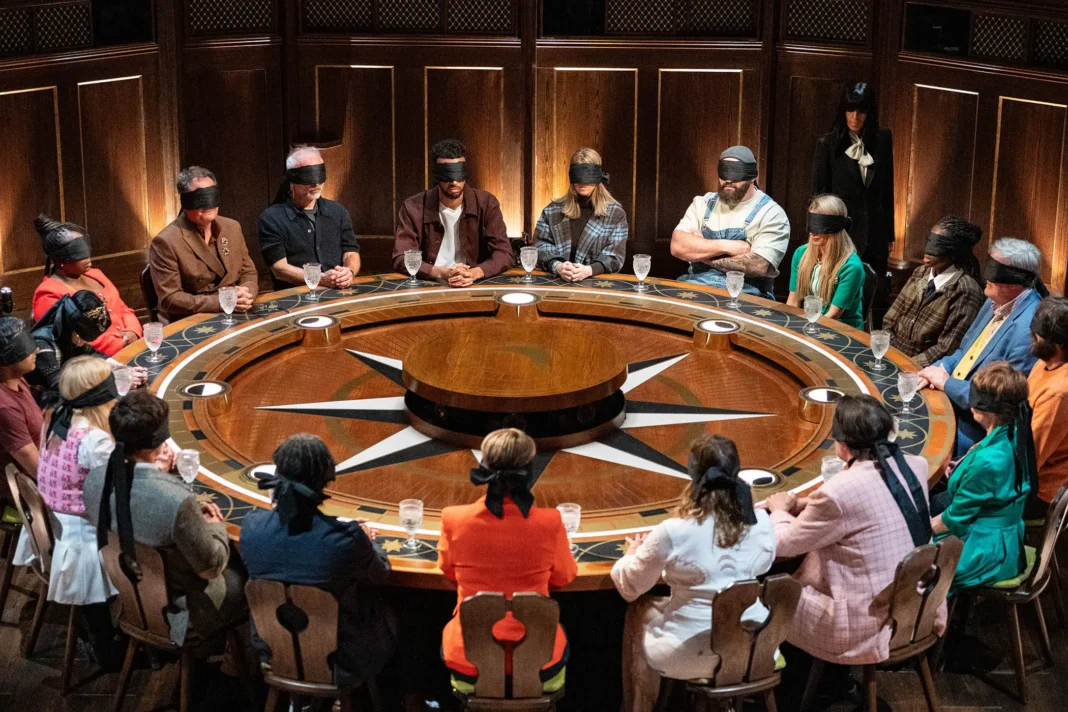
The Celebrity Traitors continues to reveal the complicated mix of trust and deception that drives human behavior. Halfway through the season, Stephen Fry proposed a daring experiment during the group’s tense roundtable. He suggested that the contestants vote without prior discussion to eliminate bias and manipulation. His idea came after growing suspicion surrounding Jonathan Ross, who had faced accusations from fellow player Ruth Codd before her elimination.
Fry’s approach aimed to break the cycle of confusion that clouded the group’s decisions. However, his advice went ignored. Instead, Jonathan Ross successfully steered the group toward eliminating Clare Balding. The decision reflected how easily trust and deception can shape outcomes when emotions run high.
The show’s creator, Marc Pos, originally designed The Traitors to explore how people navigate loyalty and betrayal. He drew inspiration from the 1629 shipwreck of the Batavia, where survivors faced mutiny and manipulation. Although the modern version takes place in a castle, the emotional dynamics remain just as intense.
The program works because it mirrors real-world behavior. People often protect those they believe share their values while suspecting outsiders. This “us versus them” mentality fuels both the game and the internet’s culture of division. Fry’s failed experiment showed how hard it is to escape that instinct, even in a controlled environment.
Over recent seasons, contestants like Jaz Singh and Joe Marler have stood out for their clear judgment. They relied on observation rather than emotion, managing to see through manipulation. Their methods highlight the importance of awareness when facing trust and deception, both in the game and beyond it.
The series also offers lessons about misinformation. Players interpret limited facts and often reach conclusions based on instinct rather than evidence. Similarly, people online struggle to separate truth from falsehood. The Celebrity Traitors demonstrates how confusion thrives when certainty disappears.
Ultimately, the show captures modern society’s challenge with trust and deception. Whether online or in real life, people are drawn into stories, suspicions, and loyalties. The line between truth and manipulation blurs, and even the most logical minds can falter when emotions take control.
For more updates on this news, follow London Pulse News.