
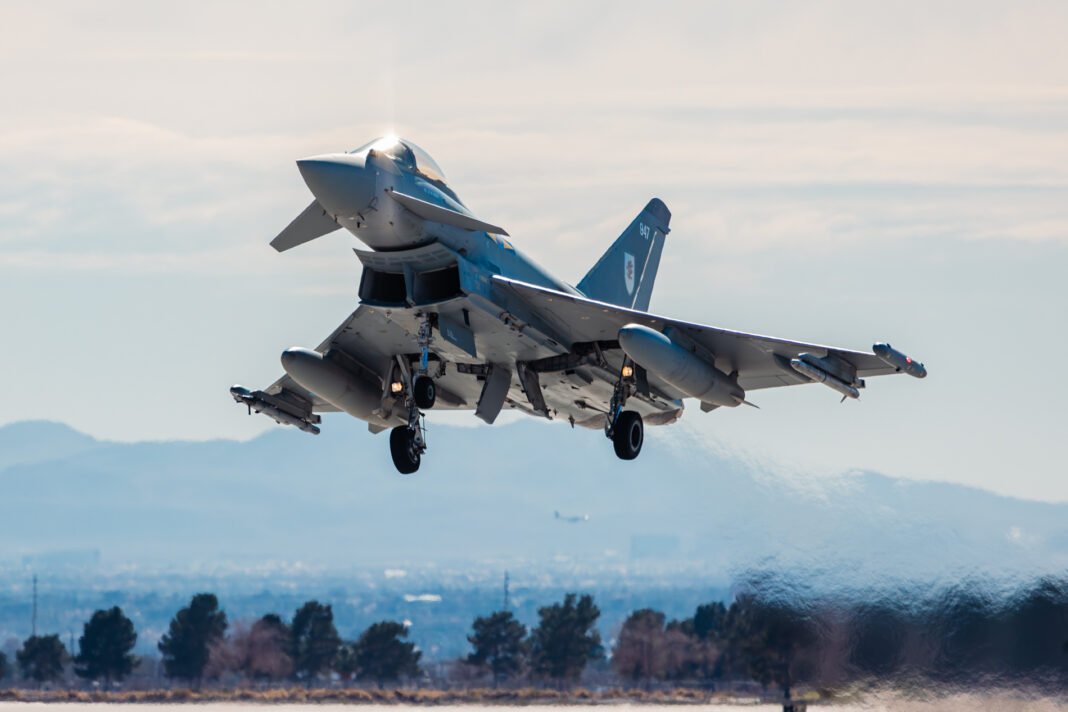
British forces have carried out intense RAF drone interceptions in the Middle East during recent attacks on coalition bases.
Military leaders confirmed that British aircraft needed emergency resupply flights to replenish missiles and rockets. The resupply followed weeks of heavy drone interception missions.
John Healey, the UK Defence Secretary, received a briefing from commanders about the escalating situation. Officials described the defensive operations as “pretty continuous” since fighting began last month.
Meanwhile, attacks targeted a coalition military base near Erbil in northern Iraq. The facility houses international troops, including American personnel supporting regional operations.
Guy Foden, a British brigadier, said attackers launched several unmanned aerial vehicles toward the base overnight. However, British personnel helped defend the location during the assault.
Foden explained that troops shot down two drones approaching the camp. Nevertheless, several drones still struck parts of the base.
At the same time, officials reported additional strikes near Baghdad. Commanders believe attackers coordinated these operations more effectively than previous attempts.
The RAF has played a central role in defending coalition positions. British pilots have already logged about 300 flight hours since the conflict intensified.
Because of the high number of missions, the military required extra munitions deliveries. Supply flights transported missiles and rockets to restore operational stock.
Nick Perry, the UK’s chief of joint operations, confirmed that resupply flights restored a “reasonable stock” of missiles. As a result, RAF jets can continue patrols and interception duties.
British aircraft also flew air combat patrols over Jordan and the United Arab Emirates. Additionally, pilots conducted sorties above Qatar and protected allied positions in Cyprus.
These missions highlight the scale of ongoing RAF drone interceptions across the region.
Officials reported no British casualties during the attacks. However, American forces suffered several minor injuries during the same incidents.
Meanwhile, analysts are studying debris from a drone that struck RAF Akrotiri in Cyprus. Investigators want to identify the drone’s components and manufacturing origin.
Healey suggested that foreign influence may play a role in the attacks. He said analysts are searching for evidence of external technology or assistance.
The defence secretary also suggested possible involvement from Vladimir Putin. Rising oil prices during regional tensions could financially benefit Russia’s war effort.
Finally, commanders stressed that coalition forces remain prepared for further threats. Continued patrols and RAF drone interceptions will protect bases and allied troops across the Middle East.
For more updates on this news, follow London Pulse News.