
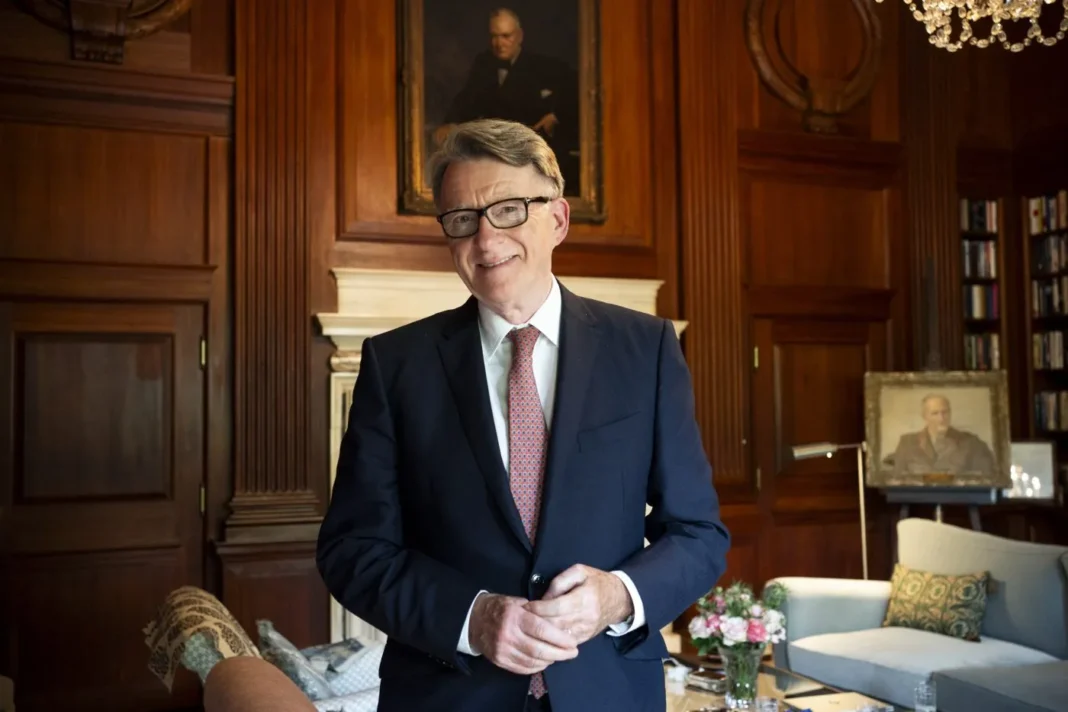
The Mandelson ambassador row has deepened after newly released government files raised questions about the appointment process. The controversy surrounds the decision to make Peter Mandelson the United Kingdom’s ambassador to the United States.
The Mandelson ambassador row began after documents revealed that Prime Minister Keir Starmer played only a limited role. Officials reportedly approved the appointment without a direct conversation between Starmer and Mandelson.
Instead, senior aides managed most of the vetting process inside Downing Street. One key figure was Lord Doyle, who served as Starmer’s communications director at the time. He reportedly reviewed Mandelson’s responses during the background checks.
However, fresh revelations have complicated the situation further. Lord Doyle later lost his Labour Party position after questions emerged about his links to a convicted child sex offender.
Consequently, critics now argue that the appointment process lacked proper oversight. They say the government should have applied stronger checks before approving such an important diplomatic post.
Documents show that officials warned Starmer about Mandelson’s past relationship with financier Jeffrey Epstein. Authorities convicted Epstein of child sex offences in 2008. Despite this, Mandelson reportedly maintained contact with him after the conviction.
Furthermore, records indicate that Mandelson visited Epstein’s home in New York. Officials therefore asked him to explain those visits during the vetting process. Mandelson answered the questions, and aides later accepted his explanations.
Meanwhile, Morgan McSweeney, who served as Starmer’s chief of staff, conducted the formal questioning. He reportedly asked Mandelson three questions regarding the Epstein connection. Lord Doyle later reviewed the answers and declared himself satisfied.
However, the Mandelson ambassador row intensified after McSweeney resigned from his position last month. His departure followed criticism about the way the government handled the appointment review.
Opposition politicians quickly seized on the revelations. Conservative leader Kemi Badenoch strongly criticized Starmer’s decision making. She argued that the prime minister should have personally examined Mandelson before approving the role.
In addition, critics questioned why the prime minister delegated such a sensitive task to close political allies. Some lawmakers believe that personal relationships influenced the review process.
The situation became more controversial after investigators revealed another issue involving Lord Doyle. Authorities discovered that he had supported Sean Morton, a former politician convicted of possessing indecent images of children.
Lord Doyle later apologized for supporting Morton. He said he believed Morton’s claim of innocence at the time. Nevertheless, the Labour Party suspended him during its investigation.
Meanwhile, Downing Street insists officials followed the correct procedures during Mandelson’s appointment. Government representatives say the diplomatic selection process does not require a personal interview with the prime minister.
Even so, critics continue to demand greater transparency. They argue that several documents related to the appointment remain missing. Some lawmakers claim these files could reveal more details about the prime minister’s involvement.
Despite the political pressure, Mandelson denies any wrongdoing. He says he answered all vetting questions honestly during the appointment process.
The Mandelson ambassador row now threatens to create further tension in British politics. As investigations continue, pressure on the government is unlikely to fade.
For more updates on this news, follow London Pulse News.