
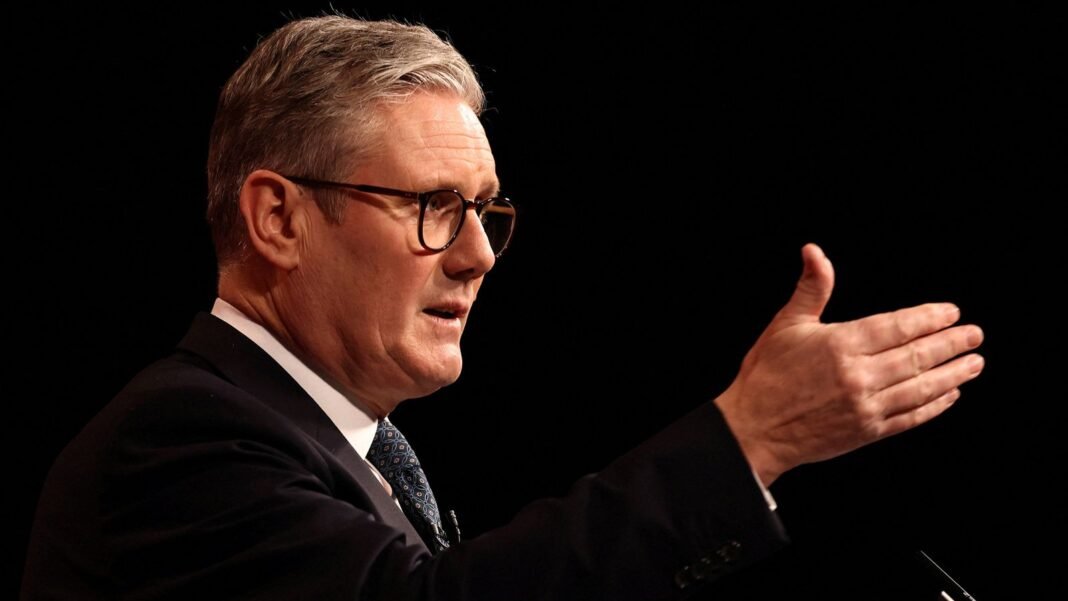
The Middle East ceasefire has prompted UK Prime Minister Keir Starmer to begin a regional visit. He welcomed the agreement between the US and Iran while traveling to meet Gulf leaders. Consequently, the UK has stepped up diplomatic efforts to support stability.
Starmer confirmed that he will meet leaders across the Gulf region this week. According to Downing Street, he will discuss ways to strengthen and uphold the agreement. Moreover, officials expect him to return to the UK on Friday. Therefore, the visit signals urgent international engagement.
The Middle East ceasefire follows weeks of escalating conflict. Donald Trump had warned of severe consequences if Iran refused to agree. His comments included threats linked to the Strait of Hormuz. As a result, global pressure increased on both sides.
Starmer welcomed the breakthrough publicly. He said the agreement offers relief to both the region and the wider world. Furthermore, he stressed the importance of turning the deal into a lasting settlement. Consequently, the Middle East ceasefire remains a fragile but critical step forward.
The US and Iran reached the agreement shortly before a deadline set by Trump. In addition, Trump stated that the deal depends on reopening the Strait of Hormuz. This waterway plays a crucial role in global energy transport. Therefore, its reopening remains a top priority.
Abbas Araghchi confirmed Iran’s conditional acceptance of the ceasefire. He said Iran would halt action if attacks against it stop. Moreover, he announced that safe passage through the Strait would resume temporarily. As a result, shipping routes may stabilize in the short term.
The conflict began earlier this year after US and Israeli forces launched strikes on Iran. They cited concerns about nuclear development as the reason. In response, Iran targeted locations across the Gulf region. Consequently, tensions escalated rapidly across the Middle East.
In addition, Iran restricted access to the Strait of Hormuz during the conflict. This move disrupted a key global shipping route. Around one-fifth of the world’s energy supplies pass through this channel. Therefore, the disruption caused significant economic concern worldwide.
Energy markets reacted quickly to the crisis. Oil prices surged, which led to higher fuel costs globally. As a result, many countries faced increased cost of living pressures. Meanwhile, governments called for de-escalation to limit further damage.
Starmer’s visit aims to reinforce cooperation with regional partners. He plans to support diplomatic efforts that secure long-term peace. Moreover, he will work with allies to maintain stability in the region. Consequently, the Middle East ceasefire remains central to ongoing global discussions.
The Middle East ceasefire has created an opportunity for diplomacy. However, leaders must act quickly to sustain progress. Therefore, Starmer’s visit could play a key role in shaping the next phase of the crisis.
For more updates on this news, follow London Pulse News.