
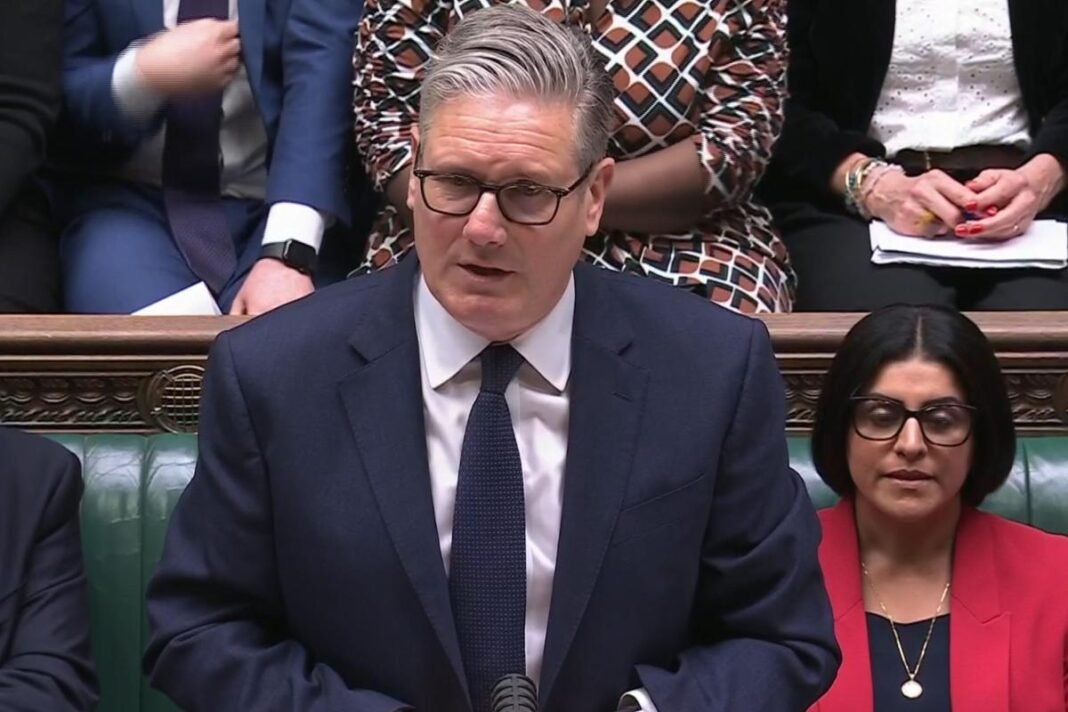
A defence warning from a former Nato chief has triggered a sharp political clash with Prime Minister Keir Starmer. He rejected claims that Britain’s security faces serious risk and defended his government’s record on military investment.
Lord Robertson, a former defence secretary and Nato figure, accused the government of complacency. He argued that Britain’s military preparedness has weakened. He also warned that long-term security risks are increasing due to underinvestment and budget pressures.
Starmer responded directly in Parliament. He said he respects Lord Robertson but disagrees with his assessment. He insisted his government prioritises national security and continues to strengthen defence capabilities.
In addition, Starmer argued that Labour inherited weak and unrealistic defence plans. He said previous policies lacked funding and clarity. Therefore, he claimed his government now focuses on fixing long-term structural issues in the armed forces.
The defence warning has intensified debate over military spending targets. The government previously committed to increasing defence spending to 2.5% of GDP. It also signalled a further rise toward 3.5% by 2035, aligning with Nato expectations.
Meanwhile, ministers continue working on a delayed defence investment plan. Officials initially planned to publish it earlier, but negotiations with the Treasury slowed progress. As a result, critics question whether funding will meet military demands.
Defence Secretary John Healey also rejected claims of complacency. He said the government actively responds to rising global threats. He pointed to increased spending decisions as evidence of action rather than delay.
However, concerns remain within Parliament. Some MPs argue the UK faces growing strategic risks. They highlight gaps in equipment, personnel, and readiness. Consequently, they call for faster implementation of defence reforms.
The defence warning also highlights tension between fiscal policy and security priorities. Some lawmakers argue that welfare spending competes with defence budgets. Others insist both areas require protection. This disagreement continues to shape political debate.
Lord Robertson said the UK cannot defend itself without stronger financial commitment. He warned that delaying investment increases vulnerability. His comments sparked renewed scrutiny of government priorities.
Starmer pushed back strongly against those claims. He said his government already increased defence funding and continues to modernise the armed forces. He also stressed cooperation with Nato allies as a key pillar of national security strategy.
Despite disagreement, both sides acknowledge rising global instability. They point to increased conflict risks and evolving security threats. Therefore, pressure continues to build on the government to finalise its defence plan.
The defence warning now sits at the centre of a wider debate over Britain’s readiness for future conflict. As discussions continue, ministers face growing demands to prove that spending plans match strategic ambitions.
For more updates on this news, follow London Pulse News.