
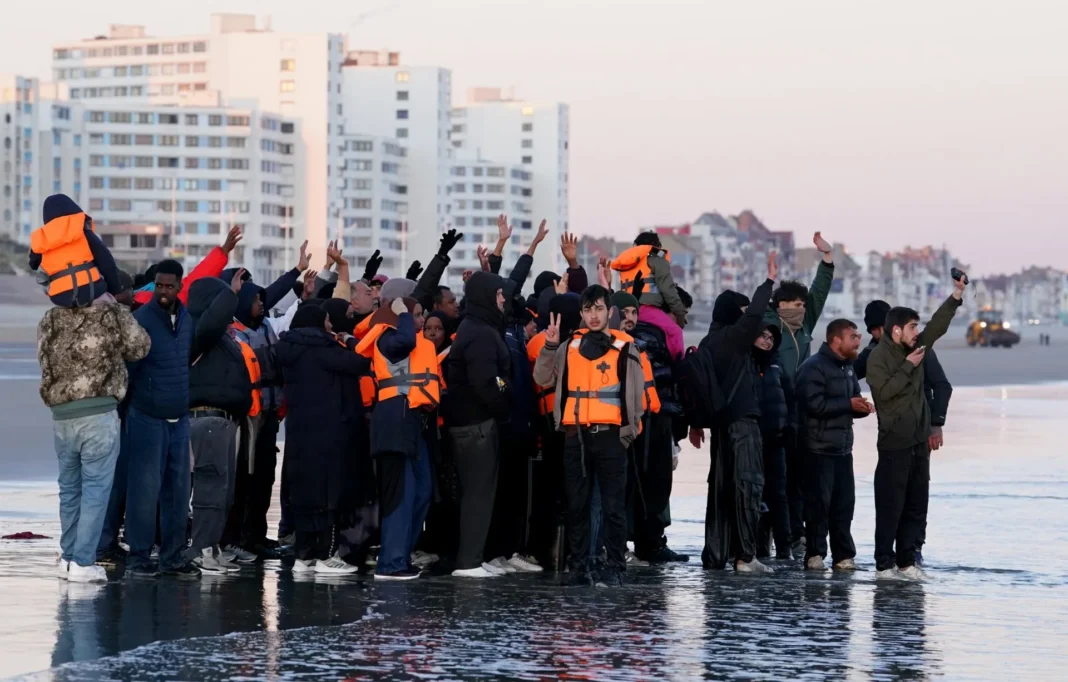
Channel crackdown intensifies as UK and France expand riot police deployments, surveillance, and coastal enforcement to stop small boat crossings. Authorities aim to disrupt smuggling networks operating along the French coastline.
The UK and France will deploy riot-trained officers along key coastal hotspots in northern France. Officials plan to use crowd-control tactics to break up groups preparing to board small boats. Tear gas and specialist equipment will support these operations.
French authorities will assign around 50 officers to a dedicated unit for coastal interception work. These officers will receive training in riot control and rapid response tactics. They will target gathering points where migrants assemble before crossing attempts.
The agreement includes a £662 million deal over three years between both countries. The UK will contribute £501 million for enforcement activity and policing support. An additional £160 million depends on measurable reductions in crossings.
Leaders will also expand aerial surveillance across key smuggling routes. Drones, helicopters, and intelligence teams will monitor coastal movements more closely. Officers will increase from about 750 to nearly 1,100 across targeted zones.
The plan focuses heavily on preventing so-called “taxi boat” operations. Smugglers often send small craft ahead to collect passengers near the shore. French authorities will intercept these vessels under updated maritime rules.
Officials recently changed French law to allow intervention against smaller boats. Authorities can now stop vessels carrying fewer than 10 people when risk levels remain low. They argue this reduces dangerous crossings and disrupts smuggling patterns.
The Channel crackdown also targets coordination between smugglers operating in Belgium and France. Intelligence services track movements across multiple coastal points. Authorities aim to block routes before boats reach launch beaches.
British officials say the strategy will reduce pressure on border systems. They expect stronger enforcement to discourage attempted crossings. Ministers argue the approach focuses on prevention rather than response after arrival.
However, opposition politicians criticise the funding structure and outcomes. They argue France should receive less money without stronger guarantees. They also question whether enforcement alone can stop crossings.
The Home Office reports that more than 6,000 people arrived via small boats in 2026 so far. Officials say this represents a drop compared with last year. They still describe the situation as a major operational challenge.
Data shows crossings peaked at around 46,000 in 2022. Numbers fell before rising again to roughly 41,000 in 2025. Authorities continue to prioritise disruption of smuggling networks.
The Channel crackdown represents a coordinated effort across policing, surveillance, and funding controls. UK and French officials believe joint action will reduce crossings over time. They plan to review progress during the summer surge period.
For more updates on this news, follow London Pulse News.