
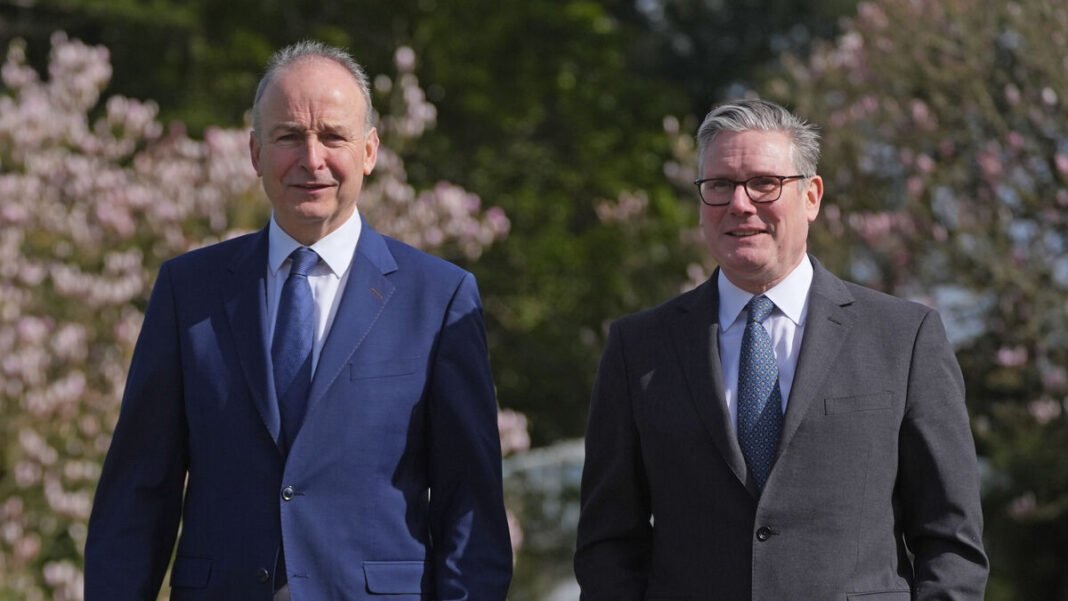
UK and Irish leaders voiced strong support for Philomena’s Law during a bilateral summit in Cork. The proposal aims to help survivors of historic institutions receive compensation without losing state benefits.
Taoiseach Micheál Martin met UK Prime Minister Keir Starmer during the second day of the UK–Ireland summit. The leaders walked through the grounds of Fota House in Cork while discussing cooperation between both governments.
Several ministers joined the meeting. Among them were Simon Harris, Helen McEntee, Darragh O’Brien and Jim O’Callaghan. The British delegation included Ed Miliband, Emma Reynolds and Peter Kyle.
The summit continued a process that both governments began last year. Leaders launched the first summit in Liverpool to rebuild ties after years of political strain. Both countries now plan to expand cooperation through joint projects running until 2030.
During the meeting, Starmer confirmed Britain’s support for Philomena’s Law. The plan would allow survivors living in the United Kingdom to accept payments from Ireland’s redress scheme. Importantly, these payments would not affect their welfare benefits.
The proposal takes its name from campaigner Philomena Lee. She spent years campaigning for justice for people who lived in mother and baby homes during the twentieth century.
Both leaders released a joint statement supporting the measure. They said survivors deserve recognition for the suffering they experienced. They also stressed that compensation should not create financial penalties for those seeking justice.
Consequently, Britain agreed to disregard payments made under Ireland’s Mother and Baby Redress Scheme. This step ensures survivors in both countries receive equal treatment when claiming support.
Meanwhile, the summit also addressed wider political and security concerns. Starmer said instability in the Middle East highlights the importance of strong relations between neighbouring countries. He argued that cooperation between London and Dublin remains essential during uncertain global conditions.
Martin echoed that view during his remarks. He said close coordination helps protect economic stability and national security for both countries.
Earlier in the day, both leaders visited Tyndall National Institute at University College Cork. Researchers there showcased projects focused on electronics and emerging technologies.
Later, the governments released a detailed statement outlining new areas of collaboration. These included research on quantum technology, development of 6G communications, and improvements to emergency preparedness.
Furthermore, both countries agreed to strengthen cooperation in maritime and cyber security. Officials also plan to improve protection for underwater infrastructure and communication cables.
In addition, Martin discussed ongoing work related to the legacy of the Northern Ireland Troubles. He described the current framework as a major opportunity for victims and their families.
The Taoiseach pledged full cooperation with investigative bodies seeking information about the conflict. He said authorities would share any relevant material that could help survivors and bereaved families.
Overall, the summit highlighted a growing partnership between the United Kingdom and Ireland. Leaders believe stronger cooperation will support economic stability, technological development and regional security in the years ahead.
For more updates on this news, follow London Pulse News.