
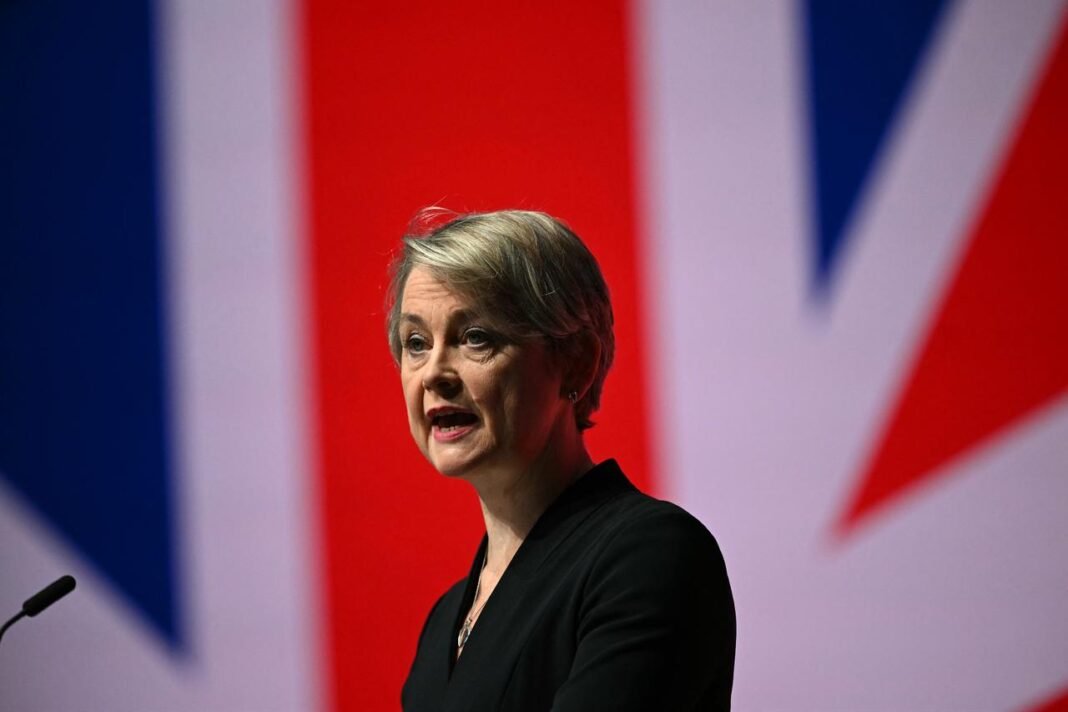
Foreign Secretary Yvette Cooper refused to confirm whether the UK is officially at war as tensions in the Middle East escalate. Overnight, an Iranian drone struck a government building in Kuwait, while oil depots in Iran faced attacks. Israel has warned residents in southern Lebanon to evacuate, citing plans to target the Iranian-backed group Hezbollah. The country also promised to act against successors to Iran’s Ayatollah Ali Khamenei.
US President Donald Trump criticized Prime Minister Sir Keir Starmer, saying the UK does not need its aircraft carriers. He accused the Prime Minister of trying to “join wars after we’ve already won.” Cooper said it is not in Britain’s interest to automatically follow the US in military matters. She stressed that Starmer’s decisions focus on UK national interests.
In an interview with Laura Kuenssberg, Cooper said the UK provides defensive support in the conflict. She explained that RAF jets carry out strike action against Iranian drone attacks. Cooper emphasized that Britain wants a swift resolution while defending partner nations. She said, “The job of the British Prime Minister is to make decisions in the UK’s national interest, not the interest of other countries.”
Cooper confirmed that Britain has deployed fighter jets, Typhoons, F-35s, air defence systems, radar, and 400 extra personnel to the region. HMS Dragon is also being prepared, though it remains docked in the UK. Cooper highlighted that the UK continues to act independently and does not outsource its foreign policy. She criticized the idea of unquestioningly agreeing with other countries.
Former Labour Prime Minister Sir Tony Blair said Starmer should have supported the US from the beginning. Blair argued that allies must be trusted and supported when conflicts arise. He compared the situation to previous campaigns, noting that the US requested only the use of bases for refueling, not full troop deployments. Cooper acknowledged Blair’s perspective but emphasized lessons learned from the 2003 Iraq war. She said every decision must prioritize British citizens’ safety and interests. Cooper concluded that Starmer is right to maintain Britain’s autonomy while cooperating with allies.
The UK Middle East involvement focuses on defensive operations, intelligence sharing, and maintaining regional stability. Starmer continues to balance the demands of alliance obligations with the responsibility to protect UK personnel and national security. UK Middle East policy prioritizes measured military engagement while safeguarding citizens.
UK Middle East operations remain under close review as officials monitor threats and coordinate with allies in the region.
For more updates on this news, follow London Pulse News.