
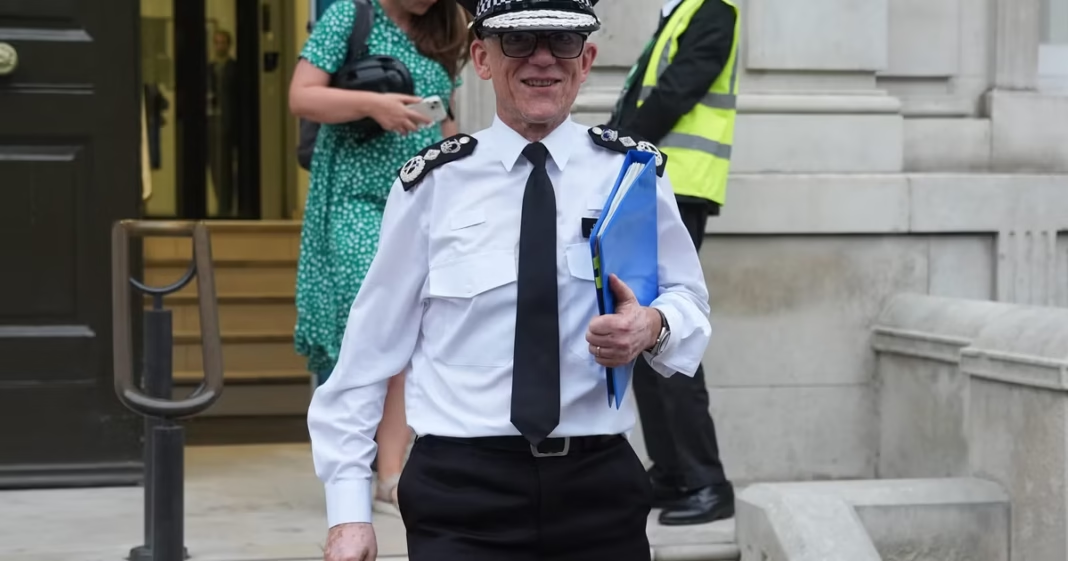
Metropolitan Police Commissioner Sir Mark Rowley has delivered a stark assessment of policing challenges, admitting racial disparities in London remain “shameful” while warning of a stretched force and failing justice system.
In a candid interview, Britain’s top police officer acknowledged black communities’ eroded trust following historical failures, but insisted most officers are “good people” determined to improve.
Rowley didn’t shy from hard truths: “Black boys growing up in London are far more likely to be dead by 18 than white boys. That’s shameful for the city.” He linked this tragedy to broader societal issues, including higher school exclusion rates for black students.
The commissioner recognized policing’s problematic legacy contributes to community tensions, particularly around stop-and-search. “We’ve got a history where policing got a lot wrong,” he said. “That legacy creates concern when we intervene in crimes disproportionately affecting black communities.”
While promising rapid 999 responses, Rowley admitted: “We’re smaller than we ought to be.” He praised the Mayor and Home Secretary for fighting for resources but warned of systemic pressures.
The justice system drew particular criticism, with Snaresbrook Crown Court now listing trials for 2029. “That’s pretty awful.” He endorsed Sir Brian Leveson’s recent report calling the system “close to broken.”
These comments come two years after Baroness Casey’s damning report found the Met institutionally racist, misogynistic and homophobic. While Rowley initially avoided those labels, he’s since launched a £366m reform plan including:
- 500 more community support officers
- 565 additional specialists for sexual and domestic abuse cases
- Renewed neighborhood policing focus
London Mayor Sadiq Khan, who appointed Rowley, maintains the commissioner agrees with Casey’s findings despite earlier semantic disagreements.
Rowley struck a delicate balance acknowledging past failures while defending frontline officers: “The vast majority are good people. We’re determined to improve.”
His challenge remains monumental: reforming a distrusted institution amid resource constraints and justice system failures, all while violent crime disproportionately impacts minority communities. As Rowley put it: “If policing and black communities can confront these issues together, we can give black boys equal life chances.” The question is whether words will translate into measurable change.
For more political updates, visit London Pulse News.