
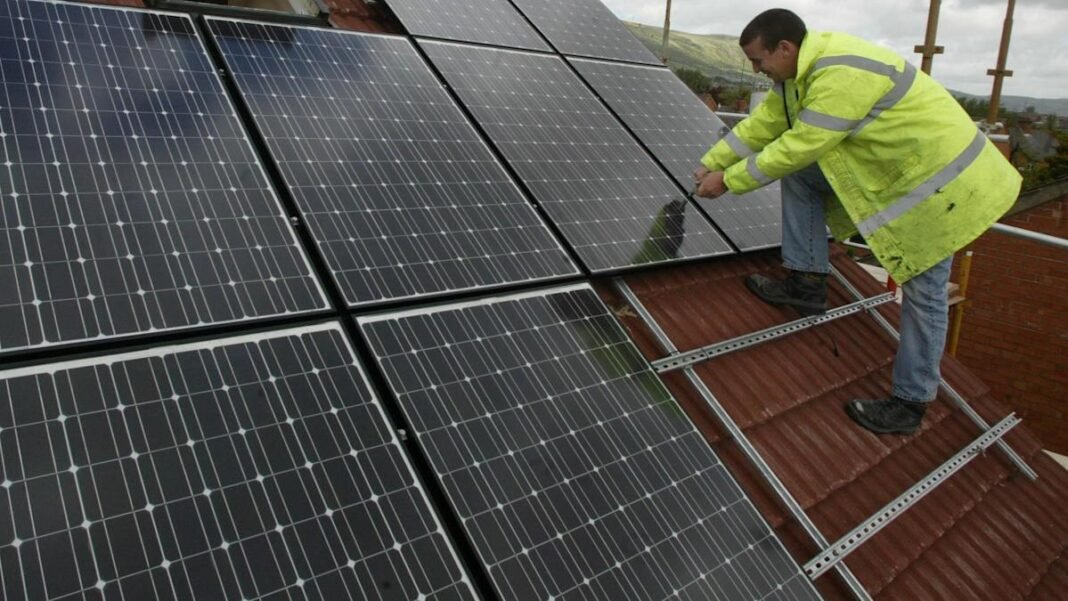
The UK government recently launched Great British Energy solar panels as part of a renewable energy initiative. However, this revelation has raised concerns over ethical sourcing and forced labor allegations.
However, Aiko and Longi, two major Chinese solar firms, supplied the panels for the schools. The government emphasized that Great British Energy solar panels represent a publicly owned energy project. Yet, critics argue that British taxpayers’ money should support local businesses instead.
Therefore, Labour MP Sarah Champion expressed disappointment. She stressed that Great British Energy solar panels should avoid ties to potential human rights abuses. We must not fund forced labor, she said. “Buying British may cost more, but it ensures ethical standards.” The UK government must ensure these standards are observed.
Moreover, China produces over 80% of the world’s solar panels, according to the International Energy Agency. However, reports link Xinjiang-based suppliers to Uyghur Muslim forced labor. A 2023 Sheffield Hallam University study highlighted these risks in solar supply chains, raising further issues for the UK government to address.
Mark Candlish of GB-Sol, a UK manufacturer, acknowledged the challenge. “Polysilicon sourcing is a major ethical issue,” he said. “China dominates the market, making alternatives hard to find.”
GB Energy stated that all contracts comply with UK modern slavery laws. A spokesperson said the company will “lead the way in ethical supply chains.” They also promised stricter transparency measures for future projects, underscoring a critical area for the UK government’s oversight.
Longi and Aiko denied using forced labor. Both companies belong to the Solar Stewardship Initiative, which promotes responsible sourcing. Aiko emphasized its commitment to ethical practices. Longi called third-party audits essential for compliance.
UK solar panel imports from China rose to 68% in 2024. This trend reflects global dependence on affordable Chinese manufacturing. However, activists urge stricter oversight to prevent human rights violations. Here, the UK government faces significant scrutiny.
In addition, Sarah Champion warned that abuse in supply chains remains widespread. She urged the government to exclude unethical suppliers from public contracts. “We must prioritize human rights over cost savings,” she said.
GB Energy plans to invest £200 million in solar projects for schools and hospitals. The controversy highlights the tension between affordability and ethics. As demand for renewables grows, ensuring clean energy has a clean supply chain will be crucial, a challenge that the UK government must strategically navigate.
For now, Great British Energy solar panels remain under scrutiny. Critics demand greater transparency, while supporters argue the initiative will improve over time. The debate continues as the UK strives for a greener future under the guidance of the UK government.
For more political updates, visit London Pulse News.