
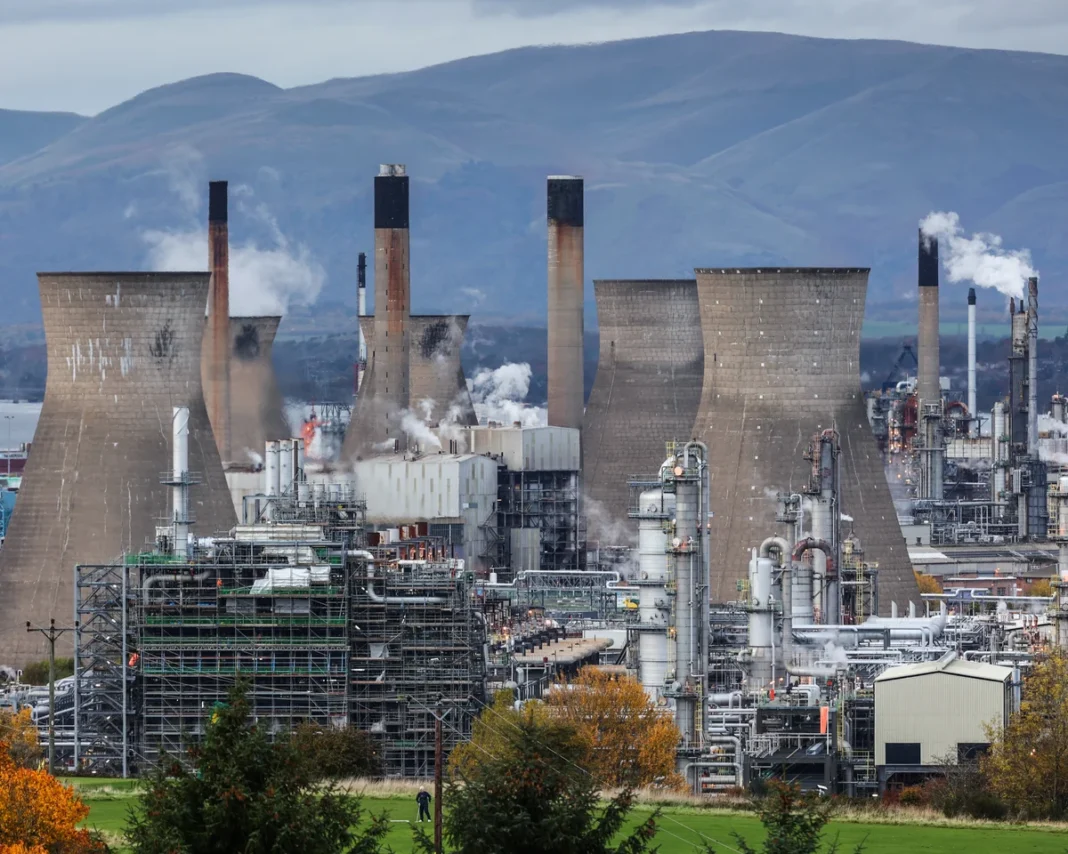
The chemical plant closure risk at Grangemouth in Scotland is escalating due to soaring energy bills and increased carbon taxes. This plant, owned by a major British chemicals company, plays a crucial role in the UK plastics sector.
The Olefins and Polymers (O&P) site produces essential raw materials used by hundreds of plastic manufacturers nationwide. However, rising costs have pushed the plant into financial trouble. Unless conditions improve soon, the site faces possible closure.
Stuart Collings, the plant manager, warned that surging energy prices and climate-related taxes have driven operations into the red. Consequently, the company has subsidised the plant using profits from other global divisions.
Yet, this cannot continue indefinitely. If no turnaround happens within two years, the company may shut the facility. Earlier this year, a related oil refinery at Grangemouth closed, resulting in 400 direct job losses and affecting thousands in its supply chain.
The O&P plant directly employs around 900 people and supports many more contractors and suppliers. A full shutdown would devastate the Falkirk region and harm Scotland’s broader economy.
The plant produces ethylene from oil and gas by applying very high temperatures. This process burns substantial amounts of gas and emits around one million tonnes of CO₂ annually. Hence, its costs heavily depend on energy prices and carbon levies.
Compared to its US counterpart, Grangemouth paid £86 million more for energy and £26 million in carbon taxes last year. Meanwhile, UK industrial energy costs run up to five times higher than in the United States.
According to the Office for National Statistics, UK industrial electricity prices have surged 75% since 2021, while gas costs more than doubled. As a result, energy-intensive sectors have cut production by 33%.
The chemical plant closure risk also threatens other UK facilities. Grangemouth supplies Scotland’s second cracker plant and multiple factories across England. Closure would disrupt supply chains nationwide.
Political leaders have sounded the alarm. They say current energy policies threaten UK industry and skilled jobs. Several have urged a pause on carbon taxes and a review of energy policy frameworks.
Although government initiatives aim to help manufacturers, most focus on electricity costs. However, Grangemouth’s major expenses stem from gas, limiting relief effectiveness.
A government spokesperson confirmed ongoing discussions with Ineos but offered no further solutions. Industry representatives warn that continued inaction could cause irreversible damage.
In conclusion, the chemical plant closure risk at Grangemouth is a critical issue, signaling broader industrial challenges. Without urgent changes, one of Britain’s vital industrial hubs might be lost.
For more updates, follow London Pulse News.