
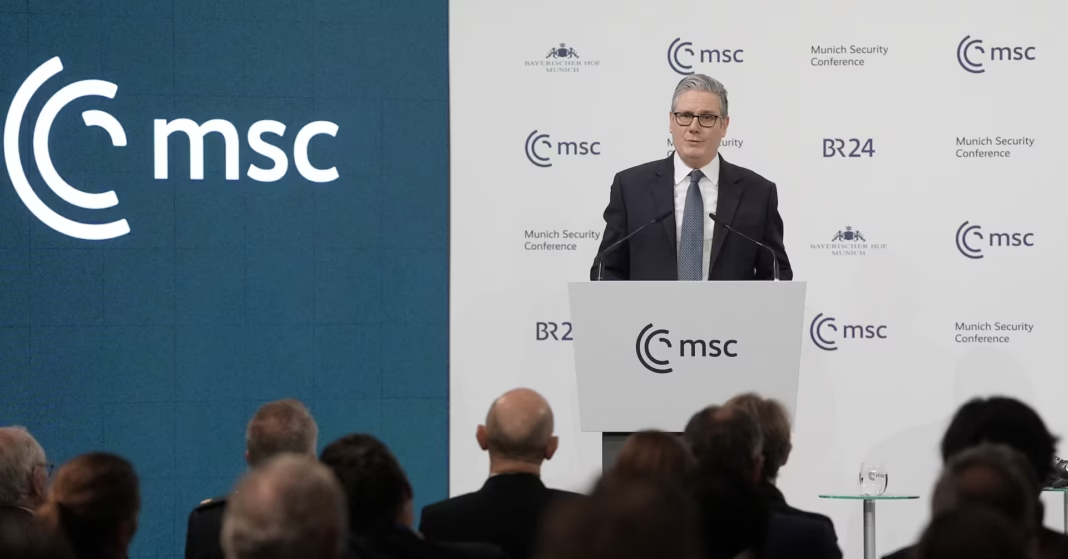
European security pact framed the opening of a major speech in Munich. Sir Keir Starmer addressed delegates at the Munich Security Conference. He warned that peace now feels less stable across the continent. Therefore, leaders must respond faster to rising global dangers.
Starmer said recent years lulled many people into false comfort. However, Russia’s actions in Ukraine changed that sense of safety. Moreover, he argued that cyber threats and disinformation now weaken societies. Thus, governments must strengthen defenses across every sector.
He stressed that Europe faces a clear test of resolve. Additionally, he said deterrence must match the scale of the threat. Therefore, nations must invest more in military readiness. He also said leaders must prepare for potential conflict.
Starmer insisted that lasting peace still guides every decision. However, he added that peace needs strong protection. So he urged allies to build reliable defensive power. That approach, he said, keeps aggression away.
He described Europe as a powerful yet underused force. Furthermore, he noted that European economies far exceed Russia’s. Yet, he said fragmented planning weakens their impact. Therefore, he called for coordinated procurement and shared projects.
Starmer argued that NATO remains central to stability. He praised decades of cooperation across the Atlantic. However, he said Europe must carry more responsibility. Thus, the alliance can remain balanced and resilient.
The Prime Minister welcomed continued support from the United States. He also acknowledged shifting American strategic priorities. So Europe must take greater ownership of its security. That shift, he said, supports a stronger partnership.
Starmer rejected the idea of abandoning transatlantic ties. Instead, he promoted balanced interdependence among allies. Therefore, Europe should reduce risky dependencies. That move would protect long term stability.
European security pact formed a central theme of his remarks. He said shared investment would boost collective deterrence. Moreover, joint production would reduce wasteful duplication. Thus, European forces could act more effectively.
He highlighted recent cooperation in support of Ukraine. Allies supplied air defense and advanced technology. They also formed a coalition of willing partners. As a result, Ukraine gained critical protection.
Starmer announced new funding for Ukrainian air defenses. He said the support would save civilian lives. Furthermore, it would deter further attacks. Thus, it would strengthen European security.
The Prime Minister outlined new military deployments. He said British forces would operate in northern waters. They would join allies in shared exercises. Therefore, readiness would improve across the region.
He also revealed deeper nuclear cooperation with France. That step would reinforce collective deterrence. Thus, any adversary would face united strength.
Starmer then turned to industrial cooperation. He said Britain and Europe must align production. That approach would speed delivery of vital equipment. So soldiers would receive modern tools faster.
European security pact again shaped his closing message. He said economic cooperation supports defense goals. Moreover, shared growth would fund stronger militaries. Thus, security and prosperity would advance together.
He called for closer links with European markets. That move, he said, would stabilize energy and food prices. Therefore, households would benefit from safer trade.
Starmer warned against extremist voices on both sides. He said they weaken alliances and embolden adversaries. So democratic leaders must build public trust.
He urged honesty about the need for change. Leaders must explain why defense spending will rise. Thus, citizens can support difficult decisions.
The Prime Minister closed with a call for unity. He said Europe must act with courage and clarity. Therefore, future generations can live in peace.
For more updates on this news, follow London Pulse News.