
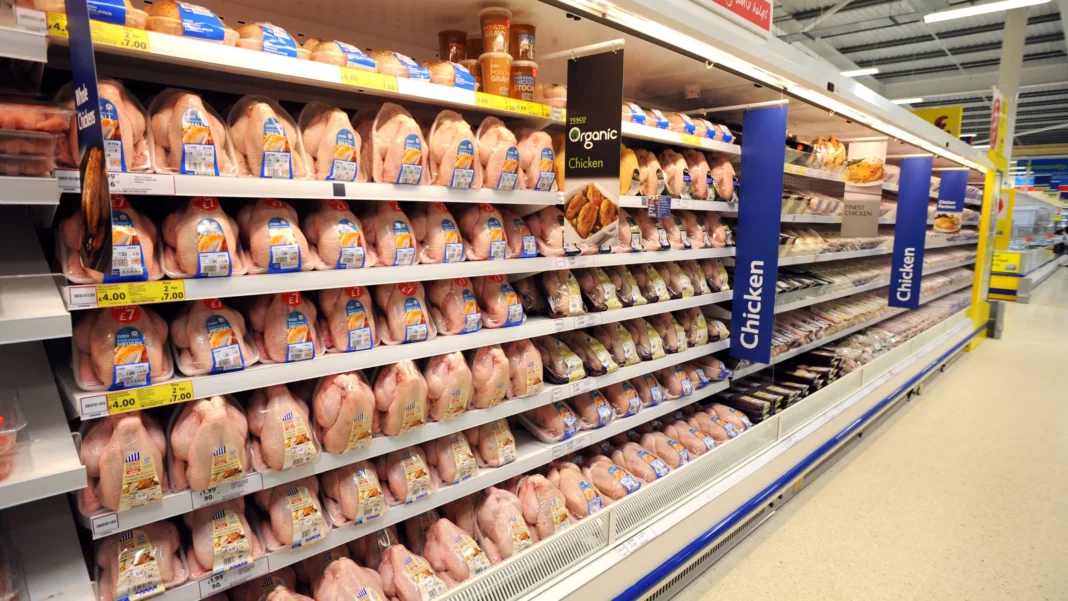
Food shortages risk has increased as officials assess the impact of the Iran conflict on UK supply chains. Government planning has focused on possible disruption to key industries. Consequently, concerns have emerged over food production and availability.
Senior officials from multiple departments reviewed worst-case scenarios during emergency exercises. Teams from No 10, the Treasury, and the Ministry of Defence took part. Moreover, they examined how prolonged disruption could affect the economy.
The food shortages risk centres on a potential shortage of carbon dioxide. This gas plays a vital role in food processing and packaging. Therefore, any supply disruption could affect several sectors.
CO2 helps producers process poultry and pork. It also creates carbonation in soft drinks. In addition, it extends the shelf life of packaged food products. As a result, shortages could impact both supermarkets and restaurants.
Officials warned that supplies could drop sharply under extreme conditions. In one scenario, availability could fall to just 18 percent of normal levels. Consequently, factories may need to change production priorities.
The government has discussed emergency measures to address shortages. Ministers may require factories to increase CO2 output. In addition, authorities could compensate companies for production changes.
The food shortages risk also extends beyond food supply. CO2 plays a role in medical logistics. It supports the transport of blood, vaccines, and organs using dry ice. Therefore, shortages could affect healthcare systems.
Several factors could worsen the situation. Rising gas prices may reduce ammonia production across Europe. In addition, mechanical failures at key plants could limit output. Consequently, supply chains may face further strain.
Despite these risks, officials say widespread shortages remain unlikely. However, consumers may notice reduced product variety. Therefore, supermarkets could stock fewer options on shelves.
The Iran conflict has already affected global markets. The Strait of Hormuz remains a key concern for energy supply. Consequently, disruption in the region continues to impact prices worldwide.
Economic forecasts suggest the UK could face significant challenges. Analysts expect higher energy costs to affect households. In addition, inflation may remain elevated compared to other major economies.
Peter Kyle said the government has prepared for different outcomes. He stressed that planning began early in the conflict. Moreover, he said officials continue to monitor developments closely.
The government has already taken steps to secure CO2 supply. Authorities restarted a major production plant in Teesside. In addition, they continue to work with industry partners.
Food shortages risk remains a key concern for policymakers. While immediate shortages are unlikely, officials continue to plan for disruption. Therefore, the situation depends heavily on developments in the Iran conflict.
For more updates on this news, follow London Pulse News.