
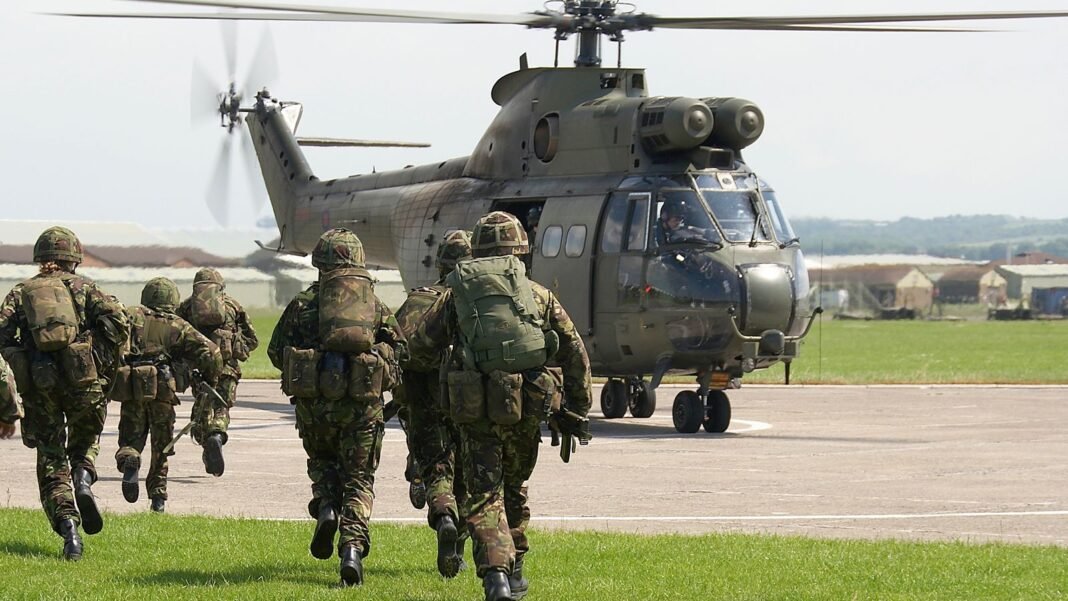
Britain’s military readiness crisis is worsening as its armed forces face severe shortages of essential weapons. Despite grand displays of ships, tanks, and jets, the UK lacks the firepower to back them up. Experts warn that without urgent changes, the military risks becoming a mere showpiece impressive on parade but ineffective in real combat.
In the 1830s, Britain’s Royal Navy enforced diplomacy with overwhelming firepower. Today, however, the situation is starkly different. While the UK still projects power globally, its forces often lack the missiles and ammunition needed to fight a modern war.
For instance, the Royal Navy’s new Type 26 and Type 31 frigates are formidable in appearance. Yet, they currently lack long-range anti-ship missiles. The Norwegian-designed Naval Strike Missile (NSM) won’t be fully deployed for years. Without these weapons, British ships cannot effectively engage enemy vessels.
Britain’s military readiness crisis extends to air defense. The Royal Air Force relies heavily on Typhoon and F-35 jets, which cannot intercept ballistic missiles. Unlike Israel, which has layered defenses like Iron Dome and Thaad, the UK has no equivalent protection. If attacked, the country would struggle to stop even 10% of incoming strikes.
Meanwhile, the Army’s aging Rapier air defense systems are nearly obsolete. Replacement Sky Sabre units are arriving slowly, leaving troops vulnerable. Deploying peacekeepers to Ukraine would stretch these defenses even thinner.
The root of Britain’s military readiness crisis lies in funding imbalances. The UK spends billions on ships, jets, and tanks but only a fraction on missiles and ammunition. For example, while a single frigate costs over £1 billion, critical weapons like the Aster 30 missile receive minimal investment.
Andrew Dorman, a security expert at King’s College London, calls recent F-35 jet orders “politically symbolic.” These planes depend on U.S. support for nuclear integration a process still years away.
Modern weapons are expensive but essential. A single Storm Shadow cruise missile costs £2 million, while basic anti-tank weapons run £20,000 per shot. Yet, without them, expensive platforms like fighter jets and warships become useless.
Matthew Savill of Rusi warns, “We could fight a short conflict, but we’d run out of ammunition fast.” Ukraine’s war has shown how quickly stockpiles deplete. Britain must prioritize weapons over empty displays of strength.
Britain’s military readiness crisis cannot be ignored. The government pledges to increase defense spending, but delays risk leaving forces exposed. Without urgent action, the UK’s military may remain a Potemkin force strong in appearance but weak where it counts.
Palmerston’s gunboat diplomacy worked because firepower backed his words. Today, Britain must ensure its military can do more than just parade. The stakes have never been higher.
For more political updates, visit London Pulse News.