
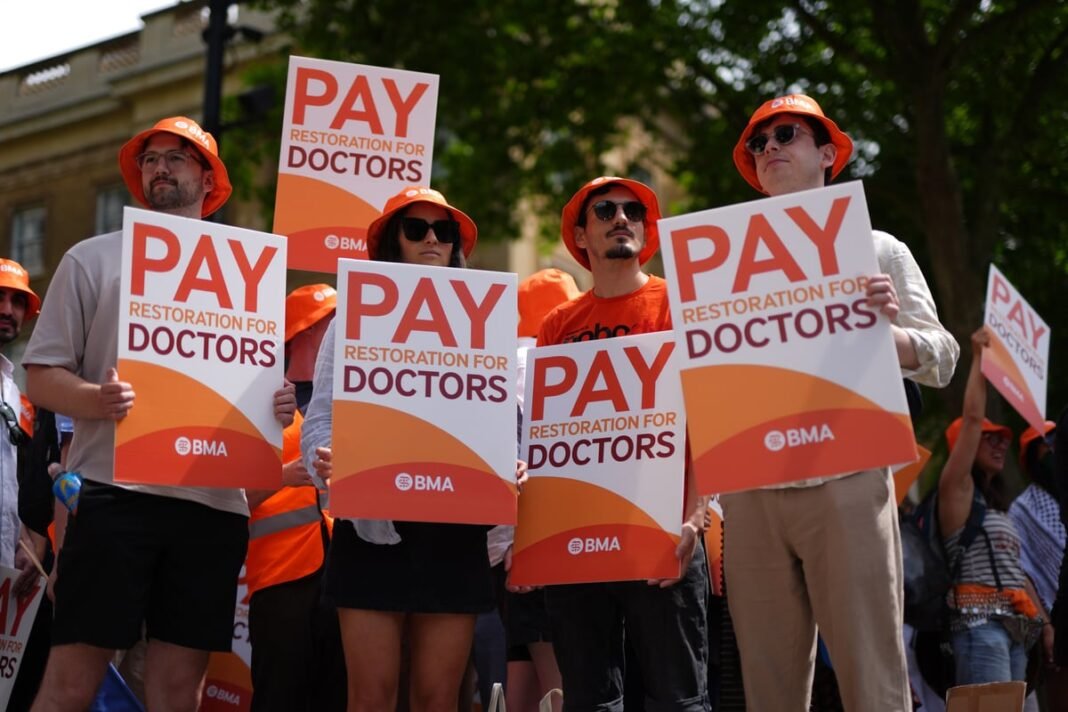
The UK government and the British Medical Association (BMA) have agreed to doctor dispute negotiations restart in a fresh attempt to end the bitter standoff over junior doctors’ pay and working conditions. The talks follow a five-day strike in late July the 12th walkout since March 2023—and a meeting between BMA leaders and Health Secretary Wes Streeting.
Both sides described Tuesday’s discussions as “constructive” and agreed to a temporary pause in strikes while negotiations continue. However, major hurdles remain, particularly on pay, with the government refusing further increases after nearly 30% rises since 2021. Yet the BMA insists pay remains central. Despite recent uplifts, junior doctors’ real-term earnings are still 20% below 2008 levels due to inflation. The union warns that without movement, strikes could resume.
A severe shortage of specialty training spots has intensified frustrations. This year, over 30,000 applicants competed for just 10,000 positions, leaving many junior doctors in limbo. The BMA argues this undermines workforce retention and patient care. Dr. Ross Nieuwoudt and Dr. Melissa Ryan, BMA junior doctors’ leaders, stated: “We’ve agreed to a negotiation window, but the government must act decisively. Patients and doctors deserve a lasting solution.”
Streeting has ruled out additional pay hikes, calling past increases “fair.” Instead, the Department of Health promises to address training costs and working conditions. A spokesperson said: “We aim to prevent further NHS disruption, but pay talks for this year are closed.”
With strikes paused, both sides now face pressure to compromise. The BMA has not ruled out future walkouts if talks stall, while the government hopes to avoid another winter of healthcare chaos.
As doctor dispute negotiations restart, the key question remains: Can they bridge the gap, or will the deadlock drag on? The coming weeks will decide whether peace or more strikes lies ahead.
For more political updates, visit London Pulse News.