
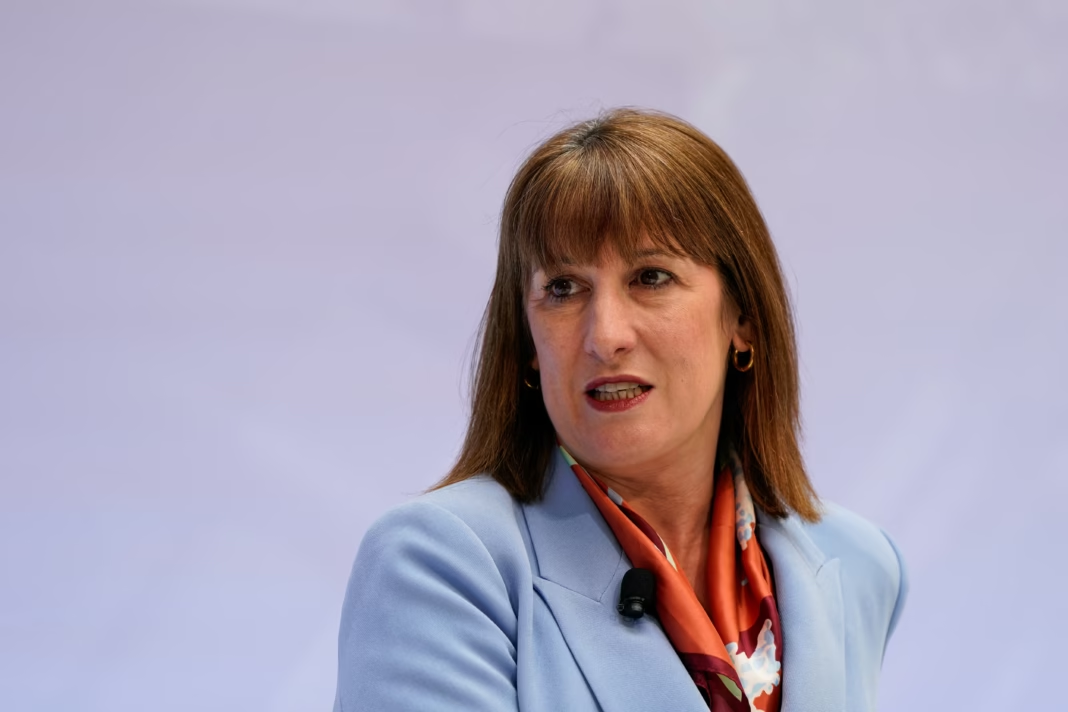
Rachel Reeves faces £41bn tax dilemma as a leading economic think tank warns that the UK government must raise taxes to meet its borrowing rules. The National Institute of Economic and Social Research (Niesr) claims the budget shortfall could reach £41.2bn unless the chancellor takes action. Recently, Niesr urged Rachel Reeves to implement “moderate but sustained” tax increases. Additionally, the think tank suggested reforming council tax and extending income tax threshold freezes. However, the government insists economic growth remains the best solution.
Meanwhile, the Conservatives accuse Labour of relying too heavily on tax hikes. Reeves initially promised no further tax rises but now refuses to rule them out. Weak economic growth has forced her to reconsider. Niesr argues that Rachel Reeves faces £41bn tax dilemma with three conflicting priorities. First, she must meet spending commitments. Second, she must honor Labour’s manifesto pledge against taxing “working people.” Third, she must stick to strict borrowing limits.
Stephen Millard, Niesr’s deputy director, stated that raising major taxes seems unavoidable. He warned that doing so would break Labour’s promise to protect workers. Still, higher taxes could stabilize public finances and lower borrowing costs. Several factors contribute to the budget gap. Slower growth has reduced tax revenues. Furthermore, the reversal of welfare cuts has cost billions. Originally, these cuts aimed to save £5.5bn annually by 2030. Now, savings will fall short by more than half.
Niesr also recommends speeding up welfare-to-work programs. This move could reduce benefit dependency and ease fiscal pressures. However, external risks like US trade policies under Donald Trump add uncertainty. Russ Mould of AJ Bell highlights rising labor costs as a hurdle for businesses. Since April, higher National Insurance Contributions have hurt profits. For example, Domino’s Pizza reported lower earnings due to employment expenses.
Moreover, potential franchisees hesitate to invest before the Autumn Budget. They seek clarity on future tax policies. Mould warns that prolonged uncertainty could stifle economic recovery. Niesr reveals that the poorest 10% of Britons earn 10% less than before COVID-19. Despite Labour’s goal of leading G7 growth, challenges persist. Trade instability and geopolitical risks hinder progress.
Currently, the UK economy is expected to grow by 1.3% in 2025 and 1.2% in 2026. While modest, this places the UK mid-table among G7 nations. The IMF, however, predicts stronger performance, ranking the UK third after the US and Canada. To address the shortfall, Niesr proposes overhauling council tax. A land value tax could replace the current system. Such reforms aim to create a fairer and more efficient tax structure.
A Treasury spokesperson reiterated that growth remains the priority. Yet, critics argue Labour lacks a clear economic strategy. Shadow Chancellor Mel Stride claims Labour’s policies have already damaged public finances. Rachel Reeves faces £41bn tax dilemma with no easy solutions. Whether through tax hikes, spending cuts, or reforms, decisive action is needed. The Autumn Budget will reveal how the government plans to navigate this fiscal challenge.
For more political updates, visit London Pulse News.