
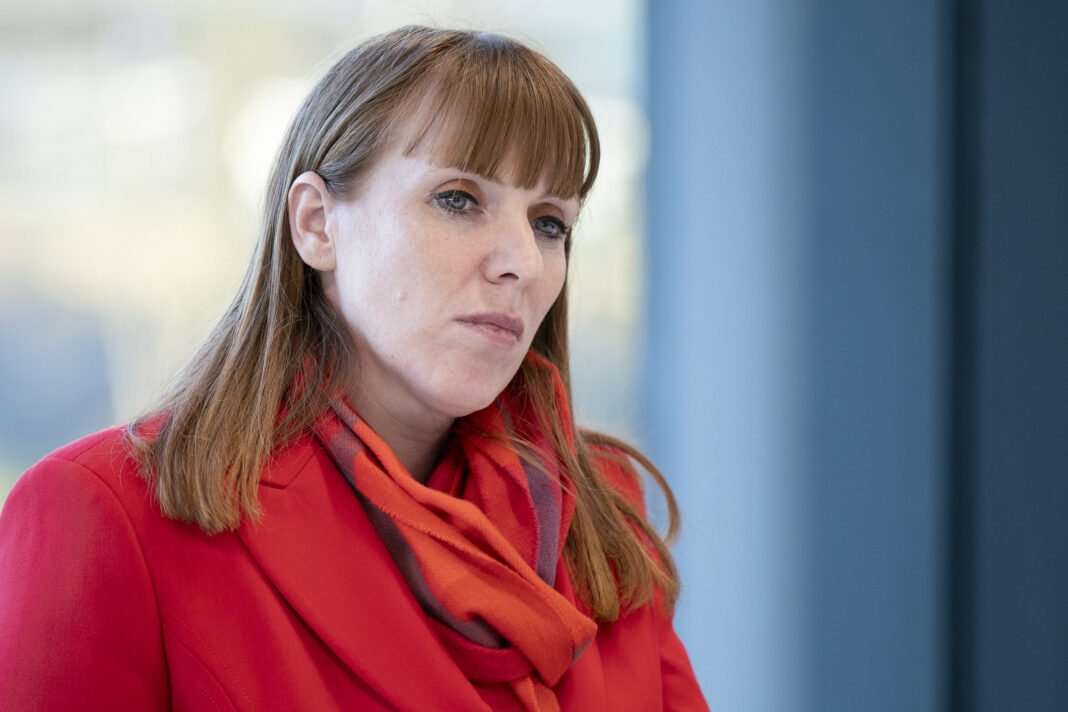
Angela Rayner, Deputy Prime Minister, has defended her approach to a recent meeting with survivors and bereaved families of the Grenfell Tower fire, despite some attendees describing it as a “car crash.” The meeting, which took place last week, was charged with emotion and strong opinions regarding the future of the 24-storey tower that was devastated by the deadly fire in 2017.
During the meeting, Rayner informed the attendees that the building would be gradually dismantled, nearly eight years after the tragedy that claimed 72 lives. The decision to take down the tower, a significant and emotional move, was met with mixed reactions from the affected families, sparking ongoing debates about what should happen to the site.
Rayner, addressing the fallout on Sunday, explained that she did not feel she had been “aggressive” during the meeting and expressed regret if anyone had felt that way. “If anyone felt that way, then I would be sincerely upset about that,” she told BBC’s Sunday with Laura Kuenssberg. Kimia Zabihyan, a representative from Grenfell Next of Kin, an advocacy group for some of the bereaved families, acknowledged the intense atmosphere of the meeting but stressed that Rayner appeared to have approached it with the “best of intentions.”
On the other hand, Grenfell United, an organization representing many survivors and families, strongly opposed the decision to dismantle the tower. They stated that no one at the meeting supported the plan, condemning the government’s decision to move forward despite the clear objections. They called the action “disgraceful and unforgivable.”
Reflecting on the difficult nature of the meeting, Rayner explained, “I think what I tried to do is take a really difficult meeting, and explain to people…knowing full well that whatever I said in that room that night was going to be very traumatic for people, and people would be upset.”
The decision to dismantle the building was formally announced on Friday after engineers confirmed that the tower had suffered significant damage. Experts advised that the structure’s condition would continue to deteriorate without further protective measures. It was also determined that retaining much of the building for use as a memorial would not be feasible.
While some individuals wanted the tower to remain as a permanent reminder of the disaster, others supported its complete removal. Rayner acknowledged the lack of consensus on the matter but stated that after holding discussions with a variety of families and community groups, she concluded that dismantling the tower was the only viable option. She emphasized her commitment to working closely with families to create a memorial that would serve as a lasting tribute to the lives lost in the tragedy.
The fire, which began in a fourth-floor flat due to a faulty fridge, rapidly spread throughout the building, exacerbated by flammable cladding on the exterior. A public inquiry conducted after the fire found that the disaster was the result of multiple failures by both the government and the construction industry.
In an effort to ensure a lasting memorial, the Grenfell Tower Memorial Commission has been consulting on plans for a monument at the site. Five design teams have been shortlisted to create the memorial, with the winner expected to submit a planning application by late 2026. Rayner remains committed to working with the families to create a memorial that honors the memory of those lost and ensures justice for the site, which she described as a “sacred place.”
Stay tuned to London Pulse News for further developments on the ongoing discussions surrounding Grenfell Tower and the future of the memorial.