
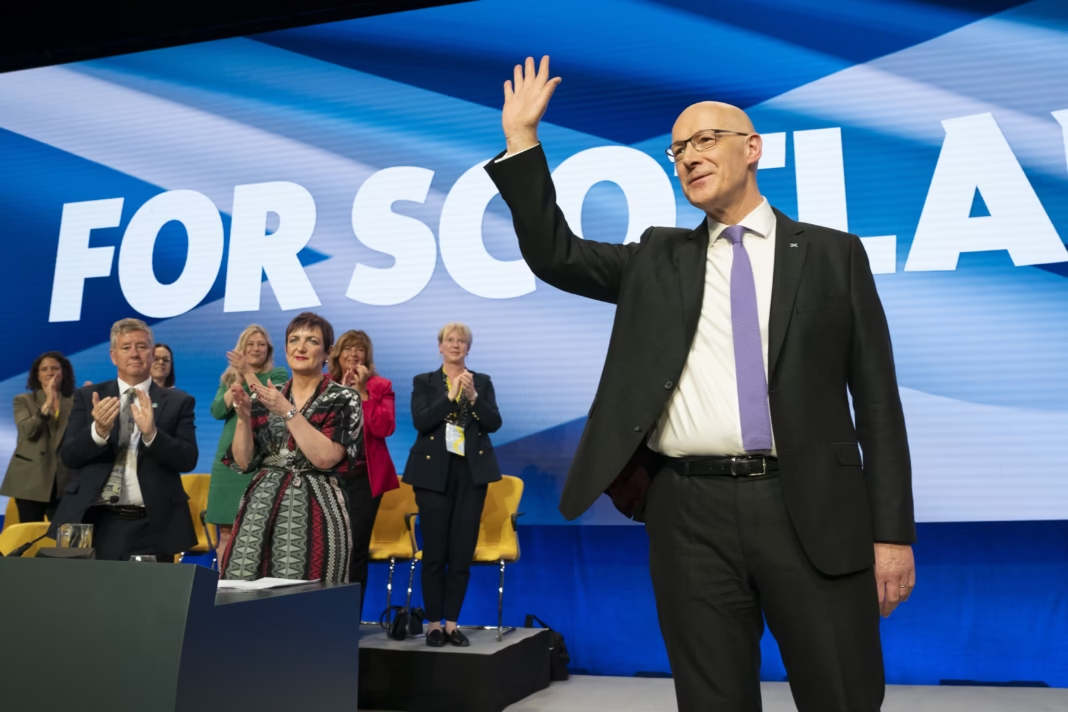
John Swinney insists an SNP majority for independence referendum is the only path to Scotland’s second vote on leaving the UK. The First Minister made this bold claim ahead of his meeting with US President Donald Trump. Swinney argues that only by winning 65 seats in 2026 can the SNP pressure Westminster into allowing another referendum. Currently, the SNP holds 60 seats in Holyrood. However, Swinney believes a stronger mandate will force the UK government’s hand. He emphasizes that independence remains his party’s top priority. Additionally, he claims a second vote would let Scotland control its energy wealth and reform welfare fairly.
Back in 2011, the SNP secured a majority, leading to the 2014 referendum. Swinney suggests history could repeat itself. He states no UK Prime Minister can ignore Scotland’s democratic will. Nevertheless, critics argue the political landscape has changed. Former SNP health secretary Alex Neil dismisses Swinney’s plan. He says the party has lost its reputation for good governance. Neil believes this strategy is more about saving the SNP than securing independence. Meanwhile, opposition parties accuse Swinney of divisive politics.
Scottish Labour’s deputy leader, Jackie Baillie, claims the SNP has “run out of ideas.” She highlights crises in healthcare and education as proof of poor governance. Baillie insists Swinney prioritizes party interests over Scotland’s needs. Similarly, the Scottish Conservatives attack Swinney’s focus on independence. Deputy leader Rachael Hamilton says Scots are tired of constitutional debates. She argues Swinney is only appealing to hardline nationalists to shore up support.
Polls suggest the SNP may struggle to gain a majority in 2026. Analysts say the party could even lose seats. Despite this, Swinney ties the SNP’s fate to independence. His strategy aims to unite pro-independence voters under the SNP banner. Yet, questions remain. What if the UK government rejects another referendum? Swinney has not clarified his next steps. For now, the SNP majority for independence referendum remains his central message. Whether voters agree will decide Scotland’s political future.
For more political updates, visit London Pulse News.