
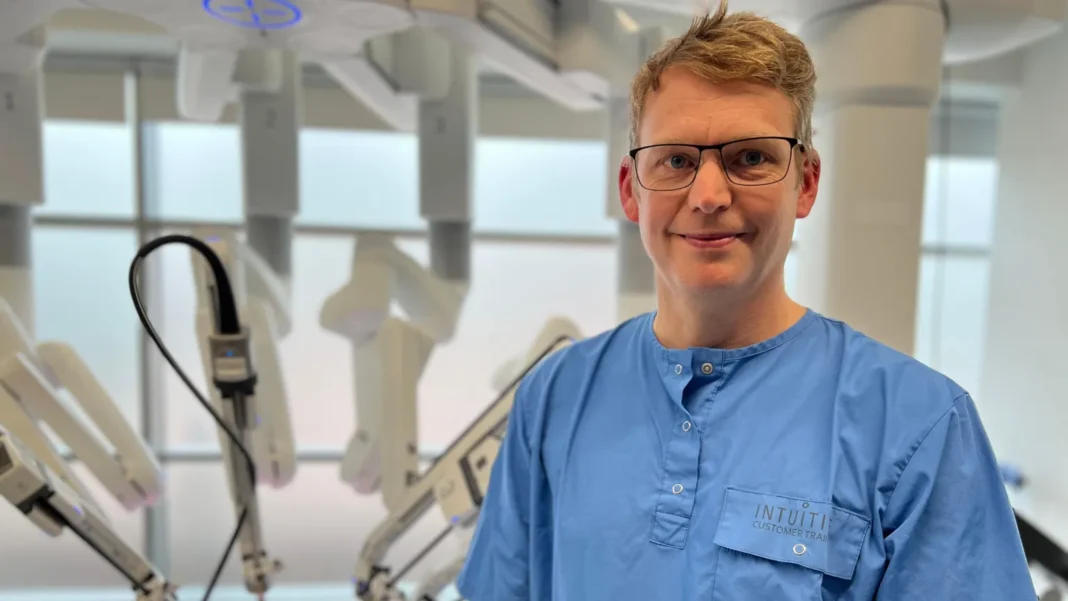
A major step forward for Robotic Surgery Training has arrived in the UK. The country’s largest training centre has officially opened in Winnersh, near Reading. Located just outside London, the facility will provide hands-on instruction for surgeons from around the world. It will help them master the da Vinci surgical system.
This state-of-the-art technology uses robotic arms to perform delicate operations under full human control. Importantly, although the machine assists the procedure, an experienced surgeon remains in command at all times. From a nearby console, surgeons view a high-definition 3D display and control the robot’s arms with precise finger movements. As a result, they can perform complex tasks with remarkable accuracy.
Consultant surgeon Gijs van Boxel from Queen Alexandra Hospital in Portsmouth explained that robotic-assisted surgery blends human skill with advanced precision. According to him, the system allows surgeons to operate with great accuracy. It reduces trauma for patients and shortens recovery times.
“This technology may look futuristic,” van Boxel said, “but it has evolved through years of innovation and refinement.” Each new version, he added, “has made surgery safer and more precise.”
Currently, more than 200 da Vinci systems operate in hospitals across the UK and Ireland. Moreover, surgeons have already used them in over 300,000 procedures. Consequently, the success of these operations continues to drive demand for Robotic Surgery Training.
To meet this need, the new Winnersh centre aims to become a global hub for surgical skill development. Recently, it hosted a session on metabolic surgery with visiting surgeons from France and other parts of Europe. During the training, participants practiced advanced techniques and shared experiences. In doing so, they reflected the collaborative spirit of modern medicine.
Looking ahead, NHS England has set ambitious goals for the next decade. Officials plan for robotic assistance in nine out of ten keyhole surgeries by 2035. Furthermore, they expect robotic systems to play a growing role in emergency operations as expertise expands.
Beyond technical benefits, advocates highlight the system’s role in improving outcomes and building surgical confidence. Indeed, enhanced visibility and steady control help surgeons handle complex procedures with greater ease and consistency.
Ultimately, the launch of this facility marks a major milestone in UK healthcare innovation. With global participation and advanced equipment, Robotic Surgery Training promises to redefine the future of surgery through precision, safety, and lifelong learning.
For more updates on this news, follow London Pulse News.