
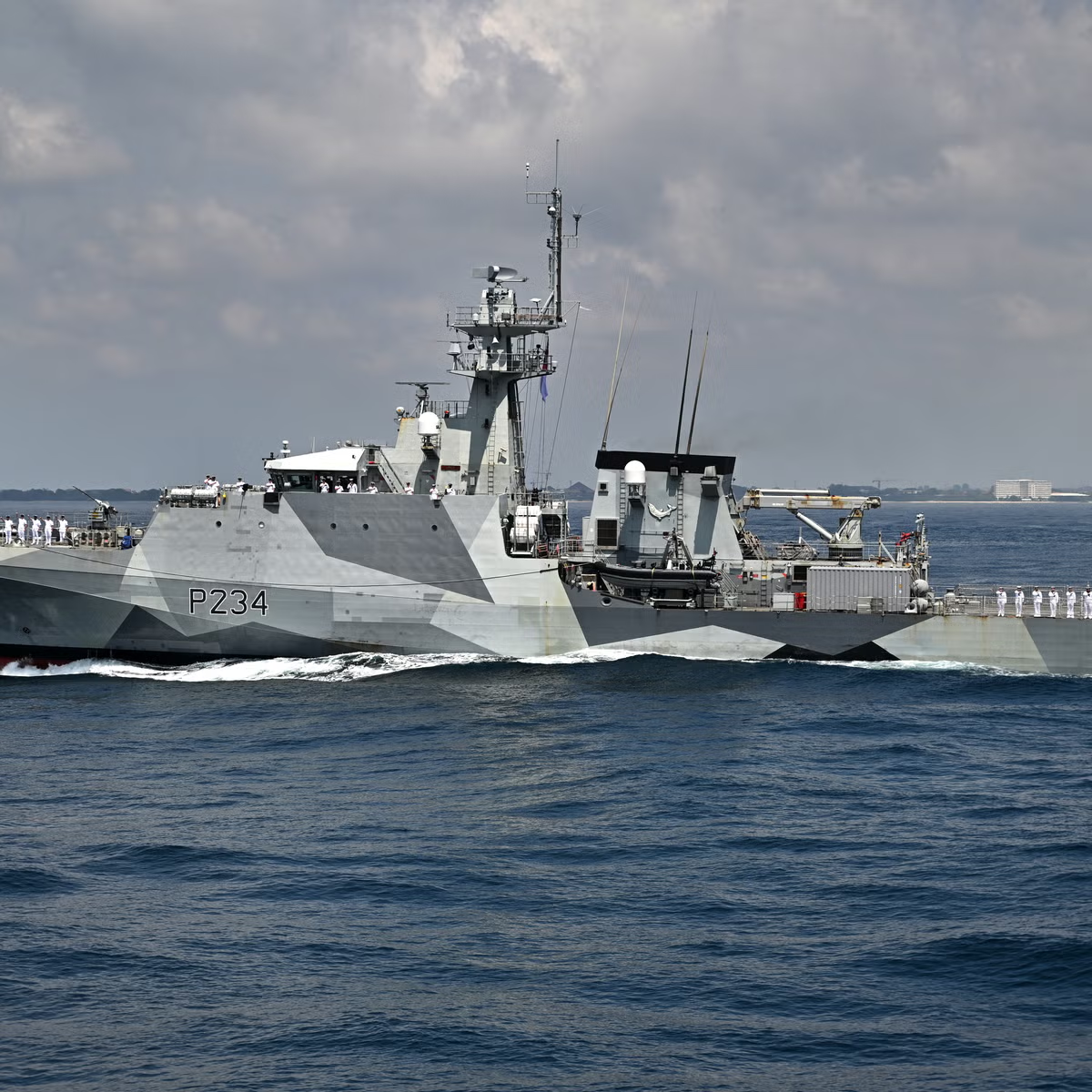
The naval patrol mission highlights growing tensions in the South China Sea. Recently, the United Kingdom sent a warship to assert navigation rights. The move reflects a wider strategy to support international maritime law.
The HMS Spey carried out the operation near the Spratly Islands. Officials confirmed the mission followed global legal standards. In particular, they referenced the United Nations Convention on the Law of the Sea. Moreover, defence leaders said the operation supports a stable maritime environment. They stressed that open sea lanes benefit global trade and security. Therefore, the UK continues to send vessels through contested waters.
HMS Spey completed similar operations across the region. For example, the ship sailed through the Taiwan Strait last year. That voyage marked a rare transit by the Royal Navy. As a result, it drew strong criticism from Chinese officials. In response, the People’s Liberation Army Eastern Theatre Command Navy accused the UK of raising tensions. Officials claimed the mission distorted international law. Furthermore, they warned that military forces would remain ready to respond.
Shortly after, HMS Spey joined HMAS Sydney for a joint operation. Together, they sailed near disputed islands in the region. Consequently, China again condemned the activity as destabilising. Meanwhile, diplomatic disagreements continue to shape the situation. Chinese representatives argue their claims rest on historical evidence. However, legal rulings challenge those claims.
In 2016, the Permanent Court of Arbitration issued a major decision. The court rejected China’s expansive maritime claims. Instead, it confirmed that international law governs the sea. Despite that ruling, China continues to assert control in the area. Its claims overlap with several Southeast Asian nations. For instance, Vietnam and the Philippines dispute parts of the same waters.
As tensions grow, naval patrol mission activity has increased across the region. Many countries now conduct similar operations to defend maritime rights. Therefore, the South China Sea remains a critical flashpoint. Additionally, frequent encounters between vessels raise the risk of incidents. Military ships and coast guards often operate in close proximity. As a result, even minor disputes could escalate quickly.
The UK insists its actions follow international law at all times. Officials say these missions aim to protect freedom of navigation. They also highlight the importance of global cooperation at sea. Ultimately, the naval patrol mission reflects wider geopolitical competition. Countries continue to balance legal claims with strategic interests. Consequently, the region remains under close international watch.
For more updates on this news, follow London Pulse News.