
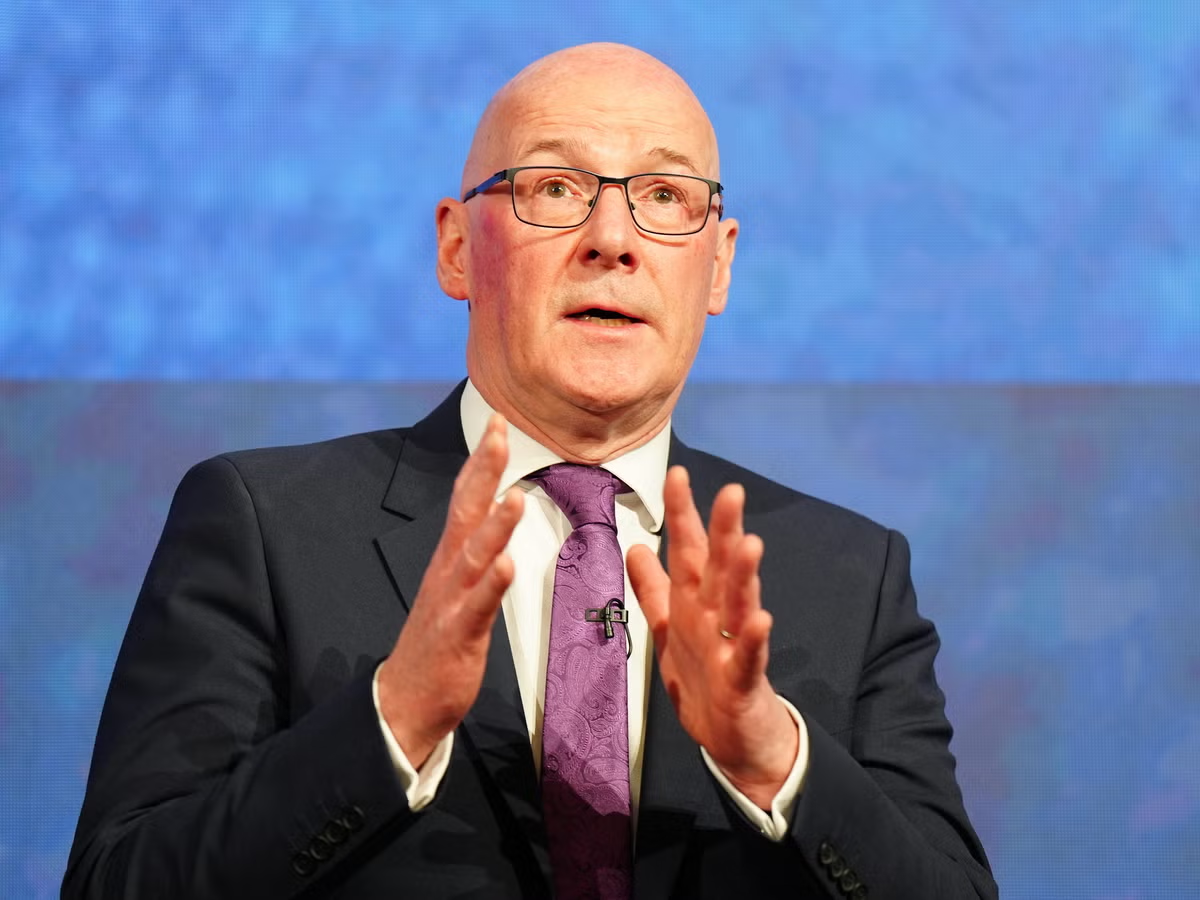
Swinney referendum push returned to the political spotlight after Scotland’s latest parliamentary election results. John Swinney confirmed plans for another independence referendum despite the SNP losing seats and falling short of a majority at Holyrood.
The Scottish First Minister renewed calls for a second independence vote only one day after the election. Furthermore, the SNP lost six seats and shed hundreds of thousands of votes compared with 2021. The SNP secured 58 seats in the Scottish Parliament. However, the party remained seven seats short of an outright majority. Meanwhile, tactical voting weakened nationalist support in several constituencies across Scotland.
Despite the losses, Swinney argued that pro-independence parties still secured a democratic mandate. In addition, he pointed to the combined total of SNP and Green MSPs in Holyrood. Swinney confirmed he still plans to request powers for another referendum from the UK Government. Moreover, he said he intends to move forward with parliamentary plans early in the new session.
The Scottish leader described the election outcome as evidence that support for independence remains strong. He also claimed Scotland deserves the right to choose its constitutional future. However, opposition parties quickly criticised the renewed independence campaign. Conservative leader Kemi Badenoch accused Swinney of ignoring voters’ priorities. Furthermore, she urged the SNP leader to focus on public services and economic pressures instead.
Badenoch argued that Scots rejected another referendum during the election campaign. She also claimed Scotland cannot afford more constitutional disputes during a cost-of-living crisis. Swinney referendum push also sparked criticism from Scottish Conservative leader Russell Findlay. He described the strategy as divisive and disconnected from public concerns.
Findlay said many voters want politicians to focus on healthcare, education, and the economy. Additionally, he accused the SNP Government of prioritising separation over governance. The election produced a fragmented Scottish Parliament. Labour and Reform UK each secured 17 seats, while the Greens won 15 seats. Meanwhile, the Conservatives gained 12 seats and the Liberal Democrats secured 10.
As a result, the SNP may need support from other parties to govern effectively. Swinney confirmed he plans discussions with most party leaders next week. However, he ruled out talks with Reform UK. The First Minister also highlighted cooperation with nationalist parties in Wales and Northern Ireland. Consequently, he suggested regional political alliances could gain greater influence across the UK.
Election figures showed declining SNP support compared with previous contests. The party’s constituency vote share dropped significantly from the last Holyrood election. Furthermore, turnout across Scotland also declined. Even so, Swinney insisted the nationalist movement remains politically strong. He argued that pro-independence parties continue holding a parliamentary majority for a fourth consecutive election cycle.
Swinney referendum push now sets up another constitutional battle with Westminster. Prime Minister Keir Starmer still opposes granting powers for a new referendum. Political analysts expect the issue to dominate Scottish politics in the coming months. Meanwhile, critics continue urging the Scottish Government to prioritise domestic challenges instead of constitutional change.
For more updates on this news, follow London Pulse News.