
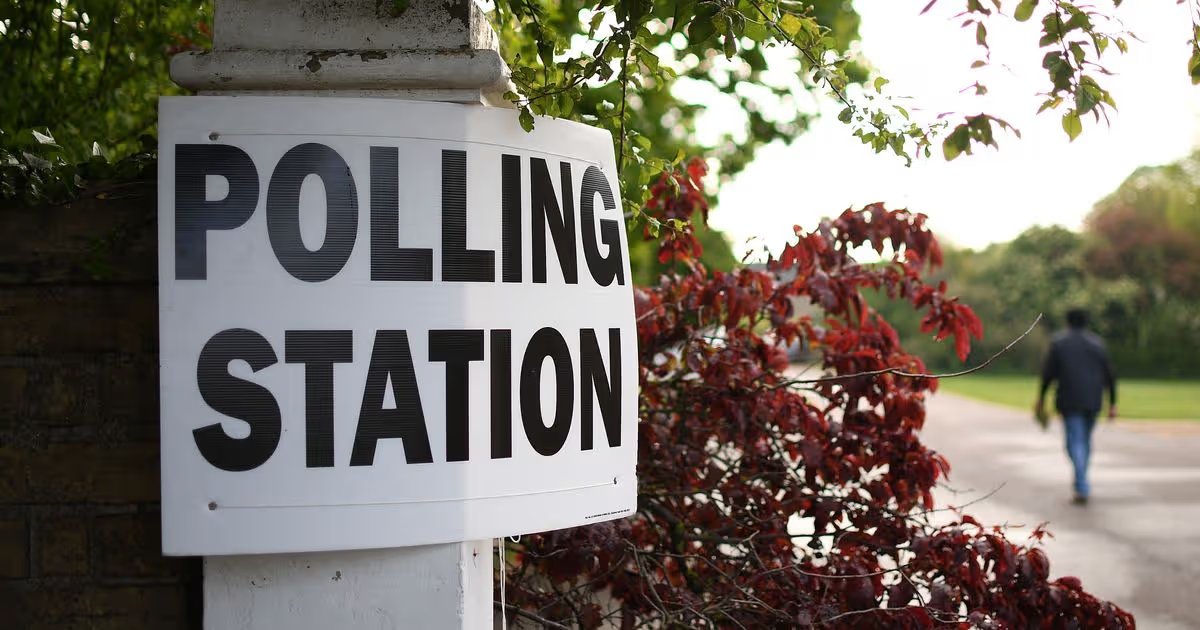
Election Day Britain began on Thursday as polling stations opened across England, Scotland, and Wales. Millions of voters headed to polling stations during the largest round of elections since the 2024 general election. Moreover, political parties across the country now face an important test of public support.
Voters arrived early to cast ballots in local councils and devolved parliaments. In England, nearly 25,000 candidates are competing for more than 5,000 council seats. Meanwhile, councils across 136 local authorities are holding elections throughout the day.
In Scotland, every seat in the Scottish Parliament is now being contested at Holyrood. Additionally, Welsh voters are selecting 96 representatives for the Senedd. Consequently, political leaders across Britain are closely watching turnout and early voting patterns.
Election Day Britain arrives during growing uncertainty around the country’s political future. Labour, Conservatives, Reform UK, and the Green Party all hope to secure important gains. However, opinion polls suggest many voters remain frustrated with mainstream politics.
Prime Minister Keir Starmer faces mounting political pressure ahead of the results. Critics continue questioning Labour’s economic performance and public messaging since entering government. Furthermore, rising living costs and energy prices remain major concerns for households.
Labour leaders attempted to frame the elections around stability and public services. Starmer urged voters to reject division and support long-term reform plans. Nevertheless, opposition parties continued criticising Labour over economic difficulties and political controversies.
The Conservative Party also entered the elections under serious pressure. Conservative leader Kemi Badenoch warned that Britain’s political environment is becoming increasingly fragmented. In addition, party officials fear losses in several long-held local strongholds.
Reform UK hopes to build stronger support in working-class communities across England. Nigel Farage claimed voters increasingly support parties promising dramatic political change. Consequently, Reform candidates expect strong performances in several contested regions.
Meanwhile, the Green Party focused heavily on younger and urban voters during campaigning. Party leaders promoted environmental policies and social justice priorities across major cities. As a result, Labour could lose support in some traditionally progressive areas.
Election Day Britain also carries major importance in Scotland and Wales. The Scottish National Party hopes to maintain control despite pressure from Labour and Reform UK. Meanwhile, Welsh elections may challenge Labour’s historic political dominance in the country.
Polling stations will remain open until 10pm across all voting regions. However, election officials do not expect rapid counting throughout the night. Only around one-third of local authorities plan overnight vote counting operations.
The first election results are expected shortly after midnight on Friday morning. Meanwhile, most declarations will arrive throughout Friday as counting continues nationwide. Political observers believe the outcomes could influence national politics for months ahead.
Election Day Britain therefore represents a major political moment for every major party. The results may reshape local government and strengthen emerging political movements across the United Kingdom.
For more updates on this news, follow London Pulse News.