
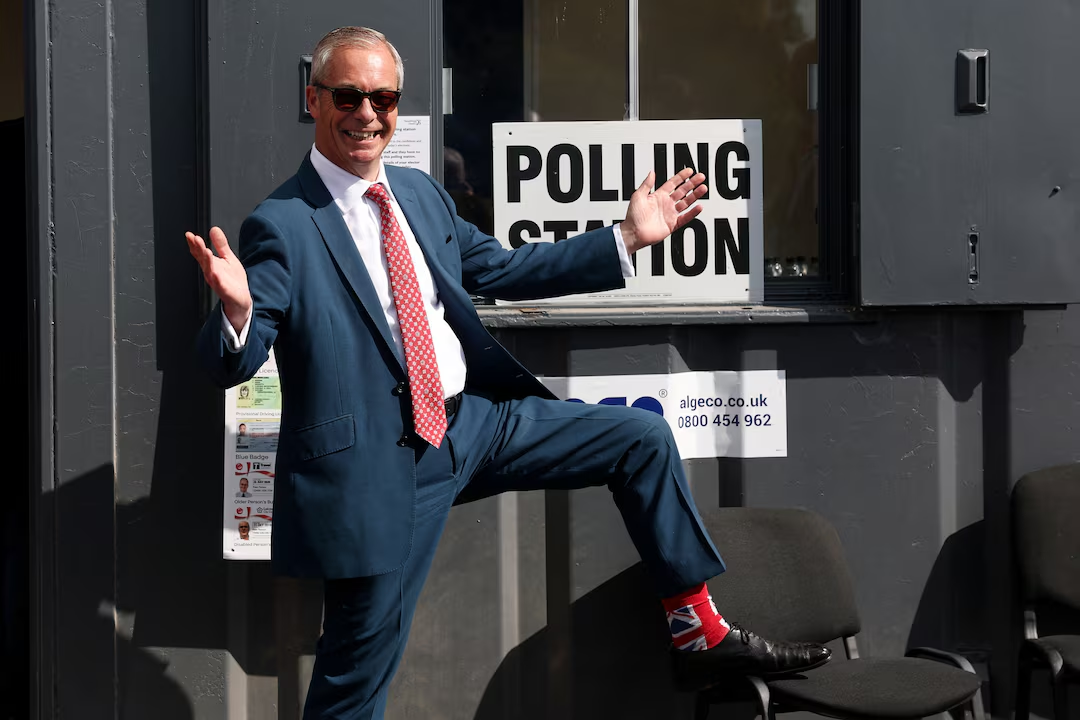
The Labour Crisis deepened after severe local election defeats shook Prime Minister Keir Starmer’s government. Meanwhile, Nigel Farage strengthened his position across several key regions. As a result, political pressure on Labour leaders increased rapidly.
Labour lost major council seats during the latest elections across England and Wales. Furthermore, Reform UK gained significant support from frustrated voters. The results also triggered new concerns about Labour’s national popularity.
Prime Minister Keir Starmer admitted the results damaged the party badly. However, he rejected calls demanding his resignation. Instead, he promised to continue leading Labour into the next general election.
Starmer accepted responsibility for the disappointing outcome. Nevertheless, he argued voters still wanted long-term economic improvements. Therefore, he insisted his government would continue working on reforms.
The Labour Crisis worsened after several senior Labour figures publicly criticized the prime minister. Former allies claimed Starmer no longer connected with voters across the country. Consequently, demands for leadership changes grew stronger inside the party.
Josh Simons, a former government minister and political strategist, urged Starmer to oversee a leadership transition. He argued Labour needed fresh direction before the next national election. Meanwhile, union leaders also pushed for major political changes.
Sharon Graham, leader of Unite, called for a clear departure timetable from the prime minister. Her comments reflected growing frustration among Labour supporters and trade unions. In addition, several Labour lawmakers privately discussed possible leadership challenges.
Nigel Farage emerged as one of the biggest winners from the elections. His Reform UK party secured major gains across local councils. Moreover, the party achieved victories in traditional Labour strongholds.
In Sunderland, Reform UK defeated Labour in a historic political upset. Labour lost control of most council seats in the city. Consequently, analysts described the result as a major warning sign for Starmer.
The elections also reshaped politics in Wales and Scotland. In Wales, Labour lost control of the Senedd after strong opposition campaigns. Meanwhile, Scotland’s ruling nationalist party maintained power once again.
Farage’s growing popularity sparked discussion about future national leadership. Political observers now view him as a serious contender in British politics. Therefore, Britain’s traditional two-party system faces increasing uncertainty.
In response to the election losses, Starmer appointed former Prime Minister Gordon Brown to a new international finance role. The government hoped the appointment would calm internal unrest. However, critics dismissed the move as outdated politics.
Several Labour lawmakers continued discussing leadership alternatives behind closed doors. Some members reportedly prepared efforts to trigger a formal leadership contest. Additionally, lawmakers explored support for future candidates.
Potential challengers include Health Secretary Wes Streeting and Greater Manchester Mayor Andy Burnham. However, neither politician officially launched a campaign. At the same time, political uncertainty continued growing inside Labour ranks.
The Labour Crisis now threatens Starmer’s long-term future as prime minister. Although he remains defiant, internal divisions continue damaging party unity. Therefore, many analysts expect further political turmoil in the coming months.
For more updates on this news, follow London Pulse News.