
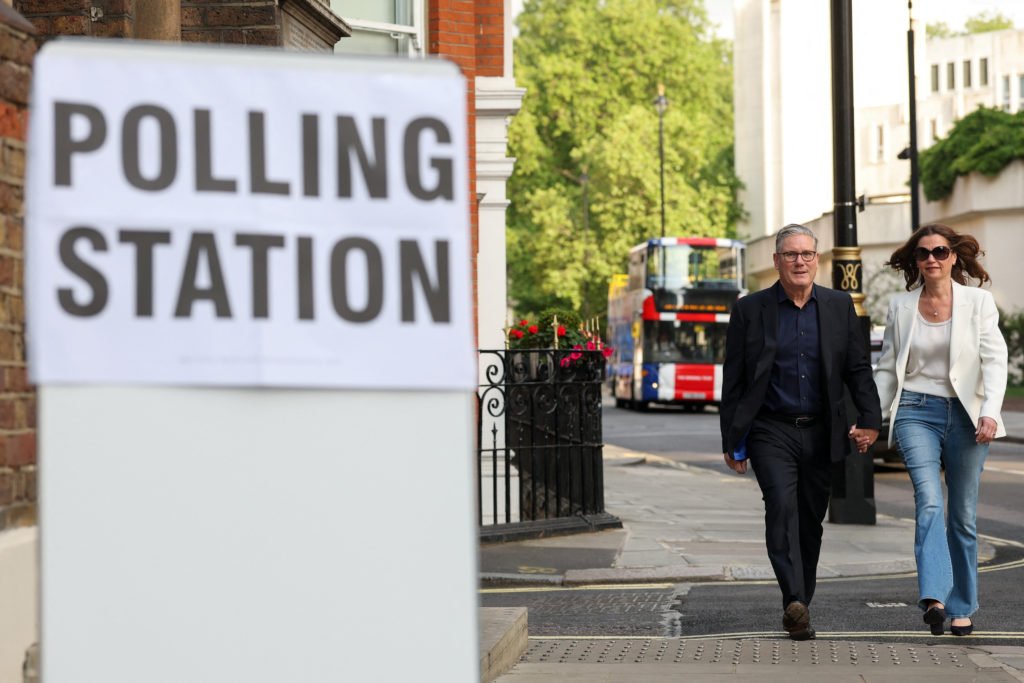
London election shift dominated the 2026 local results across the capital. London election shift also signalled major political changes in traditional Labour strongholds. Furthermore, voters delivered fragmented outcomes across many boroughs.
Labour suffered heavy losses across multiple councils in London. Meanwhile, both the Green Party and Reform UK made significant gains. As a result, political control in the capital shifted sharply. In Hackney, Zoë Garbett secured the mayoralty in a major upset. She criticised Labour strongly during her victory speech. In addition, she said voters demanded a clear alternative.
Elsewhere, Green Party influence expanded across several boroughs. Lewisham and Waltham Forest also moved under Green leadership. Consequently, the party strengthened its position in London politics. Zack Polanski celebrated the results and claimed traditional two-party politics is collapsing. Moreover, he argued voters now seek new political choices. Therefore, Green leaders framed the results as a turning point.
In contrast, Reform UK also achieved major breakthroughs. Nigel Farage announced that Havering had shifted under his party’s control. Additionally, Reform gained hundreds of council seats nationwide. Farage described Havering as “under new management.” Furthermore, his party continued building support in outer London areas. As a result, Reform UK emerged as a stronger local political force.
Labour, led nationally by Keir Starmer, retained control in some boroughs. However, it lost influence in several previously safe areas. Consequently, internal pressure on the party increased. Westminster City Council returned to Conservative control. In addition, the Conservatives held Kensington and Chelsea, Croydon, and Bexley. Therefore, the opposition maintained strength in key districts.
Kemi Badenoch also saw her party retain control in multiple councils. These included Hillingdon, Harrow, and Bromley. Meanwhile, Conservative gains offset some Labour losses. However, Labour still held several inner London councils. These included Camden, Islington, and Greenwich. Additionally, Ealing and Hounslow remained under Labour control.
Nevertheless, the overall picture showed fragmentation. Nine London councils ended with no overall control. This marked one of the highest figures in recent political history. Boroughs such as Barnet, Brent, and Enfield saw no clear majority. Similarly, Lambeth and Southwark also shifted into uncertain control. Consequently, coalition discussions are expected to increase.
Tower Hamlets stood out as a unique result. Aspire won the council outright with a majority. Therefore, it became the only borough with a single-party majority outside major national parties. The London election shift also highlighted rising youth and protest voting trends. Moreover, younger voters supported Greens in greater numbers. As a result, Labour lost ground in several urban areas.
Political analysts described the results as highly fragmented. They also noted that traditional party dominance is weakening. Therefore, future elections may produce even less predictable outcomes. Across the capital, voter sentiment reflected dissatisfaction with major parties. In addition, economic concerns influenced many local decisions. Consequently, council politics now appears more competitive than before.
The London election shift repeated itself across wards, boroughs, and mayoralties. Ultimately, it reshaped the capital’s political landscape in a significant way.
For more updates on this news, follow London Pulse News.