
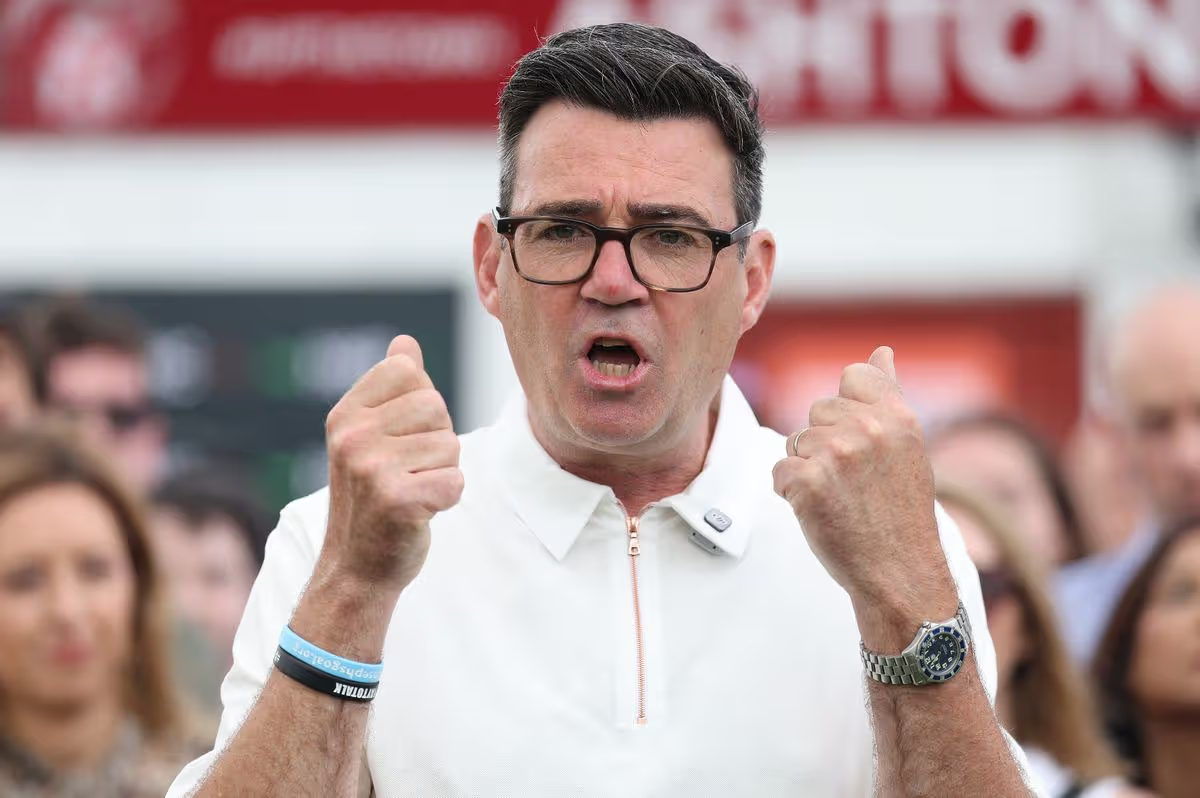
Labour leadership pressure has intensified as Andy Burnham prepares for key talks with Prime Minister Keir Starmer. Labour leadership pressure increased sharply following Burnham’s strong by-election victory in Makerfield. Furthermore, the result has fueled wider calls for change within the party.
Burnham is expected to arrive in Westminster ahead of being sworn in as an MP next week. He plans to meet with Starmer to discuss the future of the Labour leadership. Additionally, sources suggest he will push for a clear timetable regarding the Prime Minister’s departure.
The talks come at a critical moment for the party. Starmer has repeatedly insisted he will remain in office and resist any leadership challenge. However, growing unrest among Labour MPs has placed his position under renewed scrutiny.
The labour leadership pressure grew after Burnham secured a commanding win in the Makerfield by-election. Supporters view the victory as a sign of his growing national appeal. Consequently, some party members now see him as a strong alternative.
Several Labour backbenchers who previously backed Starmer have reportedly shifted their stance. This change reflects growing concern about the party’s future direction. Moreover, senior party figures have begun openly discussing leadership options.
Former cabinet members and party veterans have also weighed in on the debate. Some believe Starmer should step aside to protect party unity. Meanwhile, others argue an orderly transition would prevent deeper internal divisions.
Labour leadership pressure has also focused attention on other senior figures. Wes Streeting remains part of the wider leadership conversation. However, insiders suggest Burnham’s recent momentum has strengthened his position.
Sources close to Labour say many members now prefer change over maintaining the current status. They argue that prolonged uncertainty could weaken the party ahead of future elections. Therefore, the next few days could prove decisive.
Political commentators have suggested that Starmer could shape his legacy by stepping down voluntarily. They argue that an organised transition could preserve stability. In contrast, a contested leadership battle could damage party cohesion.
Burnham’s supporters believe his by-election victory demonstrates an ability to reconnect with voters. They also point to his strong public profile and regional leadership record. As a result, his return to Westminster has attracted significant attention.
At the same time, Starmer’s allies continue urging him to stay focused on governing. They stress that internal disputes could distract from major political priorities. Additionally, they argue leadership speculation risks undermining public confidence.
The labour leadership pressure now extends beyond Westminster. Party members and supporters across the country are closely watching the outcome of the expected talks. Meanwhile, Labour prepares for the upcoming Greater Manchester mayoral by-election.
That contest will take place next month, adding another layer of importance to Burnham’s political future. Therefore, his next moves could shape both local and national Labour politics.
The coming meeting between Burnham and Starmer may define the party’s immediate future. It could either lead to a managed transition or a deeper internal struggle. As a result, Labour leadership pressure remains at the centre of British politics.
For more updates on this news, follow London Pulse News.