
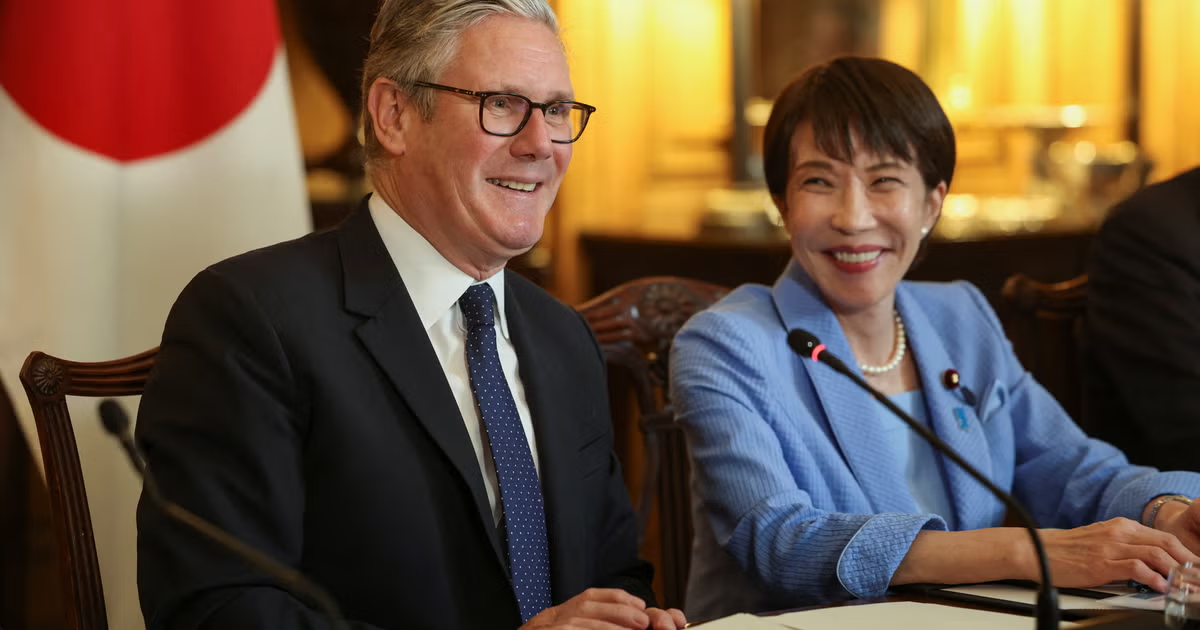
The UK Japan deal took centre stage as Prime Minister Sir Keir Starmer and Japanese Prime Minister Sanae Takaichi announced a major new partnership. The UK Japan deal includes investments worth up to £18 billion and aims to boost jobs, technology and defence cooperation. Leaders from both countries said the UK Japan deal marks the beginning of a new era in their relationship.
Sir Keir welcomed Ms Takaichi to Britain for talks ahead of the upcoming G7 summit. During their meeting, the two leaders outlined plans to strengthen economic and strategic ties while encouraging long-term investment.
The agreement includes more than £9 billion in inward investment across infrastructure and financial services. In addition, it could unlock up to £9 billion for offshore wind projects. Government officials believe the package will support tens of thousands of jobs across the UK and help drive economic growth.
Alongside the investment package, Britain and Japan confirmed a landmark technology partnership. The agreement links British expertise in research, software and chip design with Japan’s advanced manufacturing capabilities.
For the first time, the UK Semiconductor Centre will work directly with Japanese semiconductor company Rapidus. The partnership will give British firms a clearer route to manufacture advanced microchips using Japanese facilities and expertise.
Rapidus has received major backing from the Japanese government, with investment worth around £11.6 billion. British ministers believe the collaboration will strengthen supply chains and improve the resilience of the UK semiconductor industry.
Sir Keir said the partnership combines British innovation with Japanese manufacturing excellence. He added that both countries can create new opportunities by working together on research, development and emerging technologies.
However, the agreement reaches beyond business and technology. The two leaders also highlighted growing cooperation in defence and security. Sir Keir described the UK-Japan Defence Capability and Industrial Council as an important part of the relationship.
He also pointed to the Global Combat Air Programme, known as GCAP, as a central project linking the two nations. The fighter jet programme brings together the UK, Japan and Italy to develop a next-generation combat aircraft.
Ms Takaichi said the partnership reflects a shared understanding of international security challenges. She described Britain and Japan as like-minded countries that work together to support peace and stability around the world.
Furthermore, she said the relationship has grown so strong that it could be viewed as one between “quasi-allies”. She stressed that closer defence cooperation will help both countries respond to an increasingly uncertain global environment.
During their talks, the leaders also discussed the conflict in the Middle East, Russia’s war in Ukraine and security across the Indo-Pacific region. They underlined the importance of protecting global supply chains and supporting free trade.
Government officials also highlighted the benefits for British industries. The technology partnership aims to attract fresh investment for sectors such as quantum computing, advanced semiconductors and clean energy innovation.
Technology minister Kanishka Narayan said Japan remains one of Britain’s closest technology partners. He added that the agreement will give UK innovators better access to investment, manufacturing networks and overseas markets.
At the same time, Japanese businesses will gain opportunities to expand in Britain by taking advantage of the country’s research base, software expertise and innovation-friendly environment.
Both governments believe the new package will deepen economic ties while supporting growth and job creation. As a result, the agreement could become one of the most significant UK-Japan partnerships in recent years.
For more updates on this news, follow London Pulse News.