
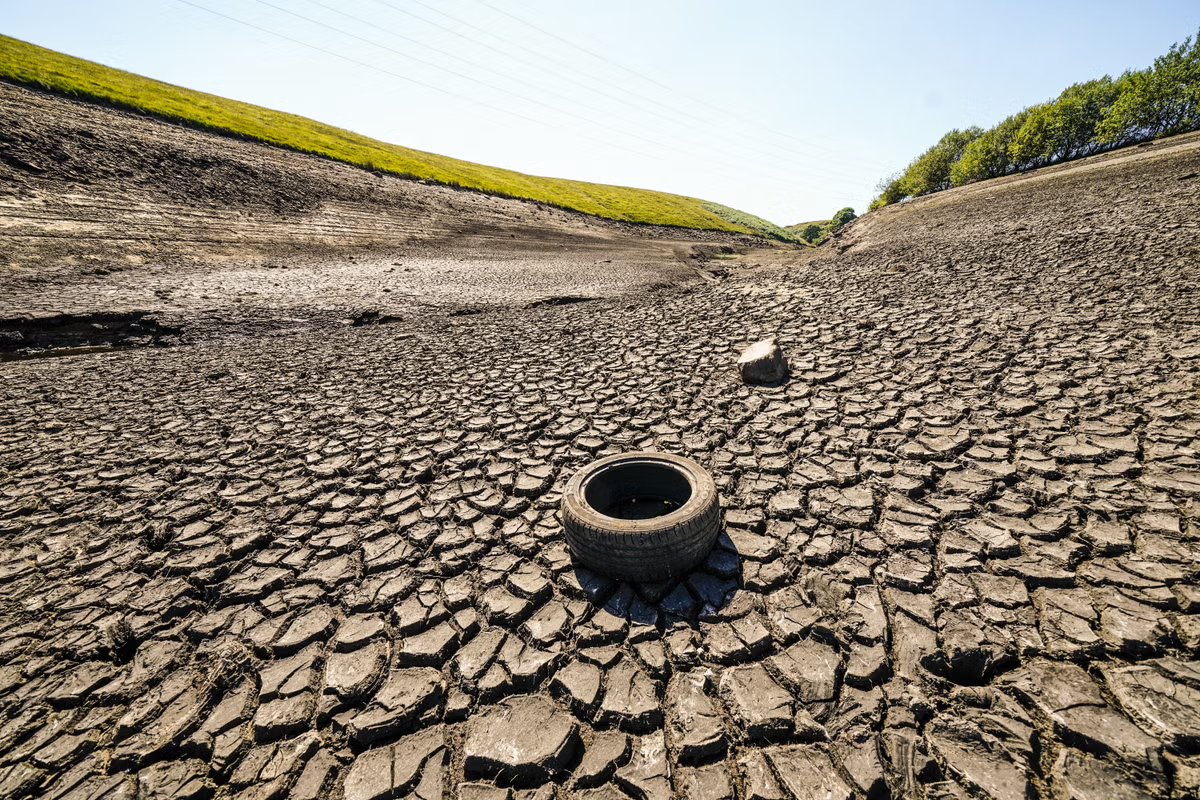
Food import risks are increasing as climate change and extreme heat place growing pressure on global food production. Experts warn that a potential El Niño event this summer could worsen conditions for farmers in key supplier nations. As a result, several food products imported into the UK may face supply challenges and higher prices.
According to new research from the Energy and Climate Intelligence Unit, agricultural workers in developing countries are struggling with rising heat stress. Furthermore, many of these nations produce essential goods found on UK supermarket shelves. Consequently, experts fear that worsening weather conditions could disrupt harvests and reduce output.
The report found that developing nations supplied around 13% of UK food imports in 2025. Together, those imports carried a value of £8.9 billion. Meanwhile, the 15 largest suppliers from this group accounted for £7.4 billion worth of imports.
Several major products could face increased pressure. For example, India supplies much of the rice imported into the UK. Likewise, South Africa, Peru, and Egypt export large quantities of grapes, lemons, oranges, and nectarines. In addition, Vietnam and Brazil remain important coffee suppliers. Côte d’Ivoire and Ghana provide cocoa beans, while Kenya exports tea. Colombia and Ecuador also play a key role in banana production.
Food import risks could grow further if temperatures continue to rise. Researchers found that farmers in the 15 supplier countries lost 216 billion potential work hours in 2024 because of heat stress. That figure equals nearly 49 working days per worker each year. Moreover, lost work hours continue to increase annually.
The report also cited global findings showing that heat exposure caused the loss of 640 billion potential work hours in 2024. Notably, that figure exceeded previous records. It also stood almost 98% higher than levels recorded during the 1990s.
Agricultural workers face the greatest impact from extreme heat. In fact, they accounted for nearly two-thirds of all work hours lost worldwide. In poorer nations, that figure rose to more than three-quarters.
Meanwhile, experts warn that an El Niño weather pattern could intensify the situation. United Nations scientists estimate an 80% chance of such an event developing this summer. Therefore, some researchers believe 2027 could become the hottest year on record.
Shamika Mone, a rice farmer in India and president of the Intercontinental Network of Organic Farmers, warned that hotter and drier conditions could damage harvests. Additionally, she called for greater climate finance and stronger support for small-scale farmers. She also promoted nature-friendly farming methods to help protect crops and reduce temperatures on farms.
Food import risks have already affected British consumers. Previous research found that climate-related impacts added around £360 a year to the average UK household food bill. At the same time, UK farmers have experienced several poor harvests in recent years.
Gareth Redmond-King, head of international programmes at the ECIU, said climate change threatens both crops and the workers who produce them. Therefore, he urged governments to support more resilient farming systems. He argued that stronger adaptation measures are essential for future food security.
The ECIU also warned against reducing climate finance and overseas aid. According to the group, vulnerable farming communities need additional support to adapt to rising temperatures. Otherwise, global food production could suffer further disruption.
Meanwhile, the UK government said it remains committed to protecting food security. Officials pointed to investments in agricultural technology, climate-resilient crops, and new reservoirs. They argued that these measures will help safeguard future food production and strengthen resilience across the sector.
For more updates on this news, follow London Pulse news.