
The NATO missile programme took centre stage as the United Kingdom unveiled a major defence initiative alongside 12 allied nations. The NATO missile programme aims to strengthen long-range strike capabilities while reinforcing the alliance’s collective security. Meanwhile, leaders described the project as a significant investment in Europe’s future defence.
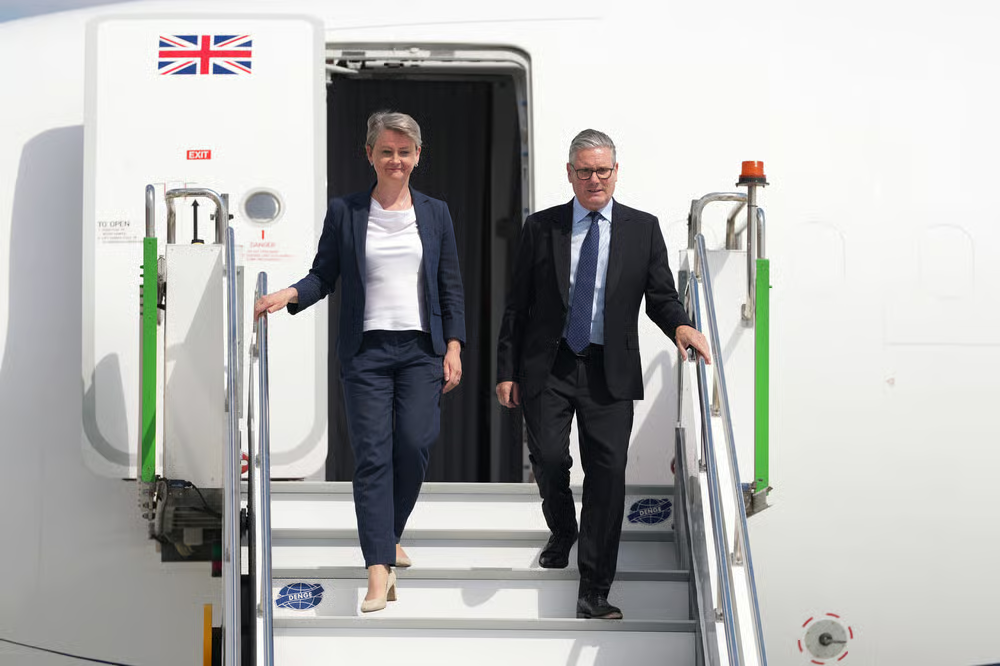
The announcement came during the NATO summit in Ankara on Wednesday. British Prime Minister Keir Starmer met with allied leaders to outline the new initiative and discuss future defence cooperation. The project, known as Deep Precision Strike, will receive more than £37 billion in combined investment over the next decade. Participating countries intend to strengthen NATO’s long-range military capabilities through advanced missile technology.
The proposed weapon system will strike targets nearly 200 miles away with high precision. Furthermore, developers believe future versions could reach distances of up to 1,250 miles.
Although the programme remains in development, officials expect the system to enter service during the 2030s. Until then, participating nations will continue research, testing and industrial collaboration. Keir Starmer described the programme as an important step toward strengthening European security. He said the initiative would help protect NATO members while improving defence cooperation across the alliance.
Additionally, the project reflects growing efforts to increase Europe’s military readiness. Allied governments continue expanding defence spending as regional security challenges evolve. The announcement also arrives as NATO members work toward higher defence investment targets. Most allies previously agreed to spend five percent of gross domestic product on defence and security by 2035.
However, the British government has not yet outlined a detailed timetable for reaching that goal. Even so, ministers have already committed £300 billion through the country’s Defence Investment Plan by 2030. During the summit, British officials highlighted growing security concerns across Europe. They pointed to increased Russian military activity near NATO territory over recent years.
Government figures stated that NATO aircraft intercepted Russian planes approaching allied airspace more than 700 times. Moreover, officials reported a sharp rise in Russian military operations near British waters. Foreign Secretary Yvette Cooper said the new missile capability would strengthen NATO’s ability to target military infrastructure during future conflicts. She added that the programme would also reinforce deterrence against potential aggression.
Furthermore, British officials stressed that the project supports NATO’s long-term defence strategy rather than immediate military operations. The summit also featured an address from Ukrainian President Volodymyr Zelensky. He urged allied governments to speed up deliveries of additional air defence systems as Russian attacks continue.
British officials noted that Ukrainian strikes against military infrastructure inside Russia have disrupted logistics and affected fuel supplies in recent months. Meanwhile, the Kremlin responded cautiously to the announcement. Russian officials said they would closely monitor developments surrounding the new defence programme.
A Kremlin spokesperson argued that additional Western weapons would not alter Russia’s military objectives. Nevertheless, Moscow stated that it still preferred a political and diplomatic settlement. The NATO missile programme represents one of the alliance’s largest joint defence projects in recent years. As development continues, participating nations expect the initiative to strengthen collective security while preparing NATO for future challenges.
For more updates on this news, follow London Pulse News.