
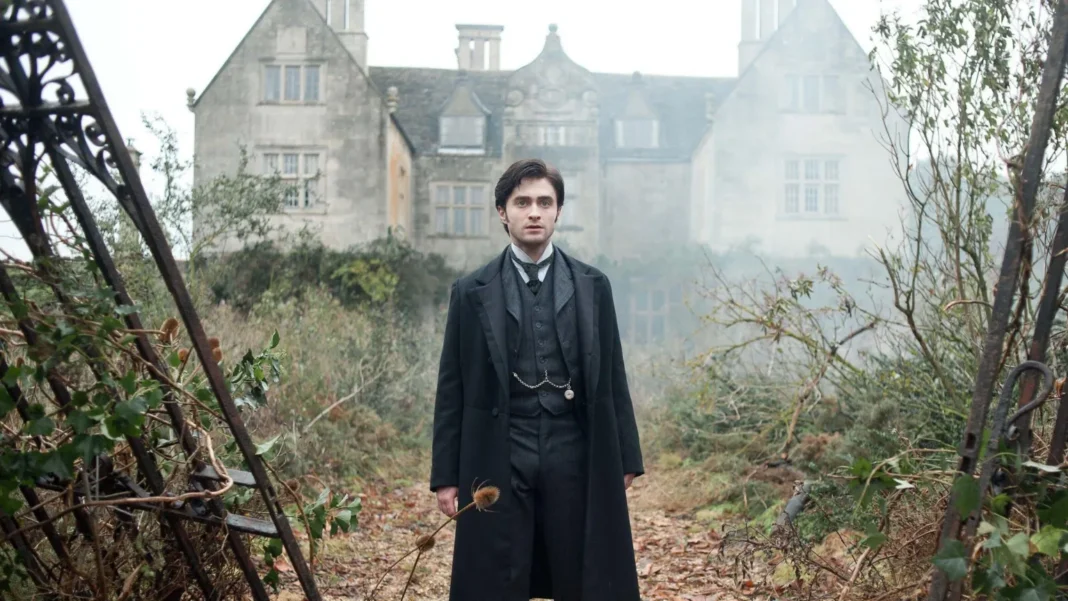
This Halloween, historic horror locations across England are drawing attention for their spooky appearances in famous films. Historic buildings and landscapes give horror films an unsettling atmosphere, adding authenticity and fear.
Charles O’Brien, Historic England’s listing and architectural research director, explained that familiar buildings can become haunting on screen. He said they provide an essential ingredient for making audiences feel fear.
Cotterstock Hall in Northamptonshire is a Georgian mansion that appears in the 2012 film adaptation of Susan Hill’s The Woman in Black. In the movie, filmmakers made the building look decayed, overgrown, and eerie. O’Brien said the production emphasized a sense of rottenness in the architecture. The hall remains one of England’s Grade I listed buildings, meaning it is of exceptional interest.
Another striking historic horror location is Lindisfarne Castle on Northumberland’s Holy Island, seen in Danny Boyle’s 28 Years Later. Laura Knowles, the castle’s visitor operations manager, recalled the eerie atmosphere during filming. She said the wind howling through chimneys and echoing corridors made it feel particularly spooky. Some visitors even report seeing ghostly figures or hearing strange sounds at night.
Berkshire’s Oakley Court is another notable site. The gothic building, with its distinctive octagonal tower, featured in multiple Hammer Horror productions, including The Curse of Frankenstein and The Brides of Dracula. The site remains one of the most recognizable historic horror locations in Britain.
Cornwall’s Headland Hotel served as the setting for the 1990 adaptation of Roald Dahl’s The Witches. O’Brien noted that the building’s architecture gives a subtle, sinister character to the story, turning a seemingly ordinary resort into a frightening place.
Guildford Cathedral also appears in the original 1976 film, The Omen. The cathedral adds tension to a scene exploring whether the young Damien could be the Antichrist. Other historic horror locations include Heatherden Hall, Trafalgar Square, and various churches used in Witchfinder General and Hammer House of Horror productions.
O’Brien emphasized that despite the rise of AI and CGI, authentic historic settings remain invaluable for filmmaking. He said audiences appreciate the realism and atmosphere that real buildings provide. Historic England hopes that filmmakers continue to feature England’s heritage in future projects.
This Halloween, Historic England encourages the public to share their own experiences of spooky buildings. Contributions to the Missing Pieces Project will help document England’s nationally protected historic sites, preserving stories and memories for future generations.
Historic horror locations combine history and cinema, giving audiences chills while highlighting England’s unique architectural legacy. These sites continue to inspire filmmakers and thrill viewers year after year.
For more updates on this story, follow London Pulse News.