
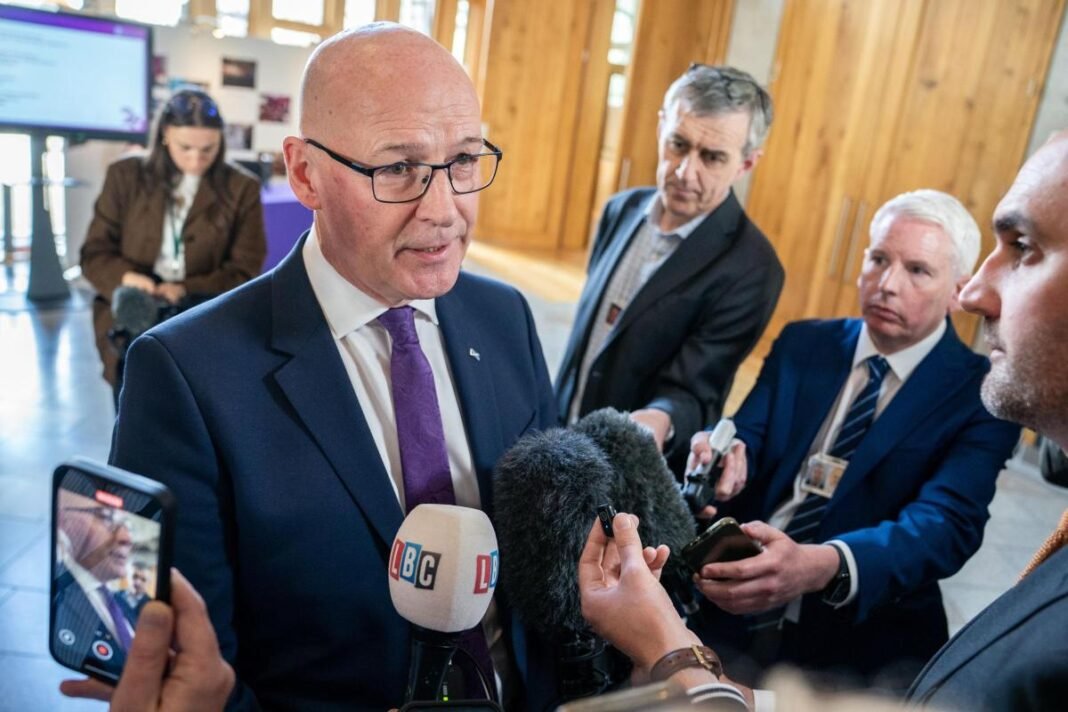
Murrell inquiry debate intensified after First Minister John Swinney refused to say whether he would cooperate with a future parliamentary investigation. His comments came as politicians continued discussing whether a formal review should examine the fallout from the Peter Murrell embezzlement case.
Speaking to reporters, Swinney stopped short of making any commitment. Instead, he said officials would wait and see what happens before deciding how to respond. His remarks followed a private meeting where lawmakers discussed possible next steps.
The issue centres on former SNP chief executive Peter Murrell, who admitted embezzling more than £400,000 from the party over 12 years. The court will sentence Murrell later this month.
Lawmakers continue to debate whether a new investigation should take place. Some political figures believe the Scottish Parliament should lead the process. Others support a joint review involving both Holyrood and Westminster. If those plans fail, a Westminster committee could launch its own inquiry.
Any future investigation could examine how the party handled public money. It could also review financial practices involving parliamentary funding and VAT claims. In addition, investigators may consider wider questions about oversight and accountability.
However, Swinney argued that another inquiry would serve no useful purpose. He insisted the issues involved the SNP’s internal governance. He also claimed the party had already resolved those concerns.
The First Minister questioned whether rival political parties should investigate another party’s internal affairs. He warned that such a move could create a difficult precedent for future parliamentary business.
His spokesperson repeated that position and declined to confirm whether Swinney would cooperate. The spokesperson said the government would consider its response after any final decision.
Furthermore, SNP representatives criticised the proposal. They argued that parliamentary committees could undermine public confidence by examining another party’s internal operations. They also claimed previous investigations had already established the facts.
Party officials pointed to the lengthy police investigation that led to Murrell’s guilty plea. They argued that no future inquiry could match the level of scrutiny already applied during that process.
Meanwhile, opposition parties continue to push for further examination of the scandal. They argue that important questions remain unanswered about governance, transparency, and financial oversight. They also believe the public deserves greater reassurance over how political organisations manage money.
Lawmakers will bring a motion calling for a formal inquiry before the Scottish Parliament. However, government supporters will likely vote against the proposal.
The Scottish Greens instead want an independent review covering the finances of all political parties. Supporters say a broader approach would strengthen trust across the political system rather than focusing on one organisation.
Murrell inquiry discussions now form part of a wider debate about transparency and accountability in public life. As lawmakers prepare for a key vote, attention now turns to whether political leaders will support a new investigation or argue that earlier inquiries provided enough answers.
For now, Swinney has left one major question unresolved. He has not confirmed whether he would cooperate if a Murrell inquiry moves forward.
For more updates on this news, follow London Pulse News.