
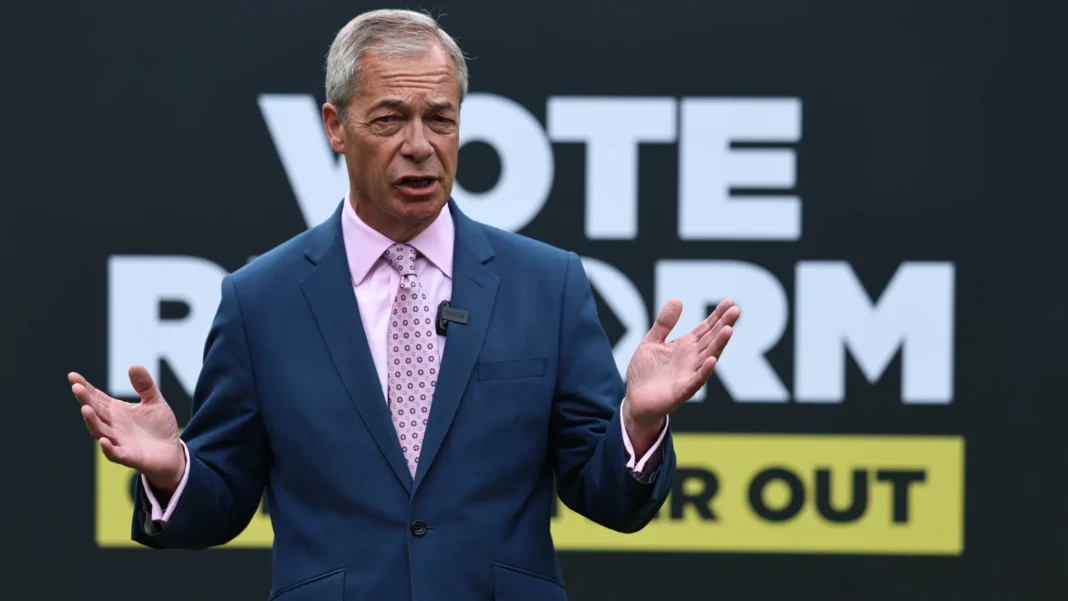
Reform union backlash intensified after Nigel Farage called on Britain’s trade unions to break away from Labour and consider affiliating with Reform UK. However, union leaders quickly dismissed the proposal and accused the party of promoting policies that would weaken workers’ rights.
Farage made the appeal during a recent interview, where he invited unions to engage with Reform UK and even suggested that one organisation could be close to building a relationship with the party. Shortly afterwards, he reinforced the message on social media, declaring that Reform UK had become “the party of workers.”
However, the response from the trade union movement was swift and highly critical. Several senior figures rejected the suggestion outright and argued that Reform UK’s political agenda conflicts with the interests of employees across the country.
The Trades Union Congress (TUC) strongly criticised the proposal. General Secretary Paul Nowak said Reform UK could not claim to represent workers while backing policies that unions believe would reduce workplace protections. He argued that proposals to remove employment safeguards would leave many people with fewer rights and less security at work.
Furthermore, Nowak claimed the party’s wider economic approach favoured wealthy interests over ordinary employees. He also accused Reform UK of attempting to rebrand itself without addressing what he described as anti-worker positions.
Reform union backlash also spread to individual trade unions. Community Union Assistant General Secretary Alasdair McDiarmid dismissed Farage’s comments as unrealistic. He argued that Reform UK had consistently opposed measures designed to strengthen employee protections.
McDiarmid pointed specifically to the Employment Rights Bill, which aims to improve workplace standards and strengthen legal protections for workers. He said Labour had historically championed working people and highlighted the party’s long-standing relationship with the trade union movement.
He also argued that workers would look beyond campaign slogans and judge political parties by their voting records and policy positions.
Meanwhile, Unite General Secretary Sharon Graham also questioned Farage’s attempt to position Reform UK as an ally of workers. She said many politicians had made similar claims over the years but insisted that actions matter more than rhetoric.
Graham pointed to Reform UK’s stance on employment legislation, healthcare policy, and public sector pensions. In her view, those positions do not align with the priorities of working families or organised labour.
The debate comes as Reform UK seeks to broaden its support base ahead of future elections. The party has increasingly focused on attracting voters from traditional Labour strongholds, particularly in working-class communities.
Despite that strategy, the latest Reform union backlash suggests the country’s major trade unions remain firmly opposed to the idea of building formal ties with Farage’s party. Union leaders continue to argue that protecting workers’ rights and public services remains their priority, while critics insist Reform UK’s policies would move the country in the opposite direction.
Farage’s invitation appears unlikely to gain support from the organisations he hopes to win over. Instead, it has prompted a united response from union leaders determined to defend their long-standing political and workplace commitments.
For more updates on this news, follow London Pulse News.