
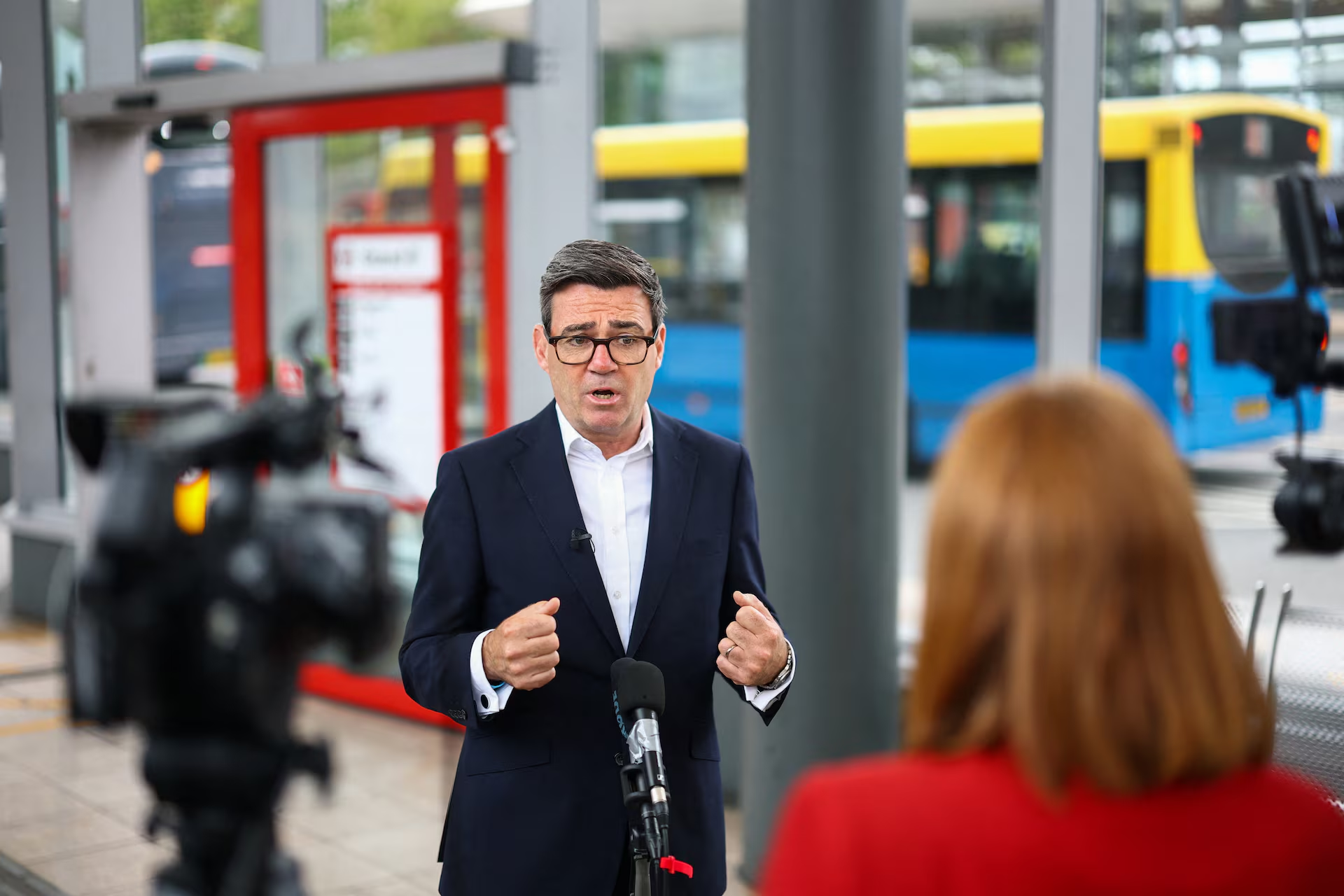
Growth strategy could move from Whitehall to Manchester under plans outlined by Prime Minister Andy Burnham.
The Prime Minister wants No 10 North to take greater responsibility for driving economic growth across the UK. The Manchester-based operation could assume responsibilities traditionally handled by the Treasury. Burnham described the proposal as a major transfer of power away from London.
The Prime Minister argued that the Treasury currently faces two competing priorities. The department must control public finances while also supporting economic growth. According to Burnham, balancing those responsibilities can sometimes weaken the focus on expanding the economy.
Burnham believes No 10 North can place greater emphasis on removing barriers to investment. He also wants the Manchester office to become increasingly important within his government. The Prime Minister said its significance would become clearer as ministers develop their economic plans.
He also confirmed that Chancellor John Healey supports the proposed changes. Burnham rejected suggestions that No 10 North represents merely a symbolic regional office. Instead, he described the initiative as a significant redistribution of political influence.
The Prime Minister argued that Britain has struggled to move economic decision-making away from the capital. He believes Manchester can provide a stronger base for coordinating economic development. The proposal also forms part of Burnham’s wider approach to regional devolution.
His government has placed local decision-making and community empowerment at the centre of its political agenda. Burnham wants regions to gain greater influence over decisions affecting their economies. He also wants government departments to respond more effectively to local opportunities.
By placing the growth mission closer to regional economies, Burnham hopes to identify problems more quickly. The approach could also give ministers greater flexibility when dealing with infrastructure and investment barriers.
Burnham said No 10 North would have greater power to address blockages within Whitehall. Those obstacles could affect major development projects, infrastructure plans and regional investment. The proposed changes could therefore give Manchester a larger role in national economic planning.
However, the Treasury would not lose responsibility for managing public finances. The department would continue overseeing government spending and wider financial management. Instead, the proposed arrangement would separate those duties from the government’s central growth mission.
Housing Secretary Angela Rayner has defended the plan amid questions about its impact on the Treasury. She rejected suggestions that the changes would weaken Healey’s position as Chancellor. Rayner said Healey continues working closely with Burnham and other senior ministers.
She also highlighted the government’s commitment to devolution and community empowerment. According to Rayner, ministers want local communities to have a stronger role in shaping decisions. The Manchester initiative therefore forms part of a broader effort to shift power beyond London.
Burnham has repeatedly argued that economic opportunities should reach regions across the country. Manchester could now become a key centre for coordinating that approach. The move also gives the Prime Minister an opportunity to demonstrate his commitment to regional government.
Nevertheless, the proposal could face challenges as ministers divide responsibilities between No 10 North and Whitehall departments. Officials will need to establish clear lines of authority between the new operation and existing departments. They must also ensure that regional decision-making supports wider national economic priorities.
Businesses and local leaders will likely watch closely as ministers develop the new arrangements. The success of the plan will depend on whether it can accelerate investment and remove administrative delays. It will also depend on whether greater regional influence produces measurable economic benefits.
For Burnham, the proposal represents more than a change to government organisation. It signals an attempt to reshape how economic decisions get made across Britain. The Prime Minister wants Manchester to play a much larger role in the national economy.
At the same time, he aims to reduce Britain’s reliance on traditional Whitehall decision-making. The government’s approach could therefore change the relationship between London and regional economies. Growth strategy will remain central to that effort as ministers develop the new structure.
If successful, the move could give regions greater influence over economic policy. It could also establish Manchester as an important centre for national economic decision-making. For now, Burnham’s plans signal a clear ambition to move economic power beyond Whitehall.
The coming months will show how much responsibility No 10 North ultimately receives. They will also reveal whether Manchester can become a genuine centre for Britain’s growth agenda.
For more updates on this news, follow London Pulse News.