
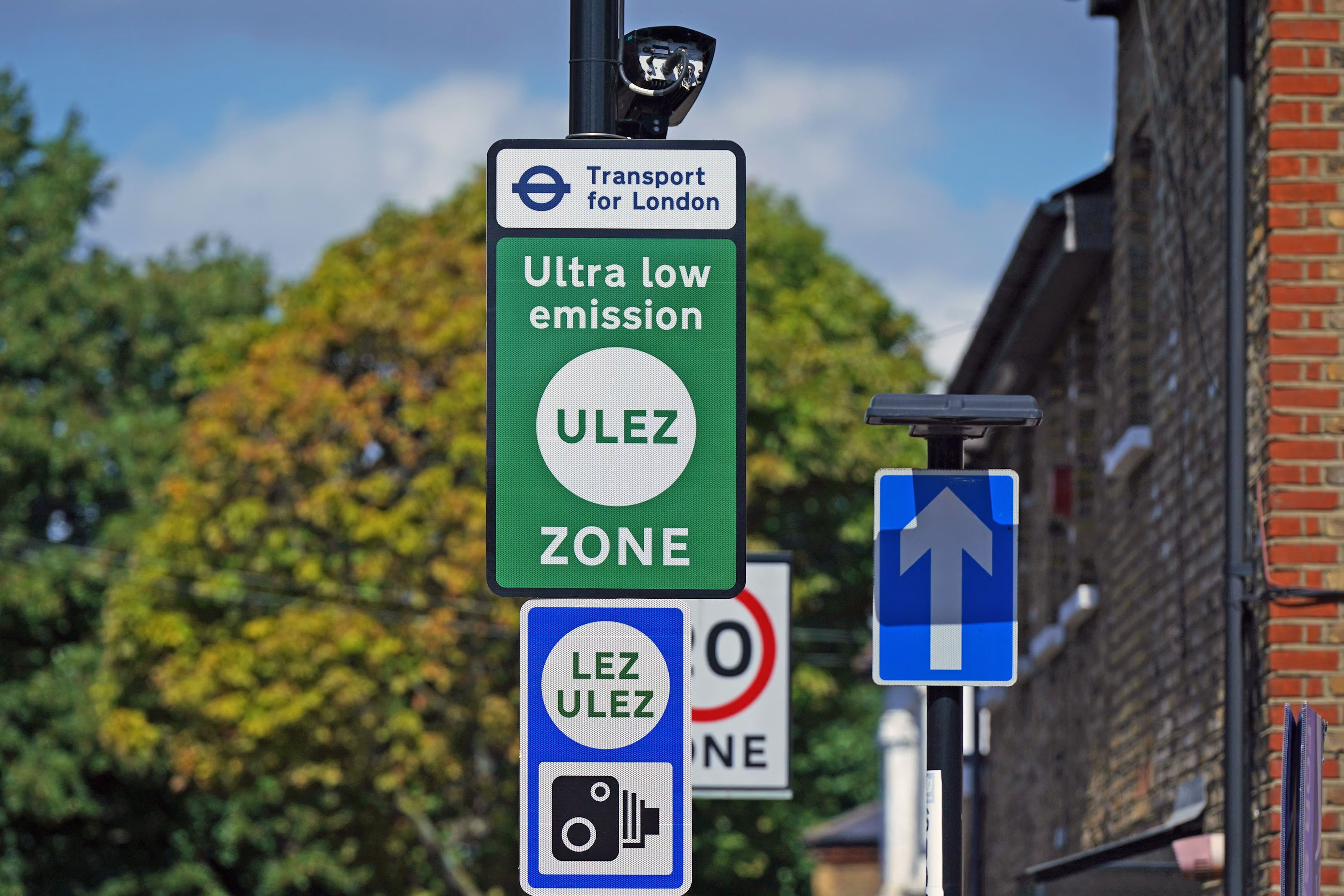
The ULEZ lung growth study links cleaner London air with faster lung development among children.
Researchers tracked more than 3,400 children over a five-year period. The study examined children from London and Luton between 2018 and 2022. Queen Mary University of London led the research with several academic partners. The findings appeared in The Lancet Public Health on Wednesday.
The researchers wanted to measure the health effects of London’s Ultra Low Emission Zone. They focused particularly on children’s developing lungs. The study involved 84 primary schools across London and Luton. Researchers recruited children aged between six and nine for the project.
Luton provided a comparison group for the London children. Both areas experienced traffic pollution, but Luton had no clean air zone. Researchers measured the children’s lung health during annual school visits. They collected the first measurements before London introduced the ULEZ.
Those early results showed an important difference between the two groups. London children initially had smaller lungs than children living in Luton. Researchers then monitored changes throughout the five-year study. They found that London children’s lung development accelerated after the ULEZ began.
Their lung health eventually became comparable with that of children in Luton. The researchers linked this improvement strongly with falling air pollution levels. The study focused on nitrogen dioxide, commonly known as NO2. This pollutant provides a useful indicator of vehicle exhaust emissions.
London children experienced a much faster decline in NO2 exposure. Their exposure fell more than twice as much as the Luton group’s. Researchers also measured forced expiratory volume in one second. This measurement shows how much air someone can forcefully exhale.
The London children recorded stronger annual improvements in this measurement. Their FEV1 increased around 10 millilitres more each year than in Luton. By the end of the study, both groups recorded similar lung capacity. Researchers said this suggested that London children had caught up. The findings also showed changes among children with impaired lung function. The proportion fell from 14% to 9% among London children.
In Luton, the proportion fell from 9% to 7%. Therefore, London recorded a larger improvement during the research period. The researchers say the results could have major long-term health implications. Children need healthy lung development to reduce future health risks. Poor lung development can increase the risk of respiratory diseases later in life. These conditions can include asthma and chronic obstructive pulmonary disease.
Poor childhood lung growth can also affect cardiovascular and metabolic health. In severe cases, it may contribute to premature death. The researchers therefore say clean air policies could protect children’s health. They believe cities should consider stronger measures against traffic pollution.
Professor Chris Griffiths said traffic pollution harms children’s health and development. He called ambitious clean air zones a priority for cities worldwide. Professor Gurch Randhawa also highlighted the findings for Bedfordshire. He said the research could inform future planning and regeneration in the region.
Ian Mudway said cities need bold measures to protect children from polluted air. He described clean air zones as an effective public health intervention. Dr Helen Wood welcomed the improvement in children’s lung health. However, she warned that pollution levels remain too high.
Both London and Luton still exceed World Health Organization guideline levels. Therefore, researchers say authorities cannot treat the progress as a final solution. The study also highlights the importance of long-term monitoring. Researchers need to understand how pollution affects children throughout their development. The findings could influence future clean air policies across Britain. They may also encourage other cities to introduce stronger pollution controls.
Clean air zones already operate in several countries around the world. However, researchers say this study provides important evidence about children’s development. The ULEZ lung growth findings could strengthen arguments for wider clean air measures. Supporters say cleaner urban environments can provide lasting health benefits. For parents, the findings offer evidence that reducing traffic pollution can make a difference. They also highlight the importance of protecting children’s lungs during early development.
The ULEZ lung growth results therefore provide a significant public health message. Cleaner air may help children achieve healthier lung development. Researchers say more action remains necessary across Britain’s cities. They argue that ambitious pollution policies could help protect children’s health for decades.
For more updates on this news, follow London Pulse News.