
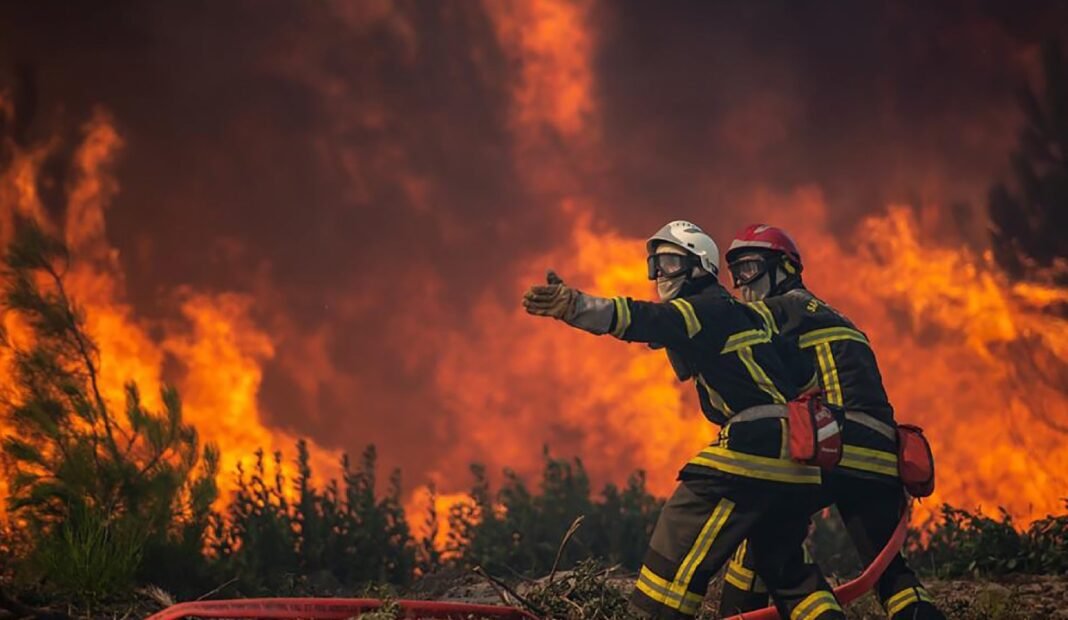
Army deployed to tackle wildfires as hundreds of fires spread across dry parts of Britain, putting communities and emergency crews under pressure.
The government has sent military personnel to support firefighters battling major wildfires across Wales. Additional troops are also preparing to join the emergency response. Around 200 personnel from the Queen’s Own Gurkha Logistics Regiment and 22 Engineer Regiment have deployed to South Wales. They are supporting firefighters facing several large fires across the region.
The military response follows requests from South Wales Fire and Rescue Service. Local crews asked for additional logistical, operational and planning assistance. Meanwhile, soldiers have helped create firebreaks across affected areas. These barriers can slow flames and reduce the risk of fires spreading into nearby woodland.
Military personnel have also provided transport and coordination support. Their involvement allows emergency services to focus more resources on controlling active fires. Prime Minister Andy Burnham welcomed the military assistance during the escalating crisis. He said fire services already provide mutual support across different areas.
However, the growing number of incidents has placed additional pressure on that system. Therefore, the government decided military support could provide an important backup. Images from affected areas show soldiers working alongside firefighters. Some troops have used specialist tools to clear vegetation and create defensive firebreaks.
The Ministry of Defence said personnel would continue supporting emergency services. Their work includes planning, transportation and coordination across affected locations. The wildfire crisis has reached a serious milestone this year. National Fire Chiefs Council figures show 1,017 wildfires across the country so far.
That total has already exceeded the number recorded during the whole of 2025. Consequently, fire services face an unusually demanding summer. Extreme heat and prolonged dry conditions have created highly vulnerable landscapes. Large areas now contain dry vegetation that can ignite and spread flames quickly.
Phil Garrigan, chairman of the National Fire Chiefs Council, highlighted the role of human behaviour. He said careless, accidental and deliberate actions cause many UK wildfires. However, climate change has also increased the danger. Longer periods of hot and dry weather can create conditions that support larger fires.
Drought has further intensified the problem across parts of England and Wales. As a result, vegetation can burn faster and remain difficult to control. Several fires have already caused serious disruption for local communities. Emergency teams have worked to protect homes, infrastructure and surrounding countryside.
Authorities have also introduced measures designed to reduce the risk of new fires. The government temporarily banned disposable barbecues in response to the danger. Millions of people across England and Wales also received emergency warnings. The messages highlighted the very high national wildfire risk.
The warnings urged people to take extra care in dry outdoor areas. Even small fires can spread rapidly under the current conditions. Wildfires in Wales and the West Midlands have also reached major incident status. That designation reflects the scale and seriousness of the emergency.
The government held an emergency Cobra meeting earlier in the week. Officials discussed the growing wildfire threat and the resources available to emergency services.The Army deployment adds another layer of support during the ongoing crisis. Soldiers can assist with tasks that help firefighters reach and contain dangerous areas.
Meanwhile, emergency crews continue monitoring fire activity across affected regions. Authorities remain concerned about further outbreaks while hot and dry conditions persist. The Prince of Wales has also thanked emergency workers for their efforts. Emergency teams continue working long hours to protect communities and limit damage.
For now, firefighters and military personnel remain focused on controlling existing blazes. They must also prevent new fires from developing across Britain’s increasingly dry landscape.
For more updates on this news, follow London Pulse News.