
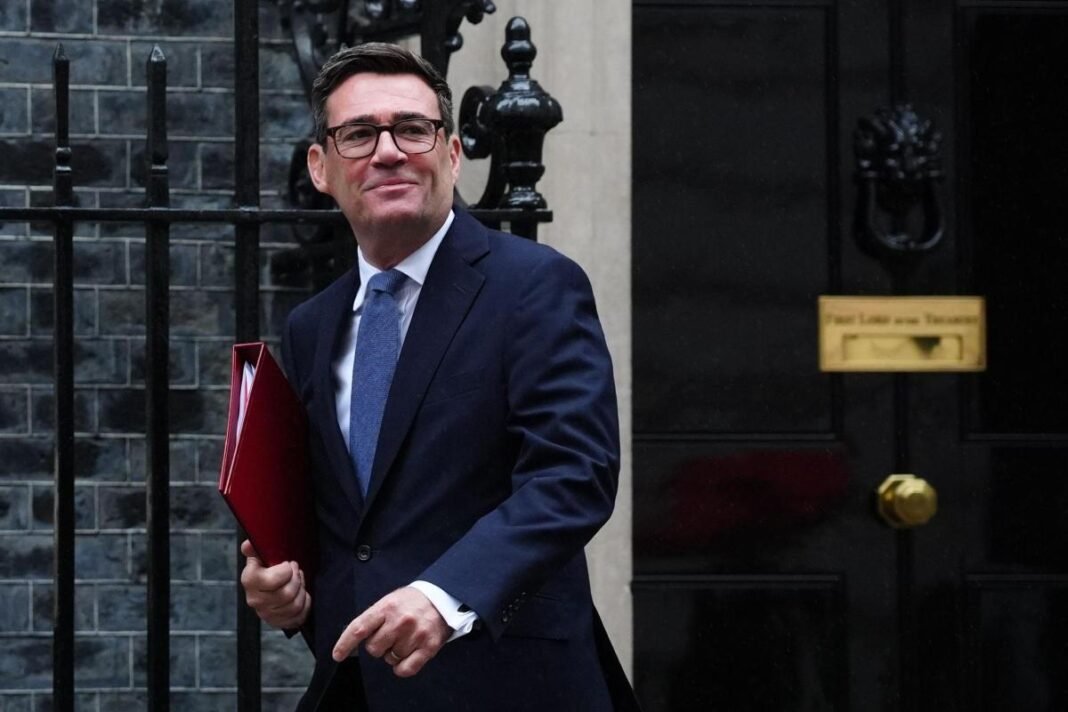
Prime Minister Andy Burnham faced intense pressure over the UK economy during his first Prime Minister’s Questions as borrowing costs climbed sharply.
Conservative leader Kemi Badenoch challenged Burnham over government spending, rising debt and the possibility of future tax increases. Her questions came after UK government borrowing costs reached their highest level in 18 years.
However, Burnham defended his economic approach and promised to maintain fiscal discipline. He told MPs that his government would remain “grounded in fiscal responsibility” while helping households deal with the cost-of-living pressures.
“This will be a government grounded in fiscal responsibility,” Burnham said. “It will stick to the fiscal rules.”
Badenoch argued that Burnham had announced several spending commitments without explaining how his government would fund them.
She claimed that investors had become concerned about the government’s economic plans. She also presented Burnham with three possible options: higher taxes, increased borrowing or spending cuts.
“The markets are clearly worried that we now have a spendthrift prime minister,” Badenoch said. She then asked whether Burnham planned to increase taxes in the upcoming Budget.
Burnham rejected the criticism and pointed to measures that his government had already introduced. He highlighted cuts affecting energy bills and business rates for the hospitality sector.
He also refused to reveal detailed Budget measures before the official announcement. Burnham said he and Chancellor John Healey had agreed to bring forward the Budget date to reduce market speculation.
The pressure comes as government bond yields continue to rise.
The yield on the UK’s 10-year government bond reached its highest level since 2008. Meanwhile, the 30-year bond yield climbed to its highest level since 1998.
Higher yields increase the government’s cost of borrowing. Therefore, rising borrowing costs could restrict the government’s spending choices ahead of the 28 October Budget.
Burnham blamed the previous Conservative government for leaving the UK exposed to financial market turbulence.
He also defended his government’s plans to reduce debt while maintaining investment in public services. The PMQs exchange also turned into a dispute over the Conservative Party’s new shadow cabinet.
Badenoch questioned Burnham about economist Lord Jim O’Neill’s comments on the government’s economic plans. O’Neill had praised Burnham’s first weeks in office but also warned that rising borrowing costs could force difficult decisions.
Burnham responded by attacking Badenoch’s decision to appoint Andrew Griffith as shadow chancellor.
Griffith previously helped write the 2022 Conservative mini-budget under former prime minister Liz Truss. Burnham argued that the mini-budget damaged investor confidence and increased pressure on household mortgages.
Badenoch rejected the criticism and argued that Burnham’s government could repeat the same mistake by announcing spending before explaining how it would pay for it.
The opposition leader also pressed Burnham on defence spending following concerns about Russia and European security.
Badenoch urged the government to commit to a 3% defence spending target. Burnham said his government would fully fund its defence investment plan and meet its NATO commitments by 2035.
He also defended his decision to appoint John Healey as chancellor, highlighting Healey’s commitment to national defence.
Burnham’s first PMQs therefore exposed the challenges facing his government. With borrowing costs rising and the October Budget approaching, the prime minister faces growing pressure to balance spending plans with fiscal responsibility.