
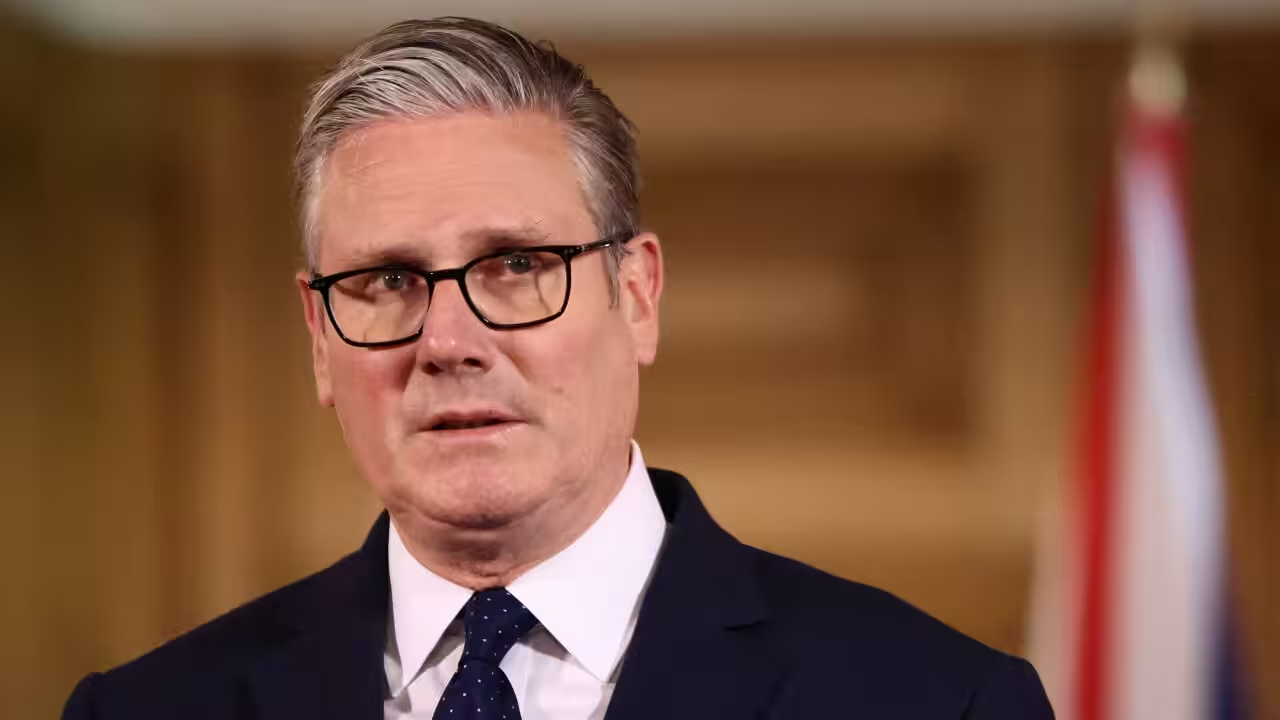
Starmer Election Pressure intensified on Thursday as millions of voters headed to polling stations across the United Kingdom. The local elections now represent the biggest political challenge facing Prime Minister Keir Starmer since Labour returned to government. Moreover, growing frustration with mainstream politics could significantly reshape the country’s political landscape in the coming years.
Voters across England, Scotland, and Wales began casting ballots early in the morning. In addition, opinion polls predicted heavy Labour losses in several important council areas. Many analysts also expected major gains for Reform UK and the Green Party as public dissatisfaction continued rising.
Nigel Farage’s Reform UK continued attracting support in working-class communities across England. Meanwhile, the Green Party targeted younger and left-leaning urban voters disappointed with Labour’s recent policies. Consequently, both parties could weaken the traditional dominance of Labour and the Conservatives.
Starmer Election Pressure increased after months of declining approval ratings for the prime minister. Critics argued Labour failed to deliver promised economic improvements after entering government. Furthermore, rising household bills and high energy costs continued affecting families across Britain.
Political experts described the elections as a major test of public confidence in Starmer’s leadership. Some Labour MPs also worried poor results could trigger fresh internal tensions within the party. However, senior cabinet ministers continued publicly defending the prime minister.
Polling stations opened across thousands of local council districts throughout England. Around 5,000 council seats remained contested during the elections. Meanwhile, voters in Scotland and Wales also selected representatives for devolved parliaments.
Labour leaders attempted to frame the elections around stability and national unity. Starmer argued voters should reject division and support practical government instead. However, opposition parties continued attacking Labour over economic struggles and political controversies.
Starmer Election Pressure also grew because of continuing speculation surrounding possible leadership challenges. Reports suggested several MPs privately discussed plans regarding Starmer’s future leadership position. Nevertheless, no organised campaign currently exists within the parliamentary party.
Angela Rayner and Wes Streeting frequently appeared in discussions about possible future leadership contenders. However, both politicians reportedly remained unwilling to launch direct challenges against Starmer. Additionally, party rules require strong parliamentary backing before any leadership contest begins.
Reform UK expected strong gains in several areas traditionally supportive of Labour. Farage claimed many voters now preferred parties promising dramatic political change. Consequently, Reform could emerge as one of the election’s biggest winners.
The Conservative Party also faced mounting electoral pressure during the local contests. Conservative leader Kemi Badenoch warned Britain now faced an increasingly fragmented political environment. Furthermore, Conservatives risked losing support in several long-held council strongholds.
In Scotland, Labour feared disappointing results against the Scottish National Party. Polls also suggested Reform UK could overtake Labour in some Scottish areas. Meanwhile, Labour risked losing influence in Wales after decades of political dominance.
The Green Party hoped to benefit from dissatisfaction among younger and progressive voters. Its campaign strongly focused on social justice and international issues in urban communities. As a result, Labour could lose additional support in major cities.
Starmer Election Pressure will likely intensify once final results arrive on Friday. Political observers expected the elections to shape Labour’s internal debate for months ahead. However, Starmer insisted he still planned to lead the party into the next general election.
For more updates on this news, follow London Pulse News.