
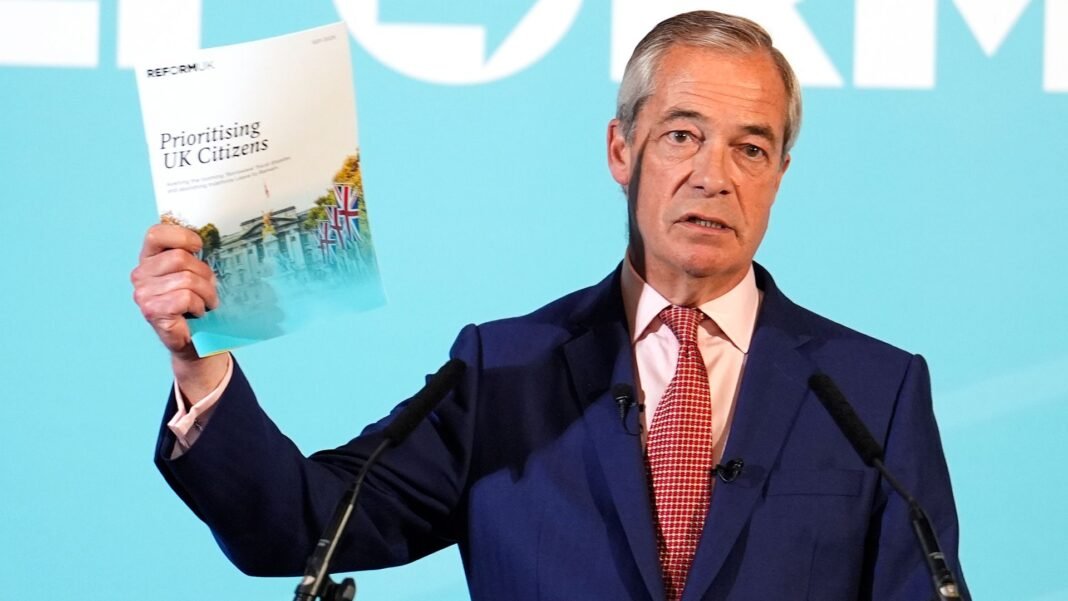
Reform UK has announced plans to restrict welfare access for foreign nationals if it enters government. The party says the proposals would significantly reduce public spending.
Robert Jenrick, the party’s treasury spokesperson, will outline the plans on Monday. He says the reforms could become the biggest welfare overhaul in a generation. Under the proposal, foreign nationals would lose access to most benefits. The restrictions would cover several major forms of financial support.
Universal Credit would form part of the proposed changes. However, Reform also plans restrictions affecting housing support and pension-related payments. Jobseeker’s Allowance would face changes under the proposals. Child Benefit and free childcare could also fall under the new restrictions.
Disability and sickness payments would also face significant changes. Reform says nearly three million people could see their payments withdrawn or altered. According to the party, the broader programme could save more than £50 billion annually. Reform says restricting benefits for foreign nationals could contribute around £21 billion.
That saving would reportedly emerge by the fifth year of the proposed system. Reform wants to reduce the growing cost of welfare across Britain. Jenrick has described the current system as unfair to British taxpayers. He argues that taxpayers should not fund benefits for people who have not contributed to the system.
The proposed policy would also affect EU citizens with settled status. Such a move could create difficult negotiations between Britain and Brussels. British citizens living elsewhere in Europe could also face consequences. Other governments could reconsider equivalent welfare rights for British expatriates.
Meanwhile, opposition parties have strongly criticised the proposals. Labour has described Reform’s financial calculations as unrealistic. A Labour spokesperson argued that the plan would shift costs elsewhere. The party also accused Reform of targeting disabled people through welfare reductions.
Labour says it has already begun changing the welfare system. Its plans include narrowing differences between Universal Credit health and standard rates. The government also plans to restore face-to-face assessments. In addition, Labour says it will invest £3.5 billion in employment support.
Jenrick is expected to criticise both Labour and the Conservatives during Monday’s speech. He will argue that neither traditional party has controlled welfare spending effectively. Reform claims the welfare bill has grown significantly under successive governments. The party points to spending increases under both Conservative and Labour administrations.
Current Office for Budget Responsibility forecasts put the welfare bill at £407 billion by 2030. Reform argues that the figure demonstrates the need for major changes. The party plans to call its programme “End Benefits Britain”. Jenrick is expected to warn that rising welfare costs could increase pressure on taxpayers.
He will also argue that Britain needs a new approach to welfare spending. Reform says its proposals would focus support on people who have contributed to the country. However, critics question whether the proposed savings would materialise. They also warn about potential consequences for vulnerable households.
The Conservatives have also criticised the announcement. Shadow welfare secretary Helen Whately described the policy as incomplete and politically motivated. Her comments also referenced a separate controversy involving Reform leader Nigel Farage. A parliamentary standards investigation concerns a £5 million gift linked to cryptocurrency businessman Christopher Harborne.
The investigation paused after Farage resigned as MP for Clacton. He subsequently won the resulting by-election last week. For now, Reform UK continues to position welfare reform as a central political priority. The party plans to provide further details during Jenrick’s speech.
Reform UK Welfare proposals could become a major issue ahead of any future general election. The plans are likely to trigger further debate about immigration and public spending. Supporters argue that the changes would reduce costs for British taxpayers. Critics warn that the proposals could create financial hardship for vulnerable residents.
The full details will become clearer when Jenrick presents the policy. Until then, questions remain about implementation, legal challenges, and international negotiations. Reform UK Welfare plans therefore represent one of the party’s most significant economic proposals. Their potential impact could extend across immigration, taxation, employment, and social security.
For more updates on this news, follow London Pulse News.