
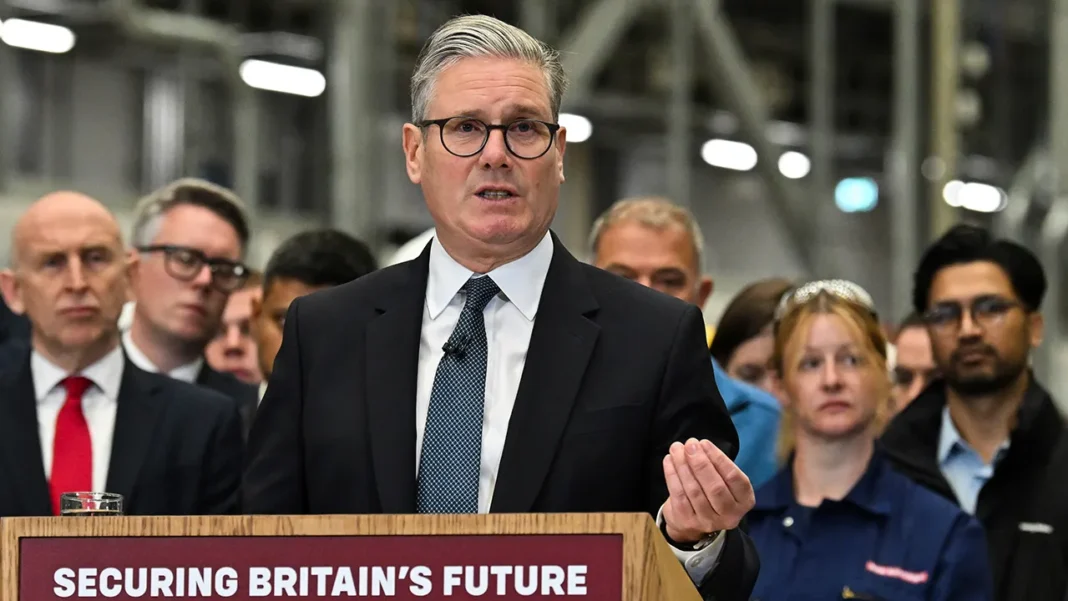
UK defence boost plans moved forward on Tuesday after Keir Starmer unveiled a major £15 billion military spending package. The prime minister said the move would help build an army “10 times more lethal” in the coming years.
Starmer launched the strategy at a drone manufacturing site as he outlined what he called a generational shift in military readiness. At the same time, he said Britain must prepare for future threats by investing heavily in technology, weapons, and defence infrastructure.
Under the plan, defence spending will rise from 2.3% of GDP to 2.7% by 2029. In addition, Starmer said the government aims to hit 3% during the next parliament. However, that still falls short of NATO’s 3.5% target by 2035.
As part of the package, the government will raise annual defence spending from £54 billion to £80 billion by 2029. Therefore, ministers say the investment marks one of the biggest military funding increases in decades.
A large share of the UK defence boost will support major projects. Around £8 billion will go to the Global Combat Air Programme, which will develop a next-generation stealth fighter for the Royal Air Force. Meanwhile, £63 billion will strengthen Britain’s nuclear deterrent. That funding includes Dreadnought submarines, SSN-AUKUS submarines, and 12 new F-35A fighter jets.
At the same time, £26 billion will modernise naval bases through Project Royal Oak. Another £5 billion will transform drone warfare and autonomous military systems. Furthermore, the government has set aside £2 billion for a new Digital Targeting Web. That system will use software and artificial intelligence to speed up battlefield decisions.
In addition, £11 billion will increase ammunition stockpiles and build at least six new energetics factories by 2030.
Starmer said the UK defence boost reflects lessons learned from the war in Ukraine. He argued that drones, autonomous systems, and integrated technology now shape modern warfare. As a result, Britain wants to strengthen its ability to respond to threats from Russia and beyond.
However, critics quickly challenged the plan. Opposition figures called it delayed and underfunded. Even so, Starmer insisted the spending would protect national security without cutting health or education budgets. Now, the UK defence boost will likely become one of the defining policies of his leadership as Britain prepares for a changing global security landscape.
For more updates on this news, follow London Pulse News.