
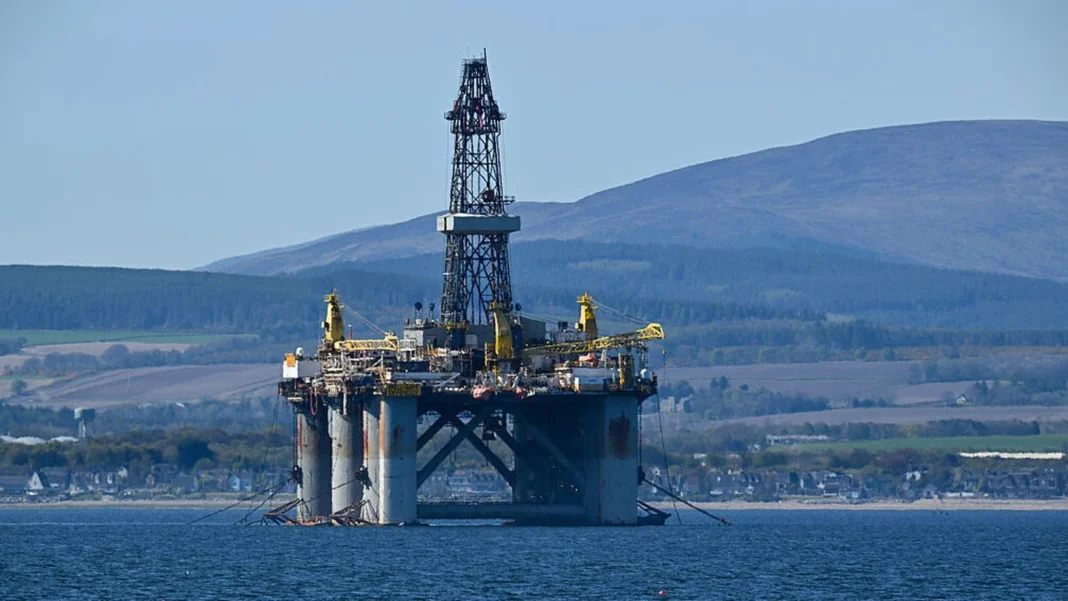
North Sea drilling has moved to the centre of political debate after United States President Donald Trump praised incoming UK Prime Minister Andy Burnham over reports of planned energy reforms. Furthermore, Trump claimed Burnham would fully reopen oil exploration in the North Sea. Meanwhile, the comments arrived just before Burnham prepares to take office.
Trump shared his views on social media ahead of Burnham’s formal appointment as Britain’s next prime minister. He described the North Sea as one of the world’s greatest sources of high-quality oil. Additionally, he argued the region still holds vast untapped reserves that could benefit the British economy for decades.
The US president claimed people in Aberdeen were celebrating the expected policy change. He also suggested increased oil production could strengthen Britain’s economy and reduce financial pressures. Moreover, Trump criticised previous energy policies that limited new domestic exploration.
Trump questioned Britain’s decision to import energy while significant reserves remain beneath the North Sea. He argued the country should make greater use of its own natural resources instead of relying on foreign supplies. Consequently, he described the expected policy shift as an important moment for Britain’s energy future.
Andy Burnham is expected to become prime minister after King Charles formally invites him to form a government. Soon afterwards, he will deliver his first address outside Downing Street. During that speech, he is widely expected to outline his government’s economic and energy priorities.
Although Burnham has not yet confirmed detailed energy proposals, reports suggest he will support expanding domestic oil and gas production. Industry representatives have repeatedly called for greater investment in North Sea production. They argue additional exploration would improve energy security while protecting jobs across the sector.
Supporters believe increased domestic production could reduce Britain’s dependence on imported fuel. They also argue stronger investment would support businesses connected to the offshore energy industry. Furthermore, many believe new projects would create employment across Scotland and other coastal regions.
However, environmental organisations continue opposing further oil and gas expansion. They argue additional drilling could undermine Britain’s climate commitments. Instead, they want greater investment in renewable energy sources and cleaner technologies.
The debate has intensified following recent volatility in global energy markets. Oil and gas prices have remained under pressure after conflict involving the United States, Israel and Iran disrupted international energy supplies. As a result, governments across Europe continue searching for ways to strengthen long-term energy security.
Economic challenges have also increased pressure on Britain’s next government. Recent forecasts suggest weaker economic growth as higher energy costs continue affecting businesses and households. Therefore, energy policy is expected to become one of Burnham’s first major challenges after entering office.
Trump has criticised Britain’s energy strategy several times in recent months. Previously, he argued the country should reopen North Sea oil fields instead of depending on imported supplies. He also praised Norway’s approach to developing offshore energy resources.
Meanwhile, Burnham’s government will face competing demands from industry leaders and environmental campaigners. Business groups continue urging ministers to encourage investment and increase domestic production. On the other hand, climate organisations want stronger commitments to renewable energy and lower carbon emissions.
The coming days are expected to provide greater clarity on Burnham’s energy strategy. His first announcements could shape Britain’s economic direction while influencing future investment across the offshore energy sector. Consequently, North Sea drilling is likely to remain a major political issue as the new government begins its term.
For more updates on this news, follow London Pulse News.