
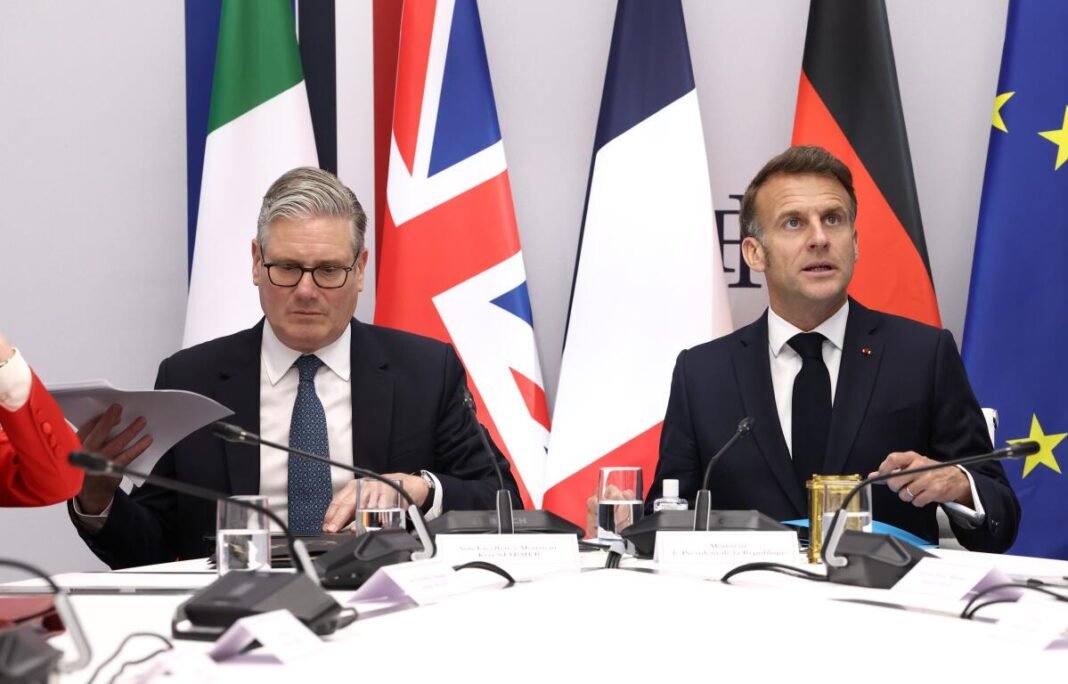
The Hormuz reopening plan now drives urgent global talks as tensions continue to disrupt trade routes. The Hormuz reopening plan sits at the center of new military discussions led by Keir Starmer and Emmanuel Macron.
Leaders from more than 30 nations gathered in London to coordinate next steps. They aim to restore safe passage through the Strait of Hormuz. This waterway remains critical for global oil transport and trade stability. Officials pushed forward detailed proposals during the high-level meeting. They want to translate recent diplomatic progress into concrete military coordination. The goal focuses on protecting commercial vessels once hostilities ease.
Earlier discussions in Paris involved more than 50 countries. Those talks produced a unified demand to reopen the route immediately. Leaders also supported forming an international naval mission to escort ships safely. Meanwhile, shipping activity remains extremely limited across the strait. Companies continue to avoid the route due to security risks. Concerns include drone threats and missile attacks linked to regional conflict.
The closure has already placed pressure on global energy markets. Around 20 percent of the world’s oil supply passes through this corridor. Disruptions have therefore triggered price instability and supply concerns worldwide. European countries feel the impact more sharply than others. Many nations reduced reliance on Russian oil in recent years. As a result, they depend heavily on alternative supply routes like the strait.
Although a temporary ceasefire raised hopes, shipping traffic has not recovered. Military tensions still shape conditions in the region. Rival actions by both sides continue to complicate the situation. The United States recently enforced blockades on Iranian-linked shipping routes. In response, Iran moved to restrict access again through the strait. These opposing strategies have further escalated uncertainty.
Reports also indicate that Iranian forces seized vessels attempting unauthorized passage. Some incidents involved warning fire directed at foreign ships. These developments highlight the risks facing commercial operators. At the same time, U.S. forces intercepted ships suspected of carrying restricted cargo. These actions demonstrate the broader enforcement efforts surrounding the conflict.
Despite these challenges, leaders continue to advance the Hormuz reopening plan. They believe coordinated action can restore confidence in global shipping. They also stress that cooperation remains essential for long-term stability. Officials expect further negotiations in the coming weeks. They plan to refine military coordination and finalize operational details. The Hormuz reopening plan remains a top priority for international security and economic recovery.
For more updates on this news, follow London Pulse News.