
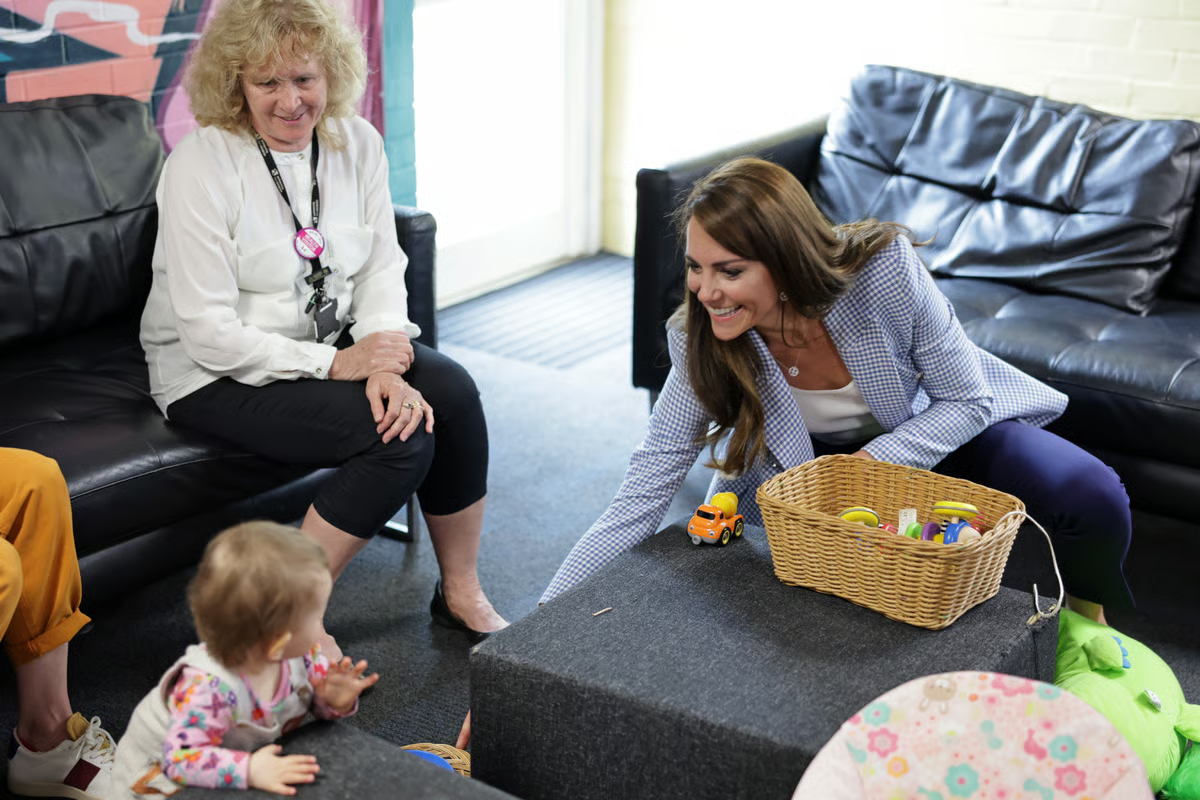
Baby distress signs are at the heart of a new NHS programme backed by the Princess of Wales. The initiative aims to help health visitors recognise emotional concerns in newborns before they can communicate through words.
The Royal Foundation Centre for Early Childhood is funding the nationwide rollout of specialist training. The programme gives health visitors practical skills to identify emotional difficulties during a baby’s earliest months. Furthermore, health experts believe early intervention can strengthen family relationships and improve long-term wellbeing.
The training introduces the Alarm Distress Baby Scale, known as the ADBB model. Health visitors use the assessment to observe facial expressions, eye contact, movement, and other behavioural cues. As a result, professionals can identify babies who may need extra support during routine health appointments.
Early trials produced encouraging results across several NHS areas. Researchers found that the number of babies identified with emotional concerns increased significantly after staff completed the training. Consequently, families received support earlier, allowing professionals to respond before issues became more serious.
The Princess of Wales has championed early childhood development for several years. She first observed the assessment tool during a visit to Denmark in 2022. Since then, she has supported efforts to bring the approach into healthcare services across England.
Health visitors involved in the pilot praised the programme for improving conversations with parents. They said the training encouraged more meaningful discussions about emotional development and family relationships. Moreover, they found it easier to explain the importance of early bonding between parents and babies.
Experts stressed that babies communicate through behaviour long before they learn to speak. Therefore, professionals can often identify emotional needs by carefully observing facial expressions and social interaction. The programme encourages staff to recognise these subtle signals during regular postnatal visits.
Healthcare specialists also explained that the training complements existing support for mothers rather than replacing it. Instead, it allows professionals to consider both the baby’s emotional wellbeing and the parent’s mental health during assessments. Consequently, families receive a more complete picture of their needs.
Leaders at the Centre for Early Childhood described the rollout as part of a wider commitment to practical improvements. They said research remains important, yet frontline healthcare workers also need effective tools they can use every day. Therefore, the organisation continues investing in projects that deliver measurable benefits for children and families.
The programme began with pilot schemes in South Warwickshire University NHS Foundation Trust and Humber Teaching NHS Foundation Trust. Following positive results, organisers expanded the project into eight additional areas. Researchers later concluded the model filled an important gap within current health visiting practice.
The evaluation showed measurable improvements during six to eight-week postnatal reviews. The proportion of babies identified with concerns increased from seven percent to 12 percent. Consequently, researchers recommended expanding the model across the United Kingdom.
Development specialists welcomed the findings and highlighted the importance of early social interaction. They explained that babies develop essential emotional and communication skills during their earliest years. Therefore, identifying difficulties quickly can support healthier development throughout childhood.
Recent figures have also highlighted wider concerns about children’s readiness for school. Many children now begin reception without key social, emotional, or communication skills. Experts believe stronger support during infancy could improve outcomes before children enter education.
Early years charities also backed the programme. They argued health visitors play a crucial role in helping parents understand their baby’s emotional development. Furthermore, they said stronger early attachments help children build confidence, resilience, and communication skills throughout childhood.
Baby distress signs remain central to the new training as health services continue expanding the programme. Supporters hope earlier identification will strengthen families, improve emotional wellbeing, and reduce pressure on specialist services. As the rollout continues, healthcare leaders expect more parents to receive guidance during the most important stage of their child’s development.
For more updates on this news, follow London Pulse News.