
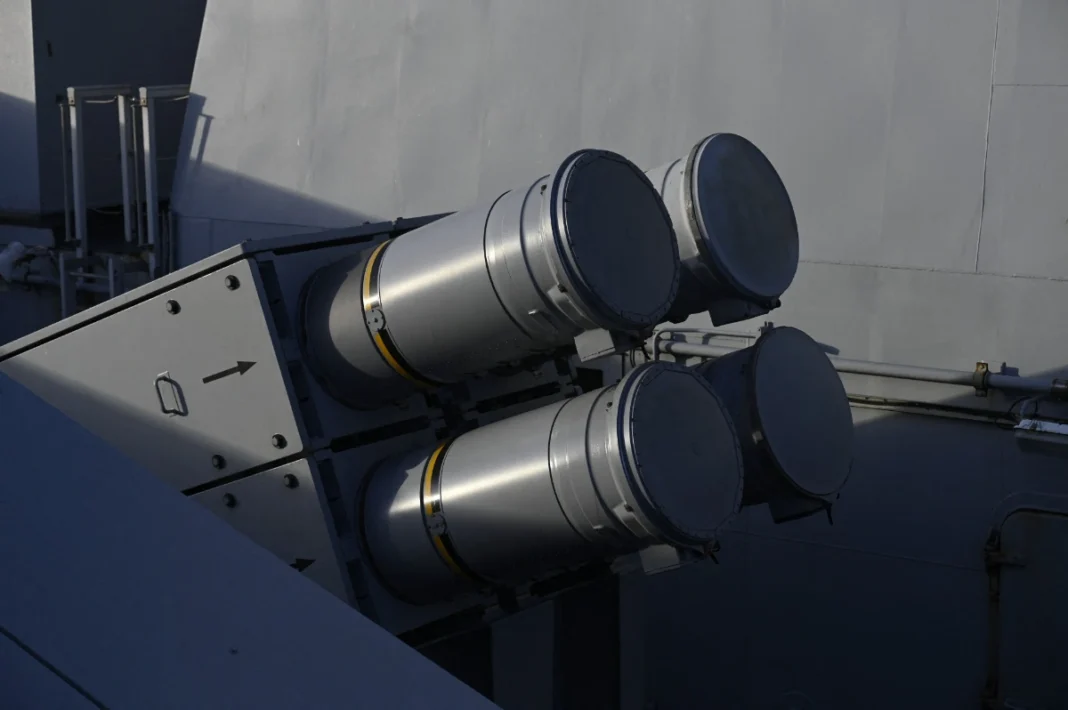
Deep Strike is at the centre of a major new defence initiative led by the United Kingdom, bringing together around a dozen NATO allies to develop advanced long-range missile capabilities. The Deep Strike programme will see participating nations commit about £37 billion over the next decade to strengthen NATO’s ability to deter future threats. Government leaders say the Deep Strike initiative will improve Europe’s defence capabilities while increasing cooperation across the alliance.
Prime Minister Keir Starmer unveiled the initiative during the NATO summit in Ankara. He met with allied leaders to launch the programme and outline plans for closer military cooperation across Europe. The new programme focuses on developing advanced precision weapons capable of striking targets hundreds, and in some cases thousands, of kilometres away. Officials said the systems would deliver high levels of accuracy while expanding NATO’s long-range military capabilities.
According to the UK government, some future weapons will reach targets more than 300 kilometres away. Others could eventually exceed 2,000 kilometres as technology continues to develop during the next decade. The government said the programme will place long-range precision strike capabilities at the heart of NATO’s defence strategy. It also expects participating countries to share technology, industrial expertise and research throughout development.
Prime Minister Keir Starmer said Britain remains committed to protecting both the UK and its allies. He said the initiative would help build a stronger European contribution within NATO while improving the alliance’s ability to deter future threats far from the front line.
Furthermore, Starmer said Britain already works with several partners on advanced military technology. However, he believes the wider programme will accelerate cooperation and strengthen NATO for years to come. The government also highlighted recent military developments in Ukraine. Officials said Ukrainian long-range attacks against logistics centres have demonstrated the growing importance of precision strike capabilities during modern warfare.
Britain has already invested heavily in similar defence projects through its Defence Investment Plan. The government has committed £3 billion to long-range weapons development. That funding includes £770 million over four years for a joint stealth and hypersonic missile programme with Germany under the Trinity House agreement.
The British and German project focuses on ground-launched weapons capable of travelling beyond 2,000 kilometres. Officials expect the system to enter service during the 2030s. Additionally, Britain has committed £1.4 billion to the Stratus programme. The project involves cooperation with France and Italy to develop the successor to the Storm Shadow cruise missile.
The government said Stratus also supports more than 1,300 skilled jobs at MBDA facilities in Stevenage and Bolton. Meanwhile, the UK has joined the Precision Strike Missile programme alongside the United States and Australia. That project aims to provide the British Army with a supersonic ballistic missile capable of reaching targets up to 500 kilometres away.
Defence Secretary Dan Jarvis said Britain is investing in the next generation of military technology while strengthening cooperation with European allies. He added that the future weapons would give British forces greater flexibility to strike distant targets with high precision while reinforcing NATO’s collective defence.
Foreign Secretary Yvette Cooper also described the initiative as an important signal to potential adversaries. She said the programme demonstrates that NATO continues to strengthen its military capabilities while remaining prepared to defend member states against long-term security threats.
Additionally, Downing Street pointed to increasing Russian military activity as another reason for expanding NATO’s capabilities. Officials noted that NATO aircraft have intercepted Russian military aircraft more than 700 times over the past two years. The government also reported a 30 percent increase in Russian military activity around British waters during the same period.
Despite those developments, ministers stressed that NATO does not seek confrontation. Instead, they said the alliance remains focused on deterrence, cooperation and the collective defence of all member nations.
For more updates on this news, follow London Pulse News.