
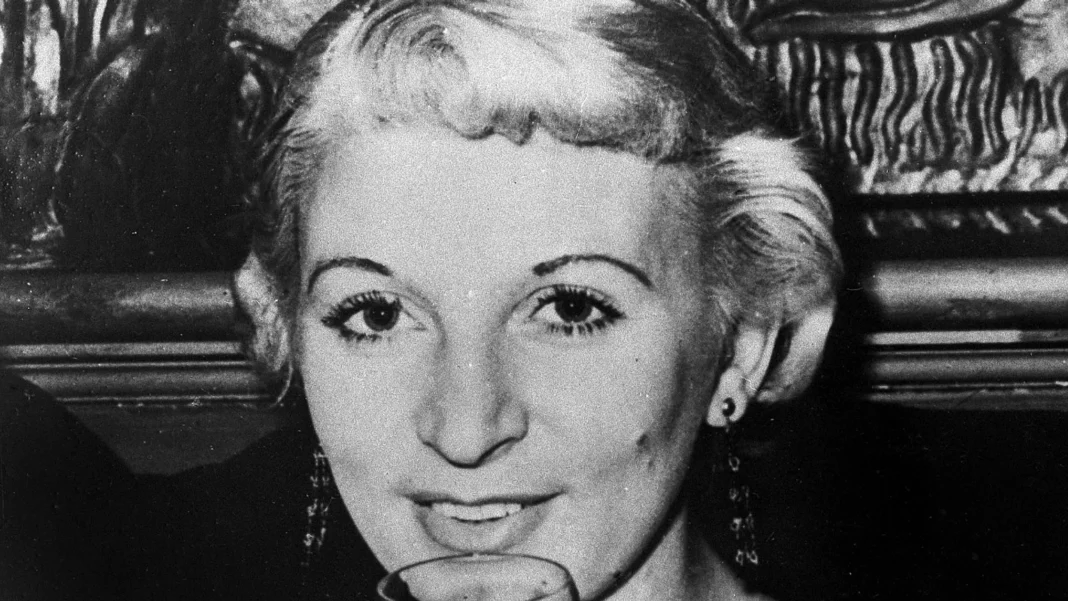
Ruth Ellis has received a conditional pardon more than seven decades after becoming the last woman executed in Britain. Ruth Ellis was hanged in 1955 after killing her abusive partner, David Blakely. The Ruth Ellis decision recognizes failures in the justice system while leaving her murder conviction unchanged.
Deputy Prime Minister David Lammy announced the government’s decision on Wednesday. He said the pardon replaces Ellis’ death sentence with a life imprisonment sentence. However, Lammy stressed that the pardon does not declare Ellis innocent of murder. Instead, it acknowledges that the punishment she received represented a profound injustice under the circumstances.
Ellis was 28 years old when authorities executed her at Holloway Prison on July 13, 1955. She worked as a nightclub hostess and raised two children as a single mother. Earlier that year, Ellis shot race-car driver David Blakely outside the Magdala pub in Hampstead, north London. Police arrested her immediately after the shooting.
The case quickly attracted widespread public attention across Britain. On the day of her execution, around 1,000 people gathered outside Holloway Prison in silent protest.
Her family has campaigned for decades to secure official recognition of the circumstances surrounding her case. They argued that the courts failed to consider the abuse Ellis suffered before the killing. Laura Enston, one of Ellis’ granddaughters, welcomed the government’s decision. She said the pardon cannot erase the family’s pain, but it formally recognizes that the justice system failed her grandmother.
Enston added that the execution deeply affected future generations of the family. She explained that the trauma continued long after Ellis’ death. Lawyers representing the family submitted a fresh application for a pardon last year. They presented evidence suggesting Ellis experienced what later became known as battered woman syndrome.
According to the legal team, David Blakely repeatedly subjected Ellis to physical, emotional and sexual abuse. Witnesses, including friends and doctors, described injuries they observed before the shooting. The lawyers also said Blakely pushed Ellis down stairs and assaulted her several times in public. Furthermore, they stated that one violent attack caused her to lose a pregnancy.
Despite that evidence, the trial judge instructed jurors not to consider how Blakely had treated Ellis. Consequently, the jury reached a guilty verdict in less than 30 minutes after a trial lasting little more than one day. Legal experts believe the outcome could have differed under later reforms to British law. Two years after Ellis’ execution, Parliament introduced legislation allowing defendants to argue diminished responsibility.
If that defence had existed during her trial, lawyers believe Ellis may have faced a manslaughter conviction instead of murder. Therefore, she likely would not have received the death penalty. Historians widely regard the Ellis case as a turning point in Britain’s criminal justice system. Her execution increased public debate about capital punishment and legal protections for abuse victims.
Britain suspended the death penalty in 1965 before abolishing it completely in 1970. The story of Ruth Ellis has remained part of British public memory for decades. Filmmakers and television producers have revisited her case through several dramatizations, reflecting continued interest in one of the country’s most controversial criminal cases.
The government’s decision closes a long campaign by Ellis’ family. Although her conviction remains, the conditional pardon formally recognizes that the punishment imposed in 1955 failed to reflect the abuse she endured or the justice she deserved.
For more updates on this news, follow London Pulse news.